Microsoft Patch Tuesday, April 2020 Edition

Microsoft today released updates to fix 113 security vulnerabilities in its various Windows operating systems and related software. Those include at least three flaws that are actively being exploited, as well as two others which were publicly detailed prior to today, potentially giving attackers a head start in figuring out how to exploit the bugs.

Nineteen of the weaknesses fixed on this Patch Tuesday were assigned Microsoft’s most-dire “critical” rating, meaning malware or miscreants could exploit them to gain complete, remote control over vulnerable computers without any help from users.

Near the top of the heap is CVE-2020-1020, a remotely exploitable bug in the Adobe Font Manager library that was first detailed in late March when Microsoft said it had seen the flaw being used in active attacks.

The Adobe Font Manager library is the source of yet another zero-day flaw — CVE-2020-0938 — although experts at security vendor Tenable say there is currently no confirmation that the two are related to the same set of in-the-wild attacks. Both flaws could be exploited by getting a Windows users to open a booby-trapped document or viewing one in the Windows Preview Pane.

The other zero-day flaw (CVE-2020-1027) affects Windows 7 and Windows 10 systems, and earned a slightly less dire “important” rating from Microsoft because it’s an “elevation of privilege” bug that requires the attacker to be locally authenticated.

Many security news sites are reporting that Microsoft addressed a total of four zero-day flaws this month, but it appears the advisory for a critical Internet Explorer flaw (CVE-2020-0968) has been revised to indicate Microsoft has not yet received reports of it being used in active attacks. However, the advisory says this IE bug is likely to be exploited soon.

Researchers at security firm Recorded Future zeroed in on CVE-2020-0796, a critical vulnerability dubbed “SMBGhost” that was rumored to exist in last month’s Patch Tuesday but for which an out-of-band patch wasn’t released until March 12. The problem resides in a file-sharing component of Windows, and could be exploited merely by sending the victim machine specially-crafted data packets. Proof-of-concept code showing how to exploit the bug was released April 1, but so far there are no indications this method has been incorporated into malware or active attacks.

Recorded Future’s Allan Liska notes that one reason these past few months have seen so many patches from Microsoft is the company recently hired “SandboxEscaper,” a nickname used by the security researcher responsible for releasing more than a half-dozen zero-day flaws against Microsoft products last year.

“SandboxEscaper has made several contributions to this month’s Patch Tuesday,” Liska said. “This is great news for Microsoft and the security community at large.”

Once again, Adobe has blessed us with a respite from updating its Flash Player program with security fixes. I look forward to the end of this year, when the company has promised to sunset this buggy and insecure program once and for all. Adobe did release security updates for its ColdFusion, After Effects and Digital Editions software.

Speaking of buggy software platforms, Oracle has released a quarterly patch update to fix more than 400 security flaws across multiple products, including its Java SE program. If you’ve got Java installed and you need/want to keep it installed, please make sure it’s up-to-date.

Now for my obligatory disclaimers. Just a friendly reminder that while many of the vulnerabilities fixed in today’s Microsoft patch batch affect Windows 7 operating systems — including all three of the zero-day flaws — this OS is no longer being supported with security updates (unless you’re an enterprise taking advantage of Microsoft’s paid extended security updates program, which is available to Windows 7 Professional and Windows 7 enterprise users).

If you rely on Windows 7 for day-to-day use, it’s to think about upgrading to something newer. That something might be a computer with Windows 10. Or maybe you have always wanted that shiny MacOS computer.

If cost is a primary motivator and the user you have in mind doesn’t do much with the system other than browsing the Web, perhaps a Chromebook or an older machine with a recent version of Linux is the answer (Ubuntu may be easiest for non-Linux natives). Whichever system you choose, it’s important to pick one that fits the owner’s needs and provides security updates on an ongoing basis.

Keep in mind that while staying up-to-date on Windows patches is a must, it’s important to make sure you’re updating only after you’ve backed up your important data and files. A reliable backup means you’re not losing your mind when the odd buggy patch causes problems booting the system.

So do yourself a favor and backup your files before installing any patches. Windows 10 even has some built-in tools to help you do that, either on a per-file/folder basis or by making a complete and bootable copy of your hard drive all at once.

As always, if you experience glitches or problems installing any of these patches this month, please consider leaving a comment about it below; there’s a better-than-even chance other readers have experienced the same and may chime in here with some helpful tips. Also, keep an eye on the AskWoody blog from Woody Leonhard, who keeps a close eye on buggy Microsoft updates each month.

Further reading:

Qualys breakdown on April 2020 Patch Tuesday

SANS Internet Storm Center on Patch Tuesday

source https://krebsonsecurity.com/2020/04/microsoft-patch-tuesday-april-2020-edition/

New IRS Site Could Make it Easy for Thieves to Intercept Some Stimulus Payments

The U.S. federal government is now in the process of sending Economic Impact Payments by direct deposit to millions of Americans. Most who are eligible for payments can expect to have funds direct-deposited into the same bank accounts listed on previous years’ tax filings sometime next week. Today, the Internal Revenue Service (IRS) stood up a site to collect bank account information from the many Americans who don’t usually file a tax return. The question is, will those non-filers have a chance to claim their payments before fraudsters do?

The IRS says the Economic Impact Payment will be $1,200 for individual or head of household filers, and $2,400 for married filing jointly if they are not a dependent of another taxpayer and have a work eligible Social Security number with adjusted gross income up to:

  • $75,000 for individuals
  • $112,500 for head of household filers and
  • $150,000 for married couples filing joint returns

Taxpayers with higher incomes will receive more modest payments (reduced by $5 for each $100 above the $75,000/$112,500/$150,000 thresholds). Most people who who filed a tax return in 2018 and/or 2019 and provided their bank account information for a debit or credit should soon see an Economic Impact Payment direct-deposited into their bank accounts. Likewise, people drawing Social Security payments from the government will receive stimulus payments the same way.

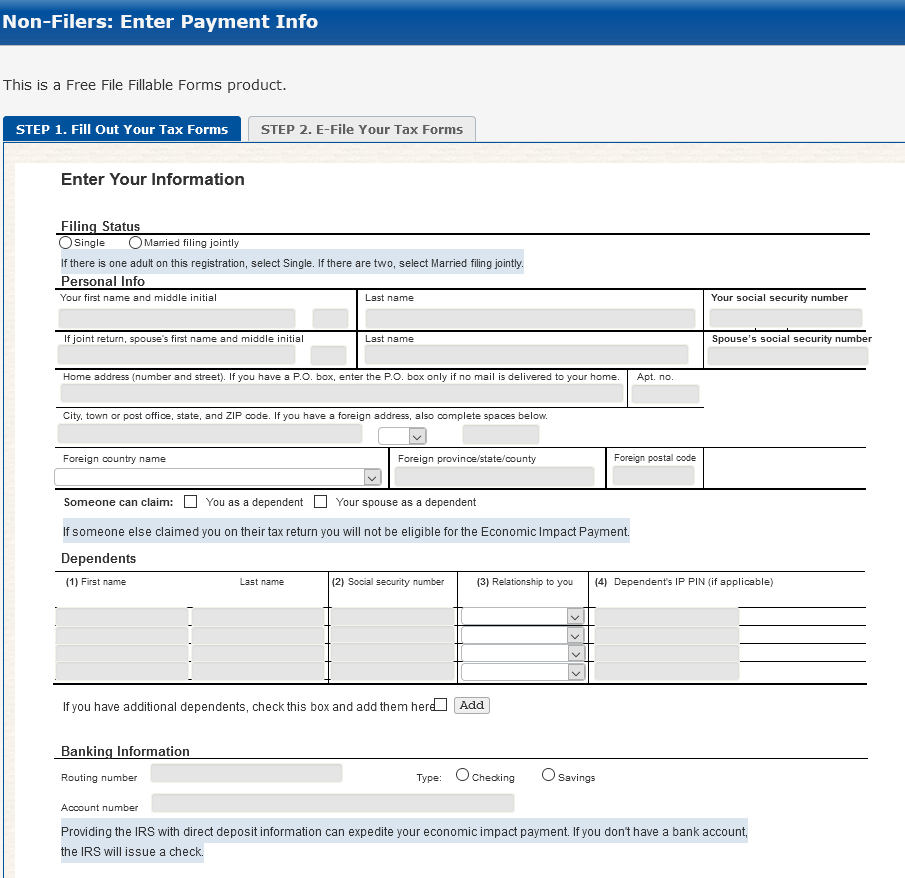
But there are millions of U.S. residents — including low-income workers and certain veterans and individuals with disabilities — who aren’t required to file a tax return but who are still eligible to receive at least a $1,200 stimulus payment. And earlier today, the IRS unveiled a Web site where it is asking those non-filers to provide their bank account information for direct deposits.

However, the possibility that fraudsters may intercept payments to these individuals seems very real, given the relatively lax identification requirements of this non-filer portal and the high incidence of tax refund fraud in years past. Each year, scam artists file phony tax refund requests on millions of Americans, regardless of whether or not the impersonated taxpayer is actually due a refund. In most cases, the victim only finds out when he or she goes to file their taxes and has the return rejected because it has already been filed by scammers.

In this case, fraudsters would simply need to identify the personal information for a pool of Americans who don’t normally file tax returns, which may well include a large number of people who are disabled, poor or simply do not have easy access to a computer or the Internet. Armed with this information, the scammers need only provide the target’s name, address, date of birth and Social Security number, and then supply their own bank account information to claim at least $1,200 in electronic payments.

Page 1 of 2 in the IRS stimulus payment application page for non-filers.

Unfortunately, SSN and DOB data is not secret, nor is it hard to come by. As noted in countless stories here, there are multiple shops in the cybercrime underground that sell SSN and DOB data on tens of millions of Americans for a few dollars per record.

A review of the Web site set up to accept bank account information for the stimulus payments reveals few other mandatory identity checks to complete the filing process. It appears that all applicants need to provide a mobile phone number and verify they can receive text messages at that number, but beyond that the rest of the identity checks seem to be optional.

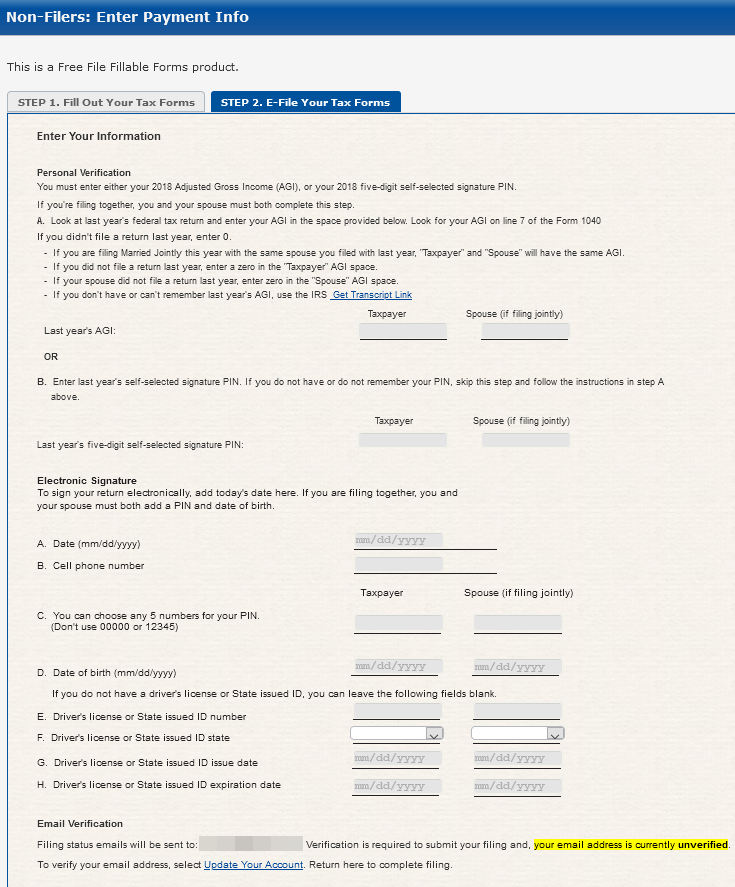
For example, Step 2 in the application process requests a number of data points under the “personal verification” heading,” and for verification purposes demands either the amount of the applicant’s Adjusted Gross Income (AGI) or last year’s “self-selected signature PIN.” The instructions say if you do not have or do not remember your PIN, skip this step and follow the instructions in step A above.

More importantly, it appears one doesn’t really need to supply one’s AGI in 2018. “If you didn’t file a return last year, enter 0,” the site explains.

Step 2 in the application for non-filers.

In the “electronic signature,” section at the end of the filing, applicants are asked to provide a cell phone number, to choose a PIN, and provide their date of birth. To check the filer’s identity, the site asks for a state-issued driver’s license ID number, and the ID’s issuance and expiration dates. However, the instructions say “if you don’t have a driver’s license or state issued ID, you can leave the following fields blank.

Alas, much may depend on how good the IRS is at spotting phony applications, and whether the IRS has access to and bothers to check state driver’s license records. But given the enormous pressure the agency is under to disburse these payments as rapidly as possible, it seems likely that at least some Americans will get scammed out of their stimulus payments.

The site built to collect payment data from non-filers is a slight variation on the “Free File Fillable Forms” product, which is a free tax filing service maintained by Intuit — a private company that also processes a huge percentage of tax returns each year through its paid TurboTax platform. According to a recent report from the Treasury Inspector General for Tax Administration, more than 14 million Americans paid for tax preparation services in 2019 when they could have filed them for free using the free-file site.

In any case, perhaps Intuit can help the IRS identify fraudulent applications sent through the non-filers site (such as by flagging users who attempt to file multiple applications from the same Internet address, browser or computer).

There is another potential fraud storm brewing with these stimulus payments. An app is set to be released sometime next week called “Get My Payment,” which is designed to be a tool for people who filed tax returns in 2018 and 2019 but who need to update their bank account information, or for those who did not provide direct deposit information in previous years’ returns.

It’s yet not clear how that app will handle verifying the identity of applicants, but KrebsOnSecurity will be taking a look at the Get My Payment app when it launches later this month (the IRS says it should be available in “mid-April”).

source https://krebsonsecurity.com/2020/04/new-irs-site-could-make-it-easy-for-thieves-to-intercept-some-stimulus-payments/

Microsoft Buys Corp.com So Bad Guys Can’t

In February, KrebsOnSecurity told the story of a private citizen auctioning off the dangerous domain corp.com for the starting price of $1.7 million. Domain experts called corp.com dangerous because years of testing showed whoever wields it would have access to an unending stream of passwords, email and other sensitive data from hundreds of thousands of Microsoft Windows PCs at major companies around the globe. This week, Microsoft Corp. agreed to buy the domain in a bid to keep it out of the hands of those who might abuse its awesome power.

Wisconsin native Mike O’Connor, who bought corp.com 26 years ago but has done very little with it since, said he hoped Microsoft would buy it because hundreds of thousands of confused Windows PCs are constantly trying to share sensitive data with corp.com. Also, early versions of Windows actually encouraged the adoption of insecure settings that made it more likely Windows computers might try to share sensitive data with corp.com.

From February’s piece:

At issue is a problem known as “namespace collision,” a situation where domain names intended to be used exclusively on an internal company network end up overlapping with domains that can resolve normally on the open Internet.

Windows computers on an internal corporate network validate other things on that network using a Microsoft innovation called Active Directory, which is the umbrella term for a broad range of identity-related services in Windows environments. A core part of the way these things find each other involves a Windows feature called “DNS name devolution,” which is a kind of network shorthand that makes it easier to find other computers or servers without having to specify a full, legitimate domain name for those resources.

For instance, if a company runs an internal network with the name internalnetwork.example.com, and an employee on that network wishes to access a shared drive called “drive1,” there’s no need to type “drive1.internalnetwork.example.com” into Windows Explorer; typing “\\drive1\” alone will suffice, and Windows takes care of the rest.

But things can get far trickier with an internal Windows domain that does not map back to a second-level domain the organization actually owns and controls. And unfortunately, in early versions of Windows that supported Active Directory — Windows 2000 Server, for example — the default or example Active Directory path was given as “corp,” and many companies apparently adopted this setting without modifying it to include a domain they controlled.

Compounding things further, some companies then went on to build (and/or assimilate) vast networks of networks on top of this erroneous setting.

Now, none of this was much of a security concern back in the day when it was impractical for employees to lug their bulky desktop computers and monitors outside of the corporate network. But what happens when an employee working at a company with an Active Directory network path called “corp” takes a company laptop to the local Starbucks?

Chances are good that at least some resources on the employee’s laptop will still try to access that internal “corp” domain. And because of the way DNS name devolution works on Windows, that company laptop online via the Starbucks wireless connection is likely to then seek those same resources at “corp.com.”

In practical terms, this means that whoever controls corp.com can passively intercept private communications from hundreds of thousands of computers that end up being taken outside of a corporate environment which uses this “corp” designation for its Active Directory domain.

The story went on to describe how years of testing — some of which was subsidized by grants from the U.S. Department of Homeland Security — showed hundreds of thousands of Windows computers were constantly trying to send this domain information it had no business receiving, including attempts to log in to internal corporate networks and access specific file shares on those networks.

O’Connor told me he was selling the domain after doing basically nothing with it for 26 years because he was getting on in years and didn’t want his kids to inherit this mess. When he put the domain up for sale, I asked if he’d agree to let me know if and when he sold it.

On Monday evening, he wrote to say that Microsoft had agreed to purchase it. O’Connor said he could  not discuss the terms of the deal, nor could he offer further comment beyond acknowledging the sale of corp.com to Microsoft.

In a written statement, Microsoft said it acquired the domain to protect its customers.

“To help in keeping systems protected we encourage customers to practice safe security habits when planning for internal domain and network names,” the statement reads. “We released a security advisory in June of 2009 and a security update that helps keep customers safe. In our ongoing commitment to customer security, we also acquired the Corp.com domain.”

Over the years, Microsoft has shipped several software updates to help decrease the likelihood of namespace collisions that could create a security problem for companies that still rely on Active Directory domains that do not map to a domain they control.

However, experts say hardly any vulnerable organizations have deployed these fixes for two reasons. First, doing so requires the organization to take down its entire Active Directory network simultaneously for some period of time.

Second, according to Microsoft applying the patch(es) will likely break or at least slow down a number of applications that the affected organization relies upon for day-to-day operations. Faced with either or both of these scenarios, most affected companies probably decided the actual risk of not applying these updates was comparatively low.

It should be noted that while Microsoft’s purchase of corp.com will safeguard companies that built Active Directory infrastructures on top of “corp” or “corp.com,” any company that has tied their internal Active Directory network to a domain they do not control is opening itself to a similar potential security nightmare.

Further reading:

Mitigating the Risk of DNS Namespace Collisions (PDF)

DEFCON 21 – DNS May Be Hazardous to your Health (Robert Stucke)

Mitigating the Risk of Name Collision-Based Man-in-the-Middle Attacks (PDF)

source https://krebsonsecurity.com/2020/04/microsoft-buys-corp-com-so-bad-guys-cant/

‘War Dialing’ Tool Exposes Zoom’s Password Problems

As the Coronavirus pandemic continues to force people to work from home, countless companies are now holding daily meetings using videoconferencing services from Zoom. But without the protection of a password, there’s a decent chance your next Zoom meeting could be “Zoom bombed” — attended or disrupted by someone who doesn’t belong. And according to data gathered by a new automated Zoom meeting discovery tool dubbed “zWarDial,” a crazy number of meetings at major corporations are not being protected by a password.

zWarDial, an automated tool for finding non-password protected Zoom meetings. According to its makers, zWarDial can find on average 110 meetings per hour, and has a success rate of around 14 percent.

Each Zoom conference call is assigned a Meeting ID that consists of 9 to 11 digits. Naturally, hackers have figured out they can simply guess or automate the guessing of random IDs within that space of digits.

Security experts at Check Point Research did exactly that last summer, and found they were able to predict approximately four percent of randomly generated Meeting IDs. The Check Point researchers said enabling passwords on each meeting was the only thing that prevented them from randomly finding a meeting.

Zoom responded by saying it was enabling passwords by default in all future scheduled meetings. Zoom also said it would block repeated attempts to scan for meeting IDs, and that it would no longer automatically indicate if a meeting ID was valid or invalid.

Nevertheless, the incidence of Zoombombing has skyrocketed over the past few weeks, even prompting an alert by the FBI on how to secure meetings against eavesdroppers and mischief-makers. This suggests that many Zoom users have disabled passwords by default and/or that Zoom’s new security feature simply isn’t working as intended for all users.

New data and acknowledgments by Zoom itself suggest the latter may be more likely.

Earlier this week, KrebsOnSecurity heard from Trent Lo, a security professional who founded SecKC, Kansas City’s longest-running monthly security meetup. Lo and fellow SecKC members recently created zWarDial, which borrows part of its name from the old phone-based war dialing programs that called random or sequential numbers in a given telephone number prefix to search for computer modems.

Lo said zWarDial evades Zoom’s attempts to block automated meeting scans by routing the searches through multiple proxies in Tor, a free and open-source software that lets users browse the Web anonymously.

“Zoom recently said they fixed this but I’m using a totally different URL and passing a cookie along with that URL,” Lo said, describing part of how his tool works on the back end. “This gives me the [Zoom meeting] room information without having to log in.”

Lo said a single instance of zWarDial can find approximately 100 meetings per hour, but that multiple instances of the tool running in parallel could probably discover most of the open Zoom meetings on any given day. Each instance, he said, has a success rate of approximately 14 percent, meaning for each random meeting number it tries, the program has a 14 percent chance of finding an open meeting.

Only meetings that are protected by a password are undetectable by zWarDial, Lo said.

“Having a password enabled on the meeting is the only thing that defeats it,” he said.

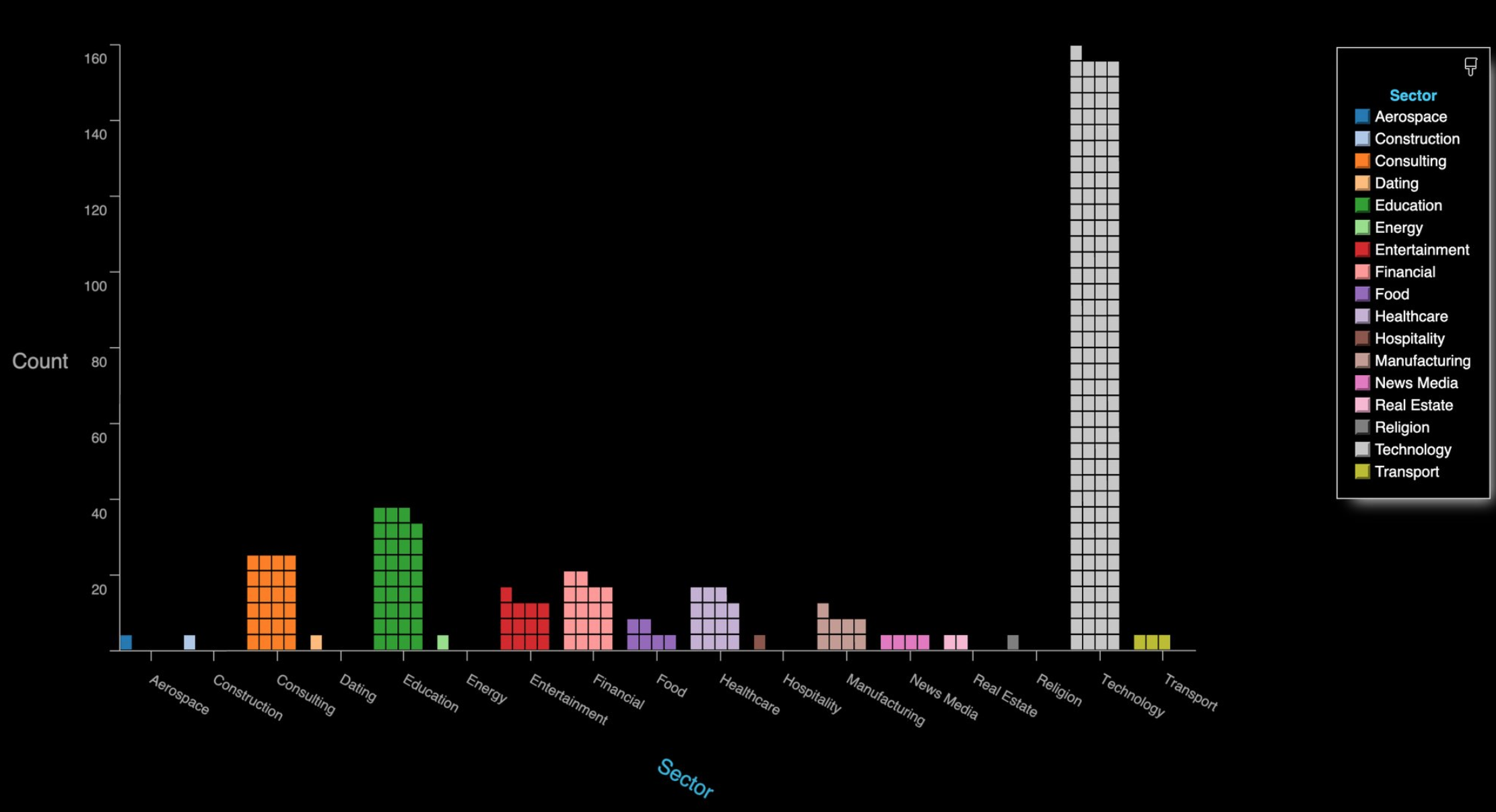
Lo shared the output of one day’s worth of zWarDial scanning, which revealed information about nearly 2,400 upcoming or recurring Zoom meetings. That information included the link needed to join each meeting; the date and time of the meeting; the name of the meeting organizer; and any information supplied by the meeting organizer about the topic of the meeting.

The results were staggering, and revealed details about Zoom meetings scheduled by some of the world’s largest companies, including major banks, international consulting firms, ride-hailing services, government contractors, and investment ratings firms.

KrebsOnSecurity is not naming the companies involved, but was able to verify dozens of them by matching the name of the meeting organizer with corporate profiles on LinkedIn.

By far the largest group of companies exposing their Zoom meetings are in the technology sector, and include a number of security and cloud technology vendors. These include at least one tech company that’s taken to social media warning people about the need to password protect Zoom meetings!

The distribution of Zoom meetings found by zWarDial, indexed by industry. As depicted above, zWarDial found roughly 2,400 exposed meetings in less than 24 hours. Image: SecKC.

A GREMLIN IN THE DEFAULTS?

Given the preponderance of Zoom meetings exposed by security and technology companies that ostensibly should know better, KrebsOnSecurity asked Zoom whether its approach of adding passwords by default to all new meetings was actually working as intended.

In reply, Zoom said it was investigating the possibility that its password-by-default approach may fail under certain circumstances.

“Zoom strongly encourages users to implement passwords for all of their meetings to ensure uninvited users are not able to join,” the company said in a written statement shared with this author.

“Passwords for new meetings have been enabled by default since late last year, unless account owners or admins opted out,” the statement continues. “We are looking into unique edge cases to determine whether, under certain circumstances, users unaffiliated with an account owner or administrator may not have had passwords switched on by default at the time that change was made.

The acknowledgment comes amid a series of security and privacy stumbles for Zoom, which has seen its user base grow exponentially in recent weeks. Zoom founder and chief executive Eric Yuan said in a recent blog post that the maximum number of daily meeting participants — both paid and free — has grown from around 10 million in December to 200 million in March.

That rapid growth has also brought additional scrutiny from security and privacy experts, who’ve found plenty of real and potential problems with the service of late. TechCrunch’s Zack Whittaker has a fairly comprehensive breakdown of them here; not included in that list is a story he broke earlier this week on a pair of zero-day vulnerabilities in Zoom that were publicly detailed by a former NASA expert.

Zoom CEO Yuan acknowledged that his company has struggled to keep up with steeply growing demand for its service and with the additional scrutiny that comes with it, saying in a blog post that for the next 90 days all new feature development was being frozen so the company’s engineers could focus on security issues.

Dave Kennedy, a security expert and founder of the security consultancy TrustedSec, penned a lengthy thread on Twitter saying while Zoom certainly has had its share of security and privacy goofs, some in the security community are unnecessarily exacerbating an already tough situation for Zoom and its tens of millions of users who rely on it for day-to-day meetings.

“What we have here is a company that is relatively easy to use for the masses (comes with its challenges on personal meeting IDs) and is relatively secure,” Kennedy wrote. “Yet the industry is making it out to be ‘this is malware’ and you can’t use this. This is extreme. We need to look at the risk specific applications pose and help voice a message of how people can leverage technology and be safe. Dropping zero-days to the media hurts our credibility, sensationalizes fear, and hurts others.”

“If there are ways for a company to improve, we should notify them and if they don’t fix their issues, we should call them out,” he continued. “We should not be putting fear into everyone, and leveraging the media as a method to create that fear.”

Zoom’s advice on securing meetings is here. SecKC’s Lo said organizations using Zoom should avoid posting the Zoom meeting links on social media, and always require a meeting password when possible.

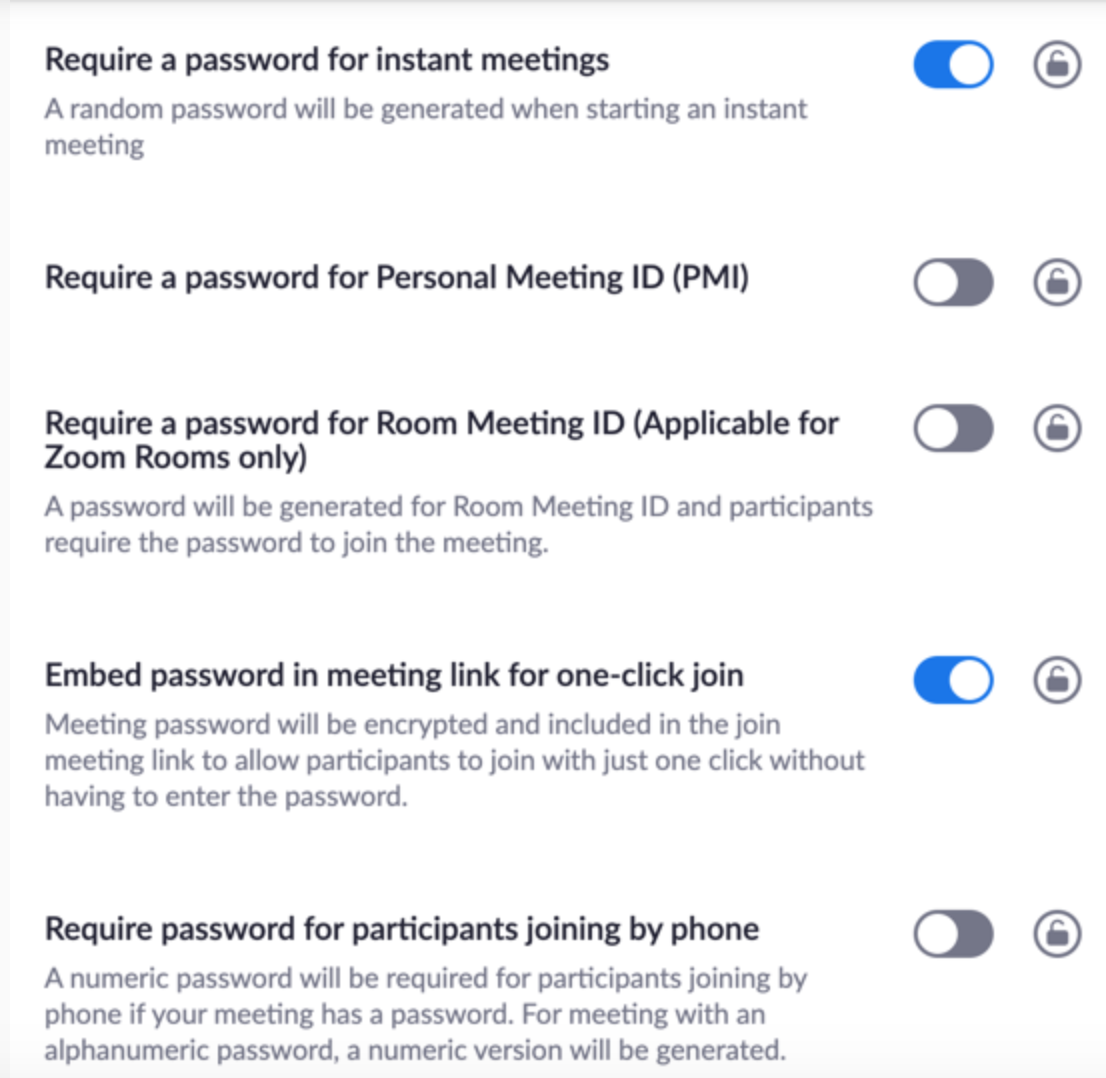
“This should be enabled by default as a new customer or a trial user,” he said. “Legacy organizations will need to check their administration settings to make sure this is enabled. You can also enable ‘Embed password in meeting link for one-click join.’ This prevents an actor from accessing your meeting without losing the usability of sharing a link to join.”

In addition, Zoom users can disable “Allow participants to join the meeting before the host arrives.”

“If you have to have this feature enabled at least enable “notify host when participants join the meeting before them,” Lo advised. “This will notify you that someone might be using your meeting without your knowledge. If you must keep your meeting unprotected you should enable ‘Mask phone number in the participant list.’ Using the waiting list feature will prevent unwanted participants from accessing your meeting but it will still expose your meeting details if used without a password.”

Some of the security settings available to Zoom users. These and others can be found at https://ift.tt/3bHBBZp

source https://krebsonsecurity.com/2020/04/war-dialing-tool-exposes-zooms-password-problems/

Phish of GoDaddy Employee Jeopardized Escrow.com, Among Others

A spear-phishing attack this week hooked a customer service employee at GoDaddy.com, the world’s largest domain name registrar, KrebsOnSecurity has learned. The incident gave the phisher the ability to view and modify key customer records, access that was used to change domain settings for a half-dozen GoDaddy customers, including transaction brokering site escrow.com.

Escrow.com helps people safely broker all sorts of transactions online (ironically enough, brokering domain sales is a big part of its business). For about two hours starting around 5 p.m. PT Monday evening, Escrow.com’s website looked radically different: Its homepage was replaced with a crude message in plain text:

The profanity-laced message left behind by whoever briefly hijacked the DNS records for escrow.com. Image: Escrow.com

DomainInvesting.com’s Elliot Silver picked up on the change and got a statement from Matt Barrie, the CEO of freelancer.com, which owns escrow.com.

“During the incident, the hackers changed the DNS records for Escrow.com to point to to a third party web server,” Barre wrote, noting that his security team managed to talk to the hacker responsible for the hijack via telephone.

Barrie said escrow.com would be sharing more details about the incident in the coming days, but he emphasized that no escrow.com systems were compromised, and no customer data, funds or domains were compromised.

KrebsOnSecurity reached out to Barrie and escrow.com with some follow-up questions, and immediately after that pinged Chris Ueland, CEO of SecurityTrails, a company that helps customers keep track of their digital assets.

Ueland said after hearing about the escrow.com hack Monday evening he pulled the domain name system (DNS) records for escrow.com and saw they were pointing to an Internet address in Malaysia — 111.90.149[.]49 (that domain is hobbled here because it is currently flagged as hosting a phishing site). The attacker also obtained free encryption certificates for escrow.com from Let’s Encrypt.

Running a reverse DNS lookup on this 111.90.149[.]49 address shows it is tied to fewer than a dozen domains, including a 12-day-old domain that invokes the name of escrow.com’s registrar — servicenow-godaddy[.]com. Sure enough, loading that domain in a browser reveals the same text that appeared Monday night on escrow.com, minus the redaction above.

The message at servicenow-godaddy[.]com was identical to the one displayed by escrow.com while the site’s DNS records were hacked.

It was starting to look like someone had gotten phished. Then I heard back from Matt Barrie, who said it wasn’t anyone at escrow.com that got phished. Barrie said the hacker was able to read messages and notes left on escrow.com’s account at GoDaddy that only GoDaddy employees should have been able to see.

Barrie said one of those notes stated that certain key changes for escrow.com could only be made after calling a specific phone number and receiving verbal authorization. As it happened, the attacker went ahead and called that number, evidently assuming he was calling someone at GoDaddy.

In fact, the name and number belonged to escrow.com’s general manager, who played along for more than an hour talking to the attacker while recording the call and coaxing information out of him.

“This guy had access to the notes, and knew the number to call,” to make changes to the account, Barrie said. “He was literally reading off the tickets to the notes of the admin panel inside GoDaddy.”

A WHOIS lookup on escrow.com Monday evening via the Windows PowerShell built into Windows 10. Image: SecurityTrails

In a statement shared with KrebsOnSecurity, GoDaddy acknowledged that on March 30 the company was alerted to a security incident involving a customer’s domain name. An investigation revealed a GoDaddy employee had fallen victim to a spear-phishing attack, and that five other customer accounts were “potentially” affected — although GoDaddy wouldn’t say which or how many domains those customer accounts may have with GoDaddy.

“Our team investigated and found an internal employee account triggered the change,” the statement reads. “We conducted a thorough audit on that employee account and confirmed there were five other customer accounts potentially impacted.”

The statement continues:

“We immediately locked down the impacted accounts involved in this incident to prevent further changes. Any actions done by the threat actor have been reverted and the impacted customers have been notified. The employee involved in this incident fell victim to a spear-fishing or social engineering attack. We have taken steps across our technology, processes and employee education, to help prevent these types of attacks in the future.”

There are many things domain owners can and should do to minimize the chances that domain thieves can wrest control over a business-critical domain, but much of that matters little if and when someone at your domain name registrar gets phished or hacked.

But increasingly, savvy attackers are focusing their attention on targeting people at domain registrars, and at their support personnel. In January, KrebsOnSecurity told the harrowing story of e-hawk.net, an online fraud prevention and scoring service that had its domain name fraudulently transferred to another provider after someone social engineered a customer service representative at e-hawk’s registrar.

Nation-state level attackers also are taking a similar approach. A massive cyber espionage campaign targeting a slew of domains for government agencies across the Middle East region between 2018 and 2019 was preceded by a series of targeted attacks on domain registrars and Internet infrastructure firms that served those countries.

While there is very little you can do to prevent your domain registrar from getting phished or tricked by scammers, there are several precautions that you can control. For maximum security on your domains, consider adopting some or all of the following best practices:

-Use 2-factor authentication, and require it to be used by all relevant users and subcontractors.

-In cases where passwords are used, pick unique passwords and consider password managers.

-Review the security of existing accounts with registrars and other providers, and make sure you have multiple notifications in place when and if a domain you own is about to expire.

-Use registration features like Registry Lock that can help protect domain name records from being changed. Note that this may increase the amount of time it takes going forward to make key changes to the locked domain (such as DNS changes).

-Use DNSSEC (both signing zones and validating responses).

-Use access control lists for applications, Internet traffic and monitoring.

-Monitor the issuance of new SSL certificates for your domains by monitoring, for example, Certificate Transparency Logs.

source https://krebsonsecurity.com/2020/03/phish-of-godaddy-employee-jeopardized-escrow-com-among-others/

Annual Protest to ‘Fight Krebs’ Raises €150K+

In 2018, KrebsOnSecurity unmasked the creators of Coinhive — a now-defunct cryptocurrency mining service that was being massively abused by cybercriminals — as the administrators of a popular German language image-hosting forum. In protest of that story, forum members donated hundreds of thousands of euros to nonprofits that combat cancer (Krebs means “cancer” in German). This week, the forum is celebrating its third annual observance of that protest to “fight Krebs,” albeit with a Coronavirus twist.

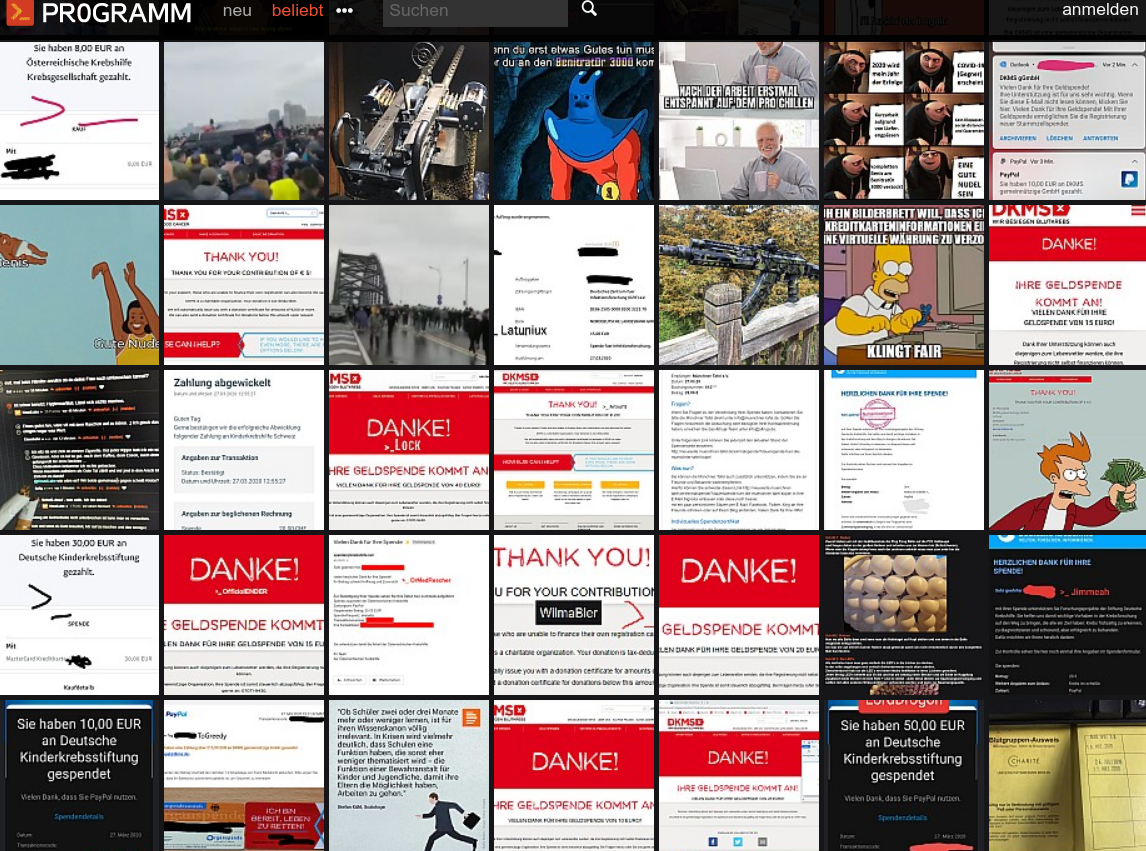
Images posted to the decidedly not-safe-for-work German-language image forum pr0gramm[.]com. Members have posted a large number of ‘thank you’ receipts from cancer research organizations that benefited from their fight cancer/krebs campaign.

On March 26, 2018, KrebsOnSecurity published Who and What is Coinhive, which showed the founder of Coinhive was the co-creator of the German forum pr0gramm[dot]com (not safe for work).  I undertook the research because Coinhive’s code at the time was found on tens of thousands of hacked Web sites, and Coinhive seemed uninterested in curbing widespread abuse of its platform.

Pr0gramm’s top members accused KrebsOnSecurity of violating their privacy, even though all of the research published about them was publicly available online. In protest, the forum’s leaders urged members to donate money to medical research in a bid to find a cure for Krebs (i.e. “cancer”). They ended up raising more than a quarter-million dollars worth of donations from members.

Last year’s commemoration of the protest fundraiser — dubbed “Krebsaction” by Pr0gramm — raised almost $300,000 for anti-cancer research groups. Interestingly, Coinhive announced it was shutting down around the same time as that second annual fundraiser.

This year’s Krebsaction started roughly three days ago and so far has raised more than 150,000 euros (~$165,000), with many Pr0gramm members posting screenshots of their online donations. The primary beneficiary appears to be DKMS, a German nonprofit that works to combat various blood cancers, such as leukemia and lymphoma.

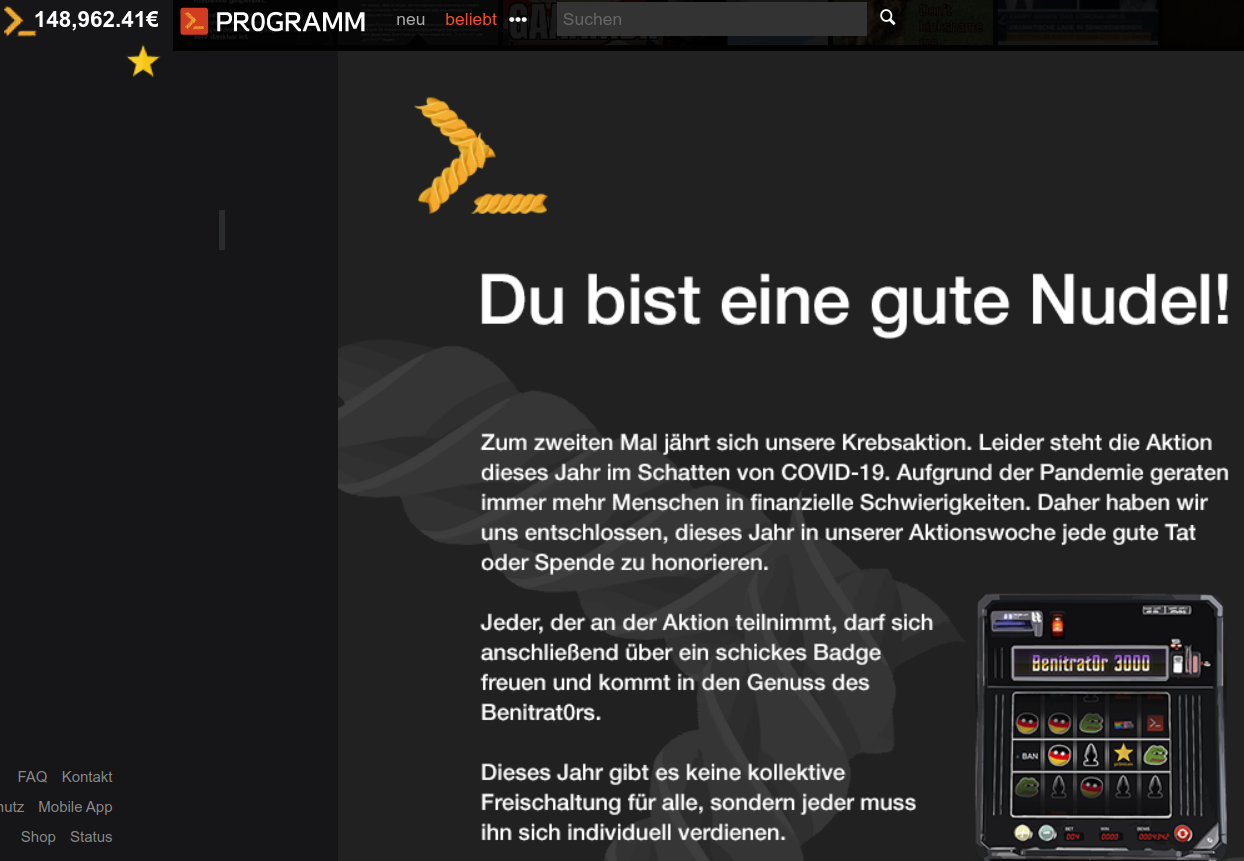
The pr0gramm post kicking off this year’s “Krebsaction” fundraiser.

This year, however, Pr0gramm’s administrators exhorted forum members to go beyond just merely donating money to a worthy cause, and encouraged them to do something to help those most affected by the COVID-19/Coronavirus pandemic.

“This year pr0gramm-members shall not only donate but do a good act in terms of corona (and prove it), for example bring food to old people, bring proof of volunteering and such stuff,” reads the Pr0gramm image kicking off this year’s Krebsaction.  The message further states, “Posts mit geringem Einsatz können wir nicht akzeptieren,” which translates roughly to “Posts with little effort we cannot accept.”

source https://krebsonsecurity.com/2020/03/annual-protest-to-fight-krebs-raises-e150k/

Russians Shut Down Huge Card Fraud Ring

Federal investigators in Russia have charged at least 25 people accused of operating a sprawling international credit card theft ring. Cybersecurity experts say the raid included the charging of a major carding kingpin thought to be tied to dozens of carding shops and to some of the bigger data breaches targeting western retailers over the past decade.

In a statement released this week, the Russian Federal Security Service (FSB) said 25 individuals were charged with circulating illegal means of payment in connection with some 90 websites that sold stolen credit card data.

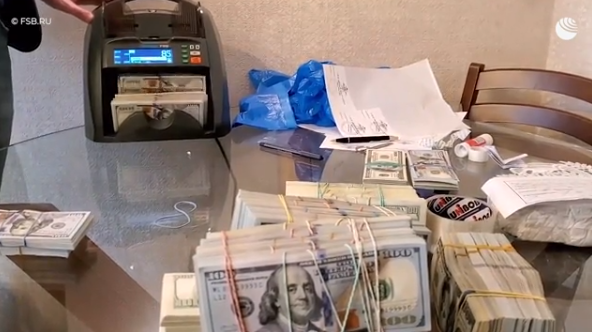
A still image from a video of the raids released by the Russian FSB this week shows stacks of hundred dollar bills and cash counting machines seized at a residence of one of the accused.

The FSB has not released a list of those apprehended, but the agency’s statement came several days after details of the raids were first leaked on the LiveJournal blog of cybersecurity blogger Andrey Sporov. The post claimed that among those apprehended was the infamous cybercriminal Alexey Stroganov, who goes by the hacker names “Flint” and “Flint24.”

According to cyber intelligence firm Intel471, Stroganov has been a long-standing member of major underground forums since at least 2001. In 2006, Stroganov and an associate Gerasim Silivanon (a.k.a. “Gabrik“) were sentenced to six years of confinement in Russia, but were set free just two years into their sentence. Intel471 says Selivanon also was charged along with Stroganov in this past week’s law enforcement action.

“Our continuous monitoring of underground activity revealed despite the conviction, Flint24 never left the cybercrime scene,” reads an analysis penned by Intel471.

“You can draw your own conclusions [about why he was released early],” Sporaw wrote, suggesting that perhaps the accused bribed someone to get out of jail before his sentence was up.

Flint is among the biggest players in the crowded underground market for stolen credit card data, according to a U.S. law enforcement source who asked to remain anonymous because he was not authorized to speak to the media. The source described Flint’s role as that of a wholesaler of credit card data stolen in some of the biggest breaches at major Western retailers.

“He moved hundreds of millions of dollars through BTC-e,” the source said, referring to a cryptocurrency exchange that was seized by U.S. authorities in 2017. “Flint had a piece of almost every major hack because in many cases it was his guys doing it. Whether or not his marketplaces sold it, his crew had a role in a lot of the big breaches over the last ten years.”

Intel471’s analysis seemed to support that conclusion, noting that Flint worked closely with other major carding shops that were not his, and that he associated with a number of cybercrooks who regularly bought stolen credit cards in batches of 100,000 pieces at once.

Top denizens of several cybercrime forums who’ve been tracking the raids posited that Stroganov and others were busted because they had a habit of violating the golden rule for criminal hackers residing in Russia or in a former Soviet country: Don’t target your own country’s people and/or banks.

A longtime moderator of perhaps the cybercrime underground’s most venerated Russian hacking forum posted a list of more than 40 carding sites thought to be tied to the group’s operations that are no longer online. Among them is MrWhite[.]biz, a carding site whose slick video ads were profiled in a KrebsOnSecurity post last year.

A snippet from a promotional video from the carding/dumps shop MrWhite.

KNOW YOUR FRAUDSTER

Nearly all of the carding sites allegedly tied to this law enforcement action — including those with such catchy names as BingoDumps, DumpsKindgom, GoldenDumps, HoneyMoney and HustleBank — were united by a common innovation designed to win loyalty among cybercriminals who buy stolen cards or “dumps” in bulk: Namely, a system that allowed buyers to get instant refunds on “bad” stolen cards without having to first prove that the cards were canceled by the issuing bank before they could be used for fraud.

Most carding sites will offer customers a form of buyer’s insurance known a “checker,” which is an automated, à la carte service customers can use after purchasing cards to validate whether the cards they just bought are still active.

These checking services are tied to “moneyback” guarantees that will automatically refund the purchase price for any cards found to be invalid shortly after the cards are bought (usually a window of a few minutes up to a few hours), provided the buyer agrees to pay an added fee of a few cents per card to use the shop’s own checking service.

But many cybercrooks have long suspected some checkers at the more popular carding sites routinely give inaccurate results that favor the card shop (i.e., intentionally flagging some percentage of inactive cards as valid). So, the innovation that Flint’s gang came up with was a policy called “Trust Your Client” or “TYC,” which appears to be a sly dig on the banking industry’s “know your customer” or KYC rules to help fight fraud and money laundering.

With TYC, if a customer claimed a card they bought was declined for fraudulent transaction attempts made within six hours of purchase, the carding shop would refund the price of that card — no questions asked. However, it seems likely these shops that observed TYC ran their own checkers on the back-end to protect themselves against dishonest customers.

An ad for the “Trust Your Client” or TYC policy observed by virtually all of the carding shops taken down in this past week’s Russian law enforcement operation.

Want to learn more about how carding shops work and all the lingo that comes with them? Check out my behind-the-scenes profile of one major fraud store — Peek Inside a Professional Carding Shop.

source https://krebsonsecurity.com/2020/03/russians-shut-down-huge-card-fraud-ring/

US Government Sites Give Bad Security Advice

Many U.S. government Web sites now carry a message prominently at the top of their home pages meant to help visitors better distinguish between official U.S. government properties and phishing pages. Unfortunately, part of that message is misleading and may help perpetuate a popular misunderstanding about Web site security and trust that phishers have been exploiting for years now.

For example, the official U.S. Census Bureau website https://my2020census.gov carries a message that reads, “An official Web site of the United States government. Here’s how you know.” Clicking the last part of that statement brings up a panel with the following information:

A message displayed at the top of many U.S. .gov Web sites.

The text I have a beef with is the bit on the right, beneath the “This site is secure” statement. Specifically, it says, “The https:// ensures that you are connecting to the official website….”

Here’s the deal: The https:// part of an address (also called “Secure Sockets Layer” or SSL) merely signifies the data being transmitted back and forth between your browser and the site is encrypted and cannot be read by third parties.

However, the presence of “https://” or a padlock in the browser address bar does not mean the site is legitimate, nor is it any proof the site has been security-hardened against intrusion from hackers.

In other words, while readers should never transmit sensitive information to a site that does not use https://, the presence of this security feature tells you nothing about the trustworthiness of the site in question.

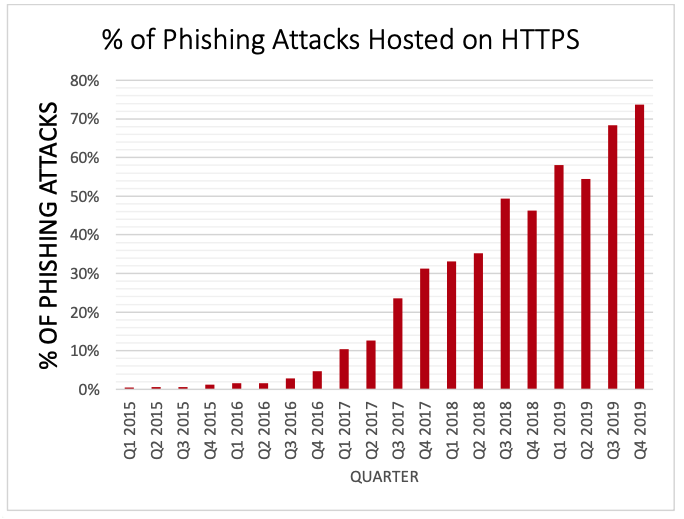
Here’s a sobering statistic: According to PhishLabs, by the end of 2019 roughly three-quarters (74 percent) of all phishing sites were using SSL certificates. PhishLabs found this percentage increased from 68% in Q3 and 54% in Q2 of 2019.

“Attackers are using free certificates on phishing sites that they create, and are abusing the encryption already installed on hacked web sites,” PhishLabs founder and CTO John LaCour said.

Image: PhishLabs.com

The truth is anyone can get an SSL certificate for free, and that’s a big reason why most phishing sites now have them. The other reason is that they help phishers better disguise their sites as legitimate, since many Web browsers now throw up security warnings on non-https:// sites.

KrebsOnSecurity couldn’t find any reliable information on how difficult it may be to obtain an SSL certificate for a .gov site once one has a .gov domain, but it is apparently not difficult for just about anyone to get their very own .gov domain name.

The U.S. General Services Administration (GSA), which oversees the issuance of .gov domains, recently made it a tiny bit more difficult to do so — by requiring all applications be notarized — but this seems a small hurdle for scam artists to clear.

Regardless, it seems the federal government is doing consumers a disservice with this messaging, by perpetuating the myth that the presence of “https://” in a link denotes any kind of legitimacy.

“‘Https’ does not mean that you are at the correct website or that the site is secure,” LaCour said. “It only indicates that the connection is encrypted. The server could still be misconfigured or have software vulnerabilities. It is good that they mention to look for ‘.gov’. There’s no guarantee that a .gov website is secure, but it should help ensure that visitors are on the right website.”

I should note that this misleading message seems to be present only on some federal government Web sites. For instance, while the sites for the GSA, the Department of Labor, Department of Transportation, and Department of Veterans Affairs all include the same wording, those for the Commerce Department and Justice Department are devoid of the misleading text, stating:

“This site is also protected by an SSL (Secure Sockets Layer) certificate that’s been signed by the U.S. government. The https:// means all transmitted data is encrypted — in other words, any information or browsing history that you provide is transmitted securely.”

Other federal sites — like dhs.gov, irs.gov and epa.gov — simply have the “An official website of the United States government” declaration at the top, without offering any tips about how to feel better about that statement.

source https://krebsonsecurity.com/2020/03/us-government-sites-give-bad-security-advice/

Who’s Behind the ‘Web Listings’ Mail Scam?

In December 2018, KrebsOnSecurity looked at how dozens of U.S. political campaigns, cities and towns had paid a shady company called Web Listings Inc. after receiving what looked like a bill for search engine optimization (SEO) services rendered on behalf of their domain names. The story concluded that this dubious service had been scamming people and companies for more than a decade, and promised a Part II to explore who was behind Web Listings. What follows are some clues that point to a very convincing answer to that question.

Since at least 2007, Web Listings Inc. has been sending snail mail letters to domain registrants around the world. The missives appear to be an $85 bill for an “annual search engine listing” service. The notice does disclose that it is in fact a solicitation and not a bill, but wording of the notice asserts the recipient has already received the services in question.
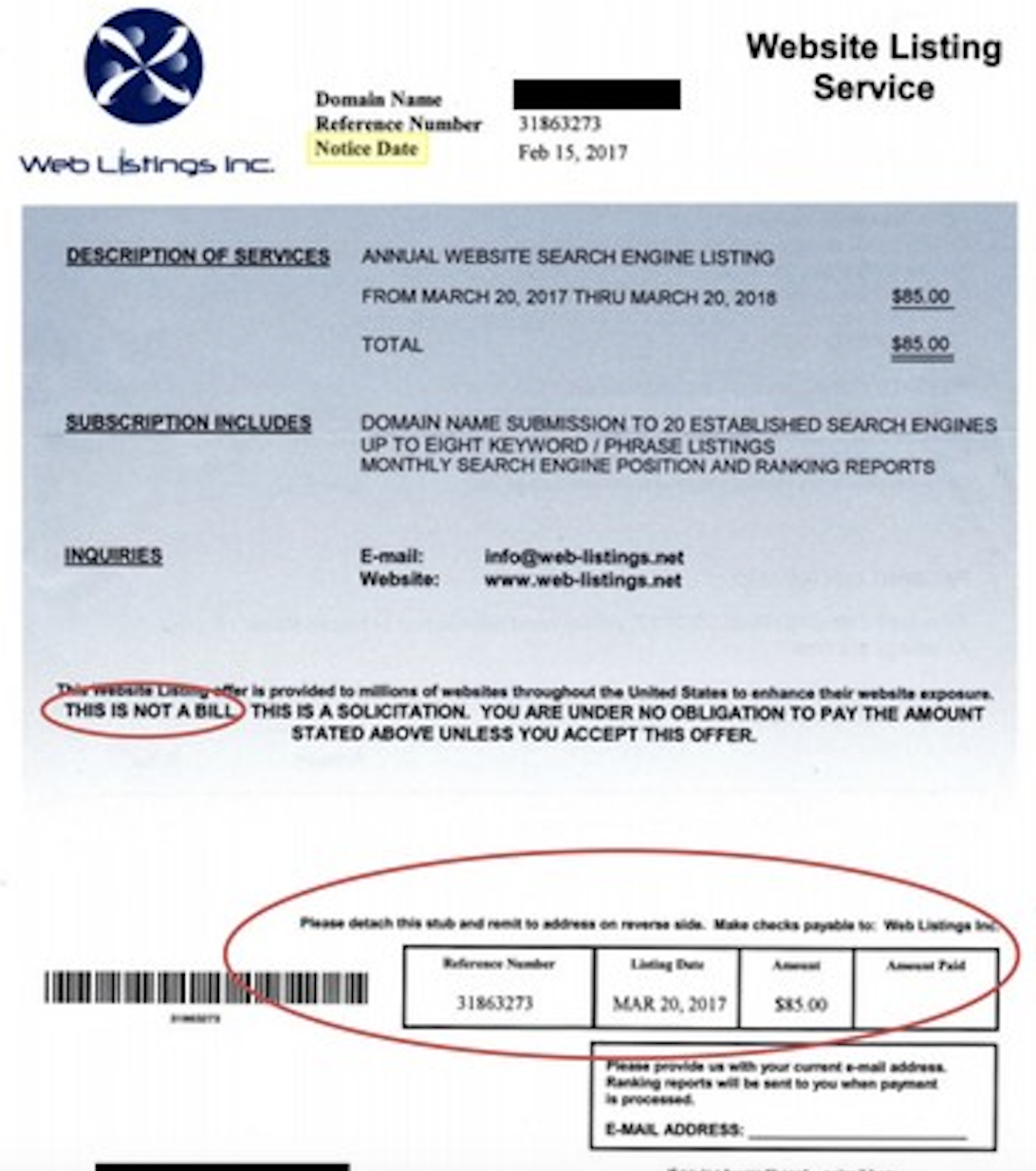
Image: Better Business Bureau.

The mailer references the domain name web-listings.net, one of several similarly-named domains registered sometime in 2007 or later to a “James Madison,” who lists his address variously as a university in New Britain, Connecticut or a UPS Store mailbox in Niagara Falls, New York.

Some others include: weblistingservices.com, webservicescorp.net, websiteservicescorp.com, web-listingsinc.com, weblistingsinc.net, and weblistingsreports.net. At some point, each of these domains changes the owner’s name from James Madison to “Mark Carter.” As we’ll see, Mark is a name that comes up quite a bit in this investigation.
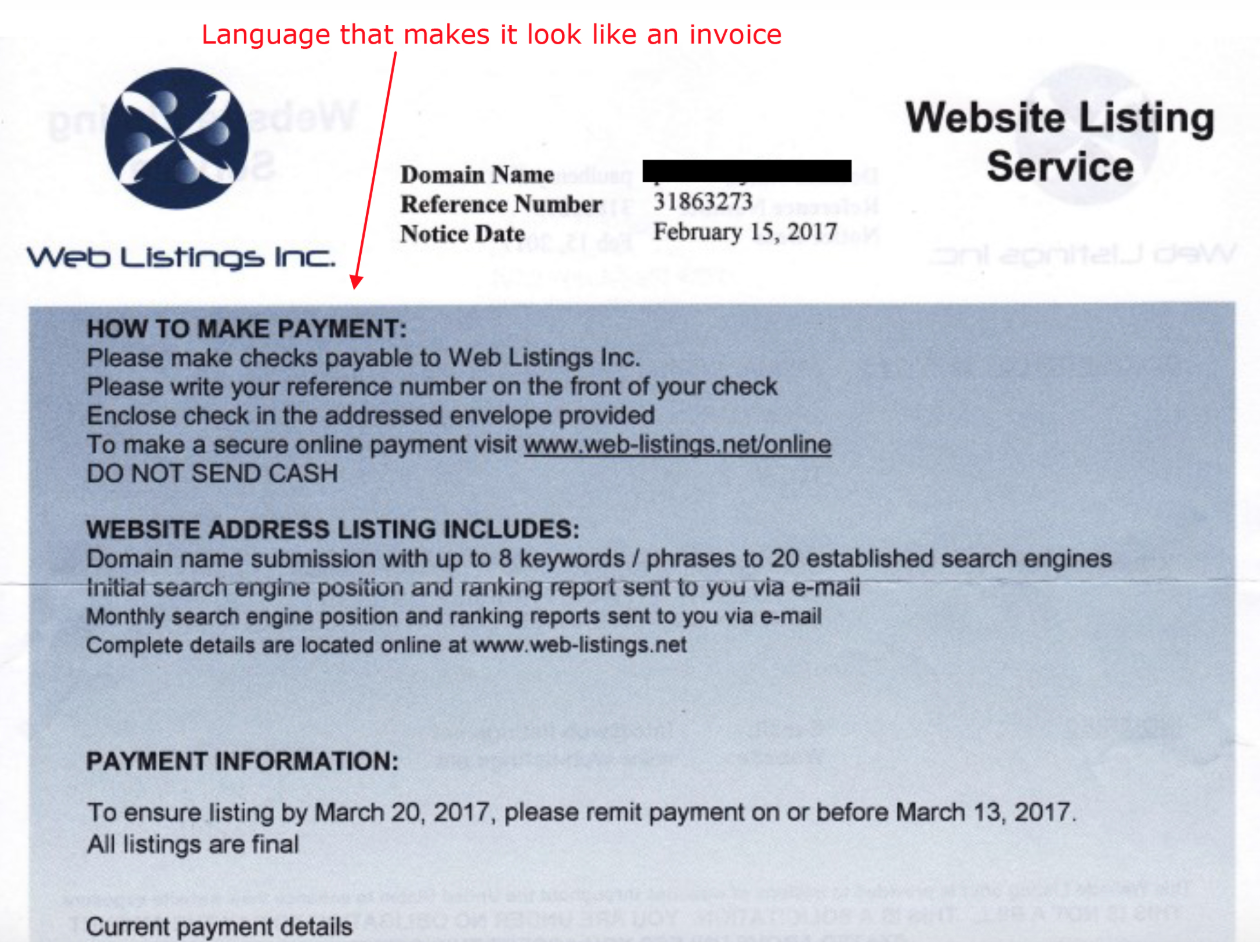
Image: Better Business Bureau.

A Twitter account for Web Listings Inc. has posts dating back to 2010, and points to even more Web Listings domains, including weblistingsinc.orgCached versions of weblistingsinc.org at archive.org show logos similar to the one featured on the Web Listings mailer, and early versions of the site reference a number of “business partners” in India that also perform SEO services.

Searching the Internet for some of these Web listing domains mentioned in the company’s Twitter account brings up a series of press releases once issued on behalf of the company. One from May 2011 at onlineprnews.com sings the praises of Weblistingsinc.info, weblistingsinc.org and web-listings.net in the same release, and lists the point of contact simply as “Mark.”

Historic WHOIS registration records from Domaintools [an advertiser on this blog] say Weblistingsinc.org was registered in Nov. 2010 to a Mark Scott in Blairgowrie, Scotland, using the email address clientnews@reputationmanagementfor.com.

Reputationmanagementfor.com bills itself as an online service for “fighting negative and incorrect content on the internet,” which is especially interesting for reasons that should become clearer in a few paragraphs. The site says Mark Scott, 46, is an employee of Reputationmanagementfor.com, and that he is also involved with two other companies:

-GoBananas, a business that sets up group outings, with a focus on bachelor and bachelorette parties;

-HelpMeGo.to, a entity in Scotland that did online marketing and travel tourism both in Scotland (via sites like Scotland.org.uk and marketinghotelsonline.co.uk) and on India’s coastal Kerala state where HelpMeGo.to employed a number of people involved in the SEO business. Helpmego.to now simply redirects to GoBananas.

According to Farsight Security, a company that keeps historic records of which Web sites were hosted at which Internet addresses, Weblistingsinc.org was for a while hosted at the IP address 68.169.45.65 with just six other domains, including travelingalberta.com, which was a blog about traveling and living in Alberta, Canada registered to Mark Scott and the email address management@helpmego.to. Cached versions of this site from 2011 show it naming Web Listings Inc. as a business partner.

That same management@helpmego.to email address is tied to the WHOIS records for markscottblog.com, gobananas.co.uk, gobananas.com. Cached copies of markscottblog.com from 2010 at Archive.org show his profile page on blogger.com links to another blog with much the same content, images and links called internetmadness.blogspot.com.

Among the 2011 entries from the Internetmadness blog is a post promoting the wonders of benefits of Web Listings Inc.
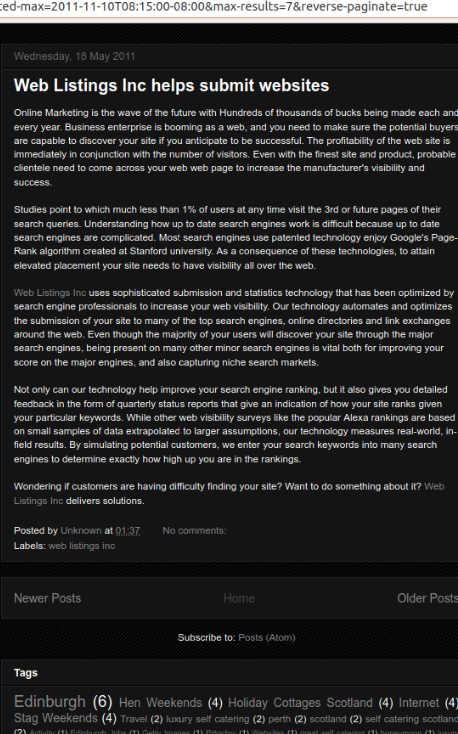
A cached copy of Mark Scott’s blog Internet Madness from 2011 promotes Web Listings Inc.

THE COBRA/APPCO GROUP

Aha! But wait, there’s more. You see, for years Weblistingsinc.org was hosted on the same servers along with a handful of other domains that all switched Internet addresses at the same times, including gobananas.com, gobananasworld.com and the IP addresses 107.20.142.166 (17 hosts), 54.85.65.241 (6 hosts).

Most of the other domains at these IPs historically have been tied to other domains connected to Mark Scott and his various companies and business partners, including chrisniarchos.net, redwoodsadvance.net, gdsinternationalus.com, staghensscotlands.com, cobra-group.blogspot.comthe-cobra-group.com, appcogroup.co.uk, and reputationmanagementfor.com.

I found a similar pattern with domains stemming from a Crunchbase company profile on Web Listings Inc., which says the firm is based in Toronto, Canada, with the Web site webtechnologiesinc.net, and email address webtechnologiesletter@gmail.com. Historic WHOIS data from Domaintools.com says Webtechnologiesinc.net was registered in 2013 to a Marcus Ruskov in Toronto.

Information about who registered Webtechnologiesletter.com is completely hidden behind privacy protection services. But Farsight says the domain was in 2015 hosted at the Internet address 54.77.128.87, along with just 70 other domains, including the same list of domains mentioned above, chrisniarchos.net, redwoodsadvance.net, gdsinternationalus.com, et cetera.

What do all of these domains have in common? They are tied to companies for which Mark Scott was listed as a key contact. For example, this press release from 2o11 says Mark Scott is the contact person for a company called Appco Group UK which bills itself as a market leader in face-to-face marketing and sales.

“Worldwide, Appco Group has raised hundreds of millions of pounds for some of the world’s biggest charities, delivered pay-TV and broadband services, financial services, security and many other successful marketing solutions on a diverse range of products,” the press release enthuses.

The Appco Group is the re-branded name of a family of marketing and sales companies originally created under the name The Cobra Group, whose Wikipedia page states that it is a door-to-door selling and marketing company headquartered in Hong Kong. It says investigations by the media have found the company promises much larger compensation rates that employees actually receive.

“It is also criticized for being a cult, a scam and a pyramid scheme,” the entry reads.

The Cobra Group and its multifariously named direct sales and marketing companies are probably best described as “multi-level marketing” schemes; that is, entities which often sell products and/or services of dubious quality, use high-pressure sales tactics and misleading if not deceptive advertising practices, and offer little to no employee payment for anything other than direct sales.

Even the most cursory amount of time spent searching the Internet for information on some of the companies named above (Appco Group, Cobra Group, Redwoods Advance, GDS International) reveals a mountain of bad press and horrible stories from former employees.

For example, Appco salespeople became known as “charity muggers” because they were trained to solicit donations on behalf of charities from random people on the street, and because media outlets later discovered that the people running Appco kept the majority of the millions of dollars they raised for the charities.

This exhaustive breakdown on the door-to-door sales industry traces Cobra and Appco Group back to a long line of companies that simply renamed and rebranded each time a scandal inevitably befell them.

Now it makes sense why Web Listings Inc. had so many confusingly-named domain names. And this might also explain the primary role of Mr. Scott’s business — the online reputation management company reputationmanagementfor.com — in relation to the Cobra Group/Appco’s efforts to burnish its reputation online.
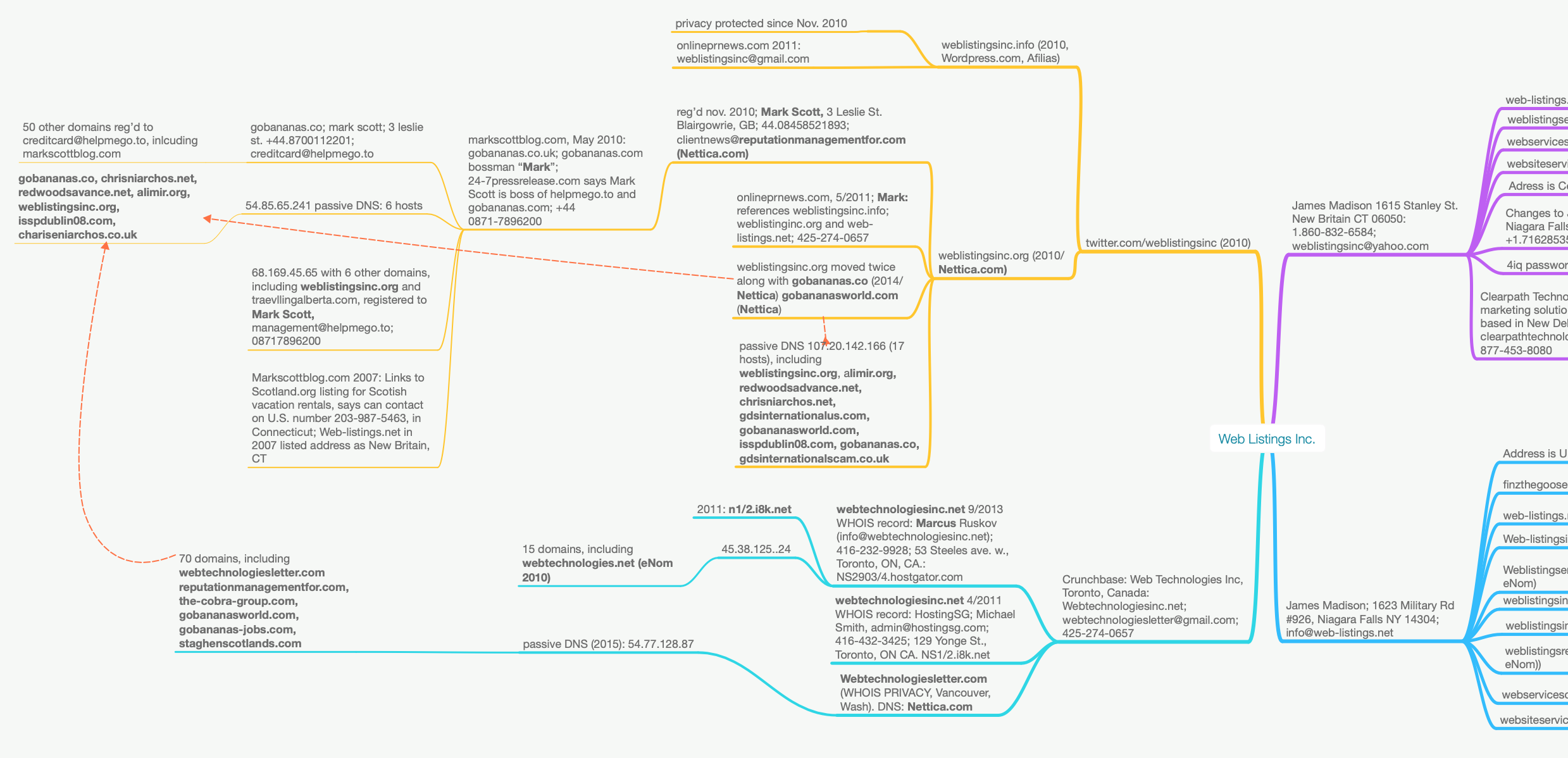
A partial screenshot of a mind map I used to keep track of the myriad connections between various Web Listings domains and their owners. This map was created with MindNode Pro for Mac.

Mark Scott did not respond to multiple requests for comment sent to various email addresses and phone numbers tied to his name. However, KrebsOnSecurity did receive a response from Cobra Group founder Chris Niarchos, a Toronto native who said this was the first he’d heard of the Web Listings scam.

“Mark used to provide some services to us but my understanding was that stopped a long time ago,” Niarchos said. “He used to own a marketing company that we supplied but that contract ended maybe 12 years ago. That’s how we met. After that he did start some internet based businesses where he sold services to us as a customer at arms length. That also stopped many years ago again as we did it all in house. As far as I know he did this for many companies and we were simply a customer of his. In my dealings with him we got what we paid for but never did we have any closer relationship than that.”

USA CONNECTIONS

Two more small — possibly insignificant — but interesting things. First, if we go back and look at archived posts from markscottblog.com in 2010, we can see a number of entries where he defends the honor of Cobra Group, Appco, and other multi-level marketing programs he supports, saying they’re not scams. If we go back further to 2008 and look at Mark Scott’s profile on Blogger.com, we can see at the bottom of the page a link called “Enquiries and Emails.”

Visiting that link brings up what looks like a public shaming page of emails apparently sent to Mr. Scott from scammers trying to set him up for some kind of fake check scheme in connection with renting one of the U.K. properties listed by his various travel accommodations Web sites. Click the “Contact” tab at the top right of that page and you’ll see Travel Scotland has a U.S. phone number that potential customers here in the states can use to make reservations toll-free.

That number happens to be in Connecticut. Recall that the address listed in the ownership records for many of the Web Listings domains tied to the “James Madison/Mark Carter” identities were for an address in Connecticut.

Finally, I wanted to mention something that has stumped me (until very recently) since I began this investigation a couple of years ago. There are two unexpected domains returned when one performs a reverse search on a couple of different persistent data points in the WHOIS registration records for the Web Listings domains. See if you can spot the odd duck in this list produced by running a reverse search at Domaintools on info@web-listings.net (the contact email address shown on the mailed letter above):

Domain Name Create Date Registrar
finzthegoose.com 2010-08-03 enom, inc.
web-listings.net 2007-04-24 ENOM, INC.,ENOM, LLC
web-listingsinc.com 2015-11-06 ENOM, INC.,ENOM, LLC
weblistingservices.com 2007-04-23 ENOM, INC.,ENOM, LLC
weblistingsinc.com 2014-06-21 GODADDY.COM, LLC
weblistingsinc.net 2016-02-09 ENOM, INC.,ENOM, LLC
weblistingsreports.net 2015-11-06 ENOM, INC.,ENOM, LLC
webservicescorp.net 2007-06-03 ENOM, INC.,ENOM, LLC
websiteservicescorp.com 2007-06-03 —

Ten points if you said “finzthegoose.com.” Now let’s run a search on the phone number for Mark Carter — the phony persona behind all the Web Listings domains registered to the Niagara Falls address — +1.716-285-3575. What stands out about this list?

Domain Name Create Date Registrar
aquariumofniagara.org 2001-01-11 GODADDY.COM, LLC
web-listings.net 2007-04-24 ENOM, INC.,ENOM, LLC
web-listingsinc.com 2015-11-06 ENOM, INC.,ENOM, LLC
weblistingservices.com 2007-04-23 ENOM, INC.,ENOM, LLC
weblistingsinc.com 2014-06-21 GODADDY.COM, LLC
weblistingsinc.net 2016-02-09 ENOM, INC.,ENOM, LLC
weblistingsreports.net 2015-11-06 ENOM, INC.,ENOM, LLC
webservicescorp.net 2007-06-03 ENOM, INC.,ENOM, LLC
websiteservicescorp.com 2007-06-03 —

If you’re picking up an aquatic and marine life theme here, you’re two for two. That is actually the real phone number for the Aquarium of Niagara; the Web-Listings people just for some reason decided to list it in their WHOIS records as theirs.

It appears that a Scotsman named Robert Paul Graham Scott — perhaps Mark’s older brother — was in the same line of work (SEO and advertising) and pimping the exact same companies as Mark. According to a listing at Companies House, the official ledger of corporations in the United Kingdom, Paul Scott was for four years until Sept. 2019 a director in HMGT Services Ltd. (HMGT stands for the aforementioned HelpMeGo.To business).

Paul Scott’s own Internet presence says he lives in Perth — a short distance from Mark’s hometown in Blairgowrie, Scotland. Like Mark, Paul Scott did not respond to requests for comment. But Paul Scott’s Twitter profile — @scubadog_uk — shows him tweeting out messages supporting many of the same companies and causes as Mark over the past decade.

More to the point, Paul’s Website — scubadog.co.uk — says he has an abiding interest in underwater photography, scuba diving, and all things marine-related.

source https://krebsonsecurity.com/2020/03/whos-behind-the-web-listings-mail-scam/

Security Breach Disrupts Fintech Firm Finastra

Finastra, a company that provides a range of technology solutions to banks worldwide, said it was shutting down key systems in response to a security breach discovered Friday morning. The company’s public statement and notice to customers does not mention the cause of the outage, but their response so far is straight out of the playbook for dealing with ransomware attacks.

London-based Finastra has offices in 42 countries and reported more than $2 billion in revenues last year. The company employs more than 10,000 people and has over 9,000 customers across 130 countries — including nearly all of the top 50 banks globally.
Earlier today, sources at two different U.S. financial institutions forwarded a notice they received from Finastra saying the outage was expected to disrupt certain services, particularly for clients in North America.

“We wish to inform our valued customers that we are investigating a potential security breach. At 3:00 a.m. EST on March 20, 2020, we were alerted to anomalous activity on our network which risked the integrity of our data-centers,” reads the notice. “As such, and to protect our customers, we have taken quick and strict remedial action to contain and isolate the incident, while we investigate further.”

The statement continues:

“Our approach has been to temporarily disconnect from the internet the affected servers, both in the USA and elsewhere, while we work closely with our cybersecurity experts to inspect and ensure the integrity of each server in turn. Using this ‘isolation, investigation and containment’ approach will allow us to bring the servers back online as quickly as possible, with minimum disruption to service, however we are anticipating some disruption to certain services, particularly in North America, whilst we undertake this task. Our priority is ensuring the integrity of the servers before we bring them back online and protecting our customers and their data at this time.”

Finastra did not respond to requests for comment. But the company appears to have acknowledged an incident via a notice on its Web site that offers somewhat less information and refers to the incident merely as the detection of anomalous activity.

“The Finastra risk and security services team has detected anomalous activity on our systems,” wrote Tom Kilroy, Finastra’s chief operating officer. “In order to safeguard our customers and employees, we have made the decision to take a number of our servers offline while we investigate. This, of course, has an impact on some of our customers and we are in touch directly with those who may be affected.”

Once considered by many to be isolated extortion attacks, ransomware infestations have become de facto data breaches for victim companies. That’s because some of the more active ransomware gangs have taken to downloading reams of data from targets before launching the ransomware inside their systems. Some or all of this data is then published on victim-shaming sites set up by the ransomware gangs as a way to strongarm victim companies into paying up.

One reader on Twitter told KrebsOnSecurity they’d heard Finastra had sent thousands of employees home today as a result of the security breach, but that claim could not be confirmed. Considering the rapidity with which the global Coronavirus pandemic appears to be spreading, thousands of employees being sent home might not be the worst outcome here.

Interestingly, several ransomware gangs have apparently stated that they are observing a kind of moratorium on attacking hospitals and other healthcare centers while the Coronavirus epidemic rages on. Bleeping Computer’s Lawrence Abrams said he recently reached out to the operators of the Maze, DoppelPaymer, Ryuk, Sodinokibi/REvil, PwndLocker, and Ako Ransomware infections to ask if they would continue targeting health and medical organizations during the outbreak.

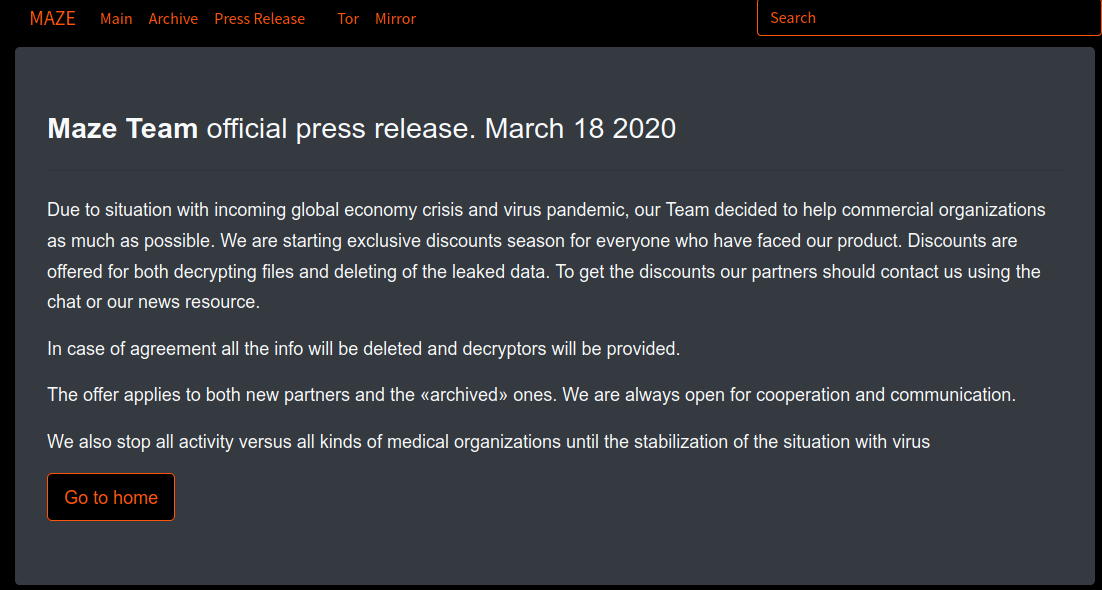
Abrams said several of those gangs told him they would indeed stop attacking healthcare providers for the time being. One gang even used its victim-shaming Web site to post a “press release” on Mar. 18 stated that “due to situation with incoming global economy crisis and virus pandemic” it would be offering discounts to victims of their ransomware.

“We also stop all activity versus all kinds of medical organizations until the stabilization of the situation with virus,” reads the release from the Maze ransomware gang.

A press release published by the Maze ransomware group.

This story will be updated as more details become available.

source https://krebsonsecurity.com/2020/03/security-breach-disrupts-fintech-firm-finastra/