Microsoft Put Off Fixing Zero Day for 2 Years

A security flaw in the way Microsoft Windows guards users against malicious files was actively exploited in malware attacks for two years before last week, when Microsoft finally issued a software update to correct the problem.

One of the 120 security holes Microsoft fixed on Aug. 11’s Patch Tuesday was CVE-2020-1464, a problem with the way every supported version of Windows validates digital signatures for computer programs.

Code signing is the method of using a certificate-based digital signature to sign executable files and scripts in order to verify the author’s identity and ensure that the code has not been changed or corrupted since it was signed by the author.

Microsoft said an attacker could use this “spoofing vulnerability” to bypass security features intended to prevent improperly signed files from being loaded. Microsoft’s advisory makes no mention of security researchers having told the company about the flaw, which Microsoft acknowledged was actively being exploited.

In fact, CVE-2020-1464 was first spotted in attacks used in the wild back in August 2018. And several researchers informed Microsoft about the weakness over the past 18 months.

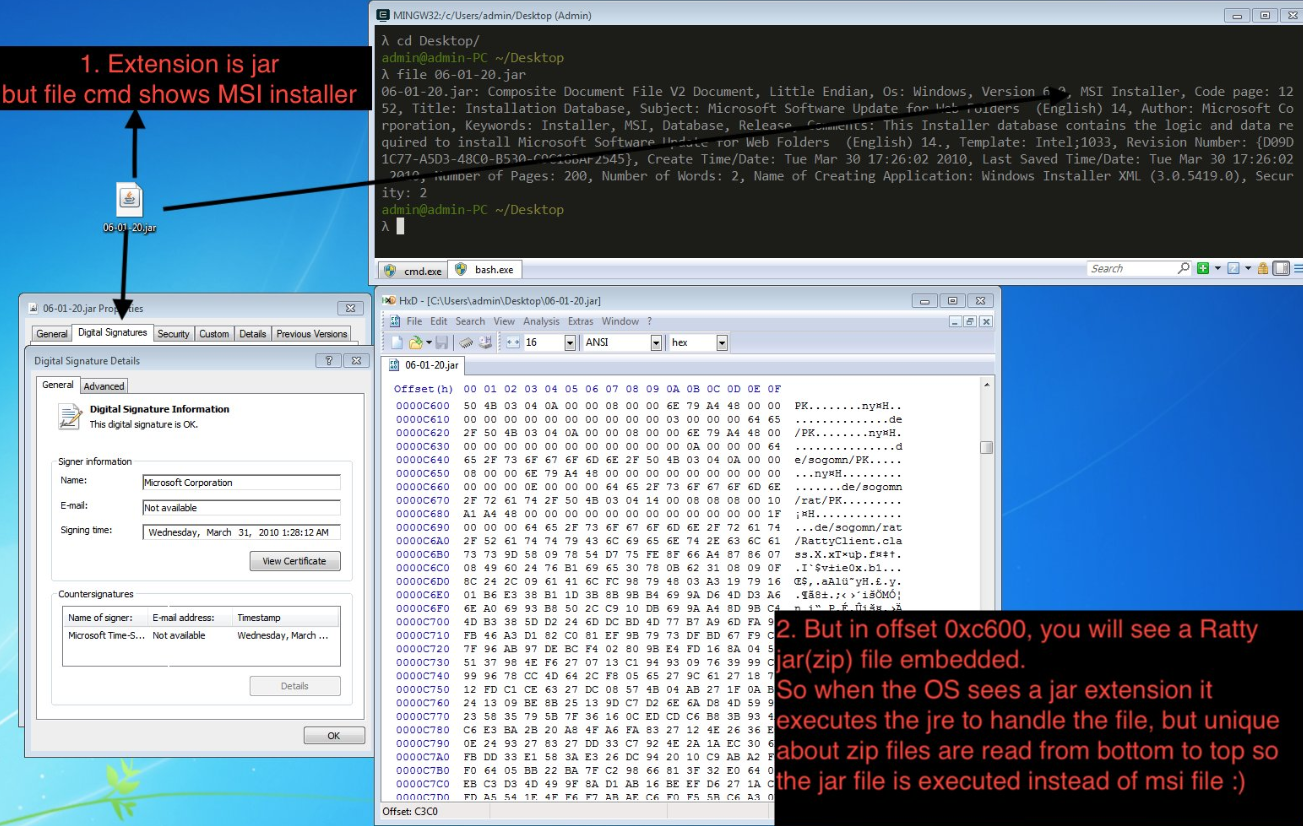
Bernardo Quintero is the manager at VirusTotal, a service owned by Google that scans any submitted files against dozens of antivirus services and displays the results. On Jan. 15, 2019, Quintero published a blog post outlining how Windows keeps the Authenticode signature valid after appending any content to the end of Windows Installer files (those ending in .MSI) signed by any software developer.

Quintero said this weakness would particularly acute if an attacker were to use it to hide a malicious Java file (.jar). And, he said, this exact attack vector was indeed detected in a malware sample sent to VirusTotal.

“In short, an attacker can append a malicious JAR to a MSI file signed by a trusted software developer (like Microsoft Corporation, Google Inc. or any other well-known developer), and the resulting file can be renamed with the .jar extension and will have a valid signature according Microsoft Windows,” Quintero wrote.

But according to Quintero, while Microsoft’s security team validated his findings, the company chose not to address the problem at the time.

“Microsoft has decided that it will not be fixing this issue in the current versions of Windows and agreed we are able to blog about this case and our findings publicly,” his blog post concluded.

Tal Be’ery, founder of Zengo, and Peleg Hadar, senior security researcher at SafeBreach Labs, penned a blog post on Sunday that pointed to a file uploaded to VirusTotal in August 2018 that abused the spoofing weakness, which has been dubbed GlueBall. The last time that August 2018 file was scanned at VirusTotal (Aug 14, 2020), it was detected as a malicious Java trojan by 28 of 59 antivirus programs.

More recently, others would likewise call attention to malware that abused the security weakness, including this post in June 2020 from the Security-in-bits blog.

Image: Securityinbits.com

Be’ery said the way Microsoft has handled the vulnerability report seems rather strange.

“It was very clear to everyone involved, Microsoft included, that GlueBall is indeed a valid vulnerability exploited in the wild,” he wrote. “Therefore, it is not clear why it was only patched now and not two years ago.”

Asked to comment on why it waited two years to patch a flaw that was actively being exploited to compromise the security of Windows computers, Microsoft dodged the question, saying Windows users who have applied the latest security updates are protected from this attack.

“A security update was released in August,” Microsoft said in a written statement sent to KrebsOnSecurity. “Customers who apply the update, or have automatic updates enabled, will be protected. We continue to encourage customers to turn on automatic updates to help ensure they are protected.”

Update, 12:45 a.m. ET: Corrected attribution on the June 2020 blog article about GlueBall exploits in the wild.

source https://krebsonsecurity.com/2020/08/microsoft-put-off-fixing-zero-day-for-2-years/

Medical Debt Collection Firm R1 RCM Hit in Ransomware Attack

R1 RCM Inc. [NASDAQ:RCM], one of the nation’s largest medical debt collection companies, has been hit in a ransomware attack.

Formerly known as Accretive Health Inc., Chicago-based R1 RCM brought in revenues of $1.18 billion in 2019. The company has more than 19,000 employees and contracts with at least 750 healthcare organizations nationwide.

R1 RCM acknowledged taking down its systems in response to a ransomware attack, but otherwise declined to comment for this story.

The “RCM” portion of its name refers to “revenue cycle management,” an industry which tracks profits throughout the life cycle of each patient, including patient registration, insurance and benefit verification, medical treatment documentation, and bill preparation and collection from patients.

The company has access to a wealth of personal, financial and medical information on tens of millions of patients, including names, dates of birth, Social Security numbers, billing information and medical diagnostic data.

It’s unclear when the intruders first breached R1’s networks, but the ransomware was unleashed more than a week ago, right around the time the company was set to release its 2nd quarter financial results for 2020.

R1 RCM declined to discuss the strain of ransomware it is battling or how it was compromised. Sources close to the investigation tell KrebsOnSecurity the malware is known as Defray.

Defray was first spotted in 2017, and its purveyors have a history of specifically targeting companies in the healthcare space. According to Trend Micro, Defray usually is spread via booby-trapped Microsoft Office documents sent via email.

“The phishing emails the authors use are well-crafted,” Trend Micro wrote. For example, in an attack targeting a hospital, the phishing email was made to look like it came from a hospital IT manager, with the malicious files disguised as patient reports.

Email security company Proofpoint says the Defray ransomware is somewhat unusual in that it is typically deployed in small, targeted attacks as opposed to large-scale “spray and pray” email malware campaigns.

“It appears that Defray may be for the personal use of specific threat actors, making its continued distribution in small, targeted attacks more likely,” Proofpoint observed.

A recent report (PDF) from Corvus Insurance notes that ransomware attacks on companies in the healthcare industry have slowed in recent months, with some malware groups even dubiously pledging they would refrain from targeting these firms during the COVID-19 pandemic. But Corvus says that trend is likely to reverse in the second half of 2020 as the United States moves cautiously toward reopening.

Corvus found that while services that scan and filter incoming email for malicious threats can catch many ransomware lures, an estimated 75 percent of healthcare companies do not use this technology.

source https://krebsonsecurity.com/2020/08/medical-debt-collection-firm-r1-rcm-hit-in-ransomware-attack/

Why & Where You Should You Plant Your Flag

Several stories here have highlighted the importance of creating accounts online tied to your various identity, financial and communications services before identity thieves do it for you. This post examines some of the key places where everyone should plant their virtual flags.

As KrebsOnSecurity observed back in 2018, many people — particularly older folks — proudly declare they avoid using the Web to manage various accounts tied to their personal and financial data — including everything from utilities and mobile phones to retirement benefits and online banking services. From that story:

“The reasoning behind this strategy is as simple as it is alluring: What’s not put online can’t be hacked. But increasingly, adherents to this mantra are finding out the hard way that if you don’t plant your flag online, fraudsters and identity thieves may do it for you.”

“The crux of the problem is that while most types of customer accounts these days can be managed online, the process of tying one’s account number to a specific email address and/or mobile device typically involves supplying personal data that can easily be found or purchased online — such as Social Security numbers, birthdays and addresses.”

In short, although you may not be required to create online accounts to manage your affairs at your ISP, the U.S. Postal Service, the credit bureaus or the Social Security Administration, it’s a good idea to do so for several reasons.

Most importantly, the majority of the entities I’ll discuss here allow just one registrant per person/customer. Thus, even if you have no intention of using that account, establishing one will be far easier than trying to dislodge an impostor who gets there first using your identity data and an email address they control.

Also, the cost of planting your flag is virtually nil apart from your investment of time. In contrast, failing to plant one’s flag can allow ne’er-do-wells to create a great deal of mischief for you, whether it be misdirecting your service or benefits elsewhere, or canceling them altogether.

Before we dive into the list, a couple of important caveats. Adding multi-factor authentication (MFA) at these various providers (where available) and/or establishing a customer-specific personal identification number (PIN) also can help secure online access. For those who can’t be convinced to use a password manager, even writing down all of the account details and passwords on a slip of paper can be helpful, provided the document is secured in a safe place.

Perhaps the most important place to enable MFA is with your email accounts. Armed with access to your inbox, thieves can then reset the password for any other service or account that is tied to that email address.

People who don’t take advantage of these added safeguards may find it far more difficult to regain access when their account gets hacked, because increasingly thieves will enable multi-factor options and tie the account to a device they control.

Secondly, guard the security of your mobile phone account as best you can (doing so might just save your life). The passwords for countless online services can be reset merely by entering a one-time code sent via text message to the phone number on file for the customer’s account.

And thanks to the increasing prevalence of a crime known as SIM swapping, thieves may be able to upend your personal and financial life simply by tricking someone at your mobile service provider into diverting your calls and texts to a device they control.

Most mobile providers offer customers the option of placing a PIN or secret passphrase on their accounts to lessen the likelihood of such attacks succeeding, but these protections also usually fail when the attackers are social engineering some $12-an-hour employee at a mobile phone store.

Your best option is to reduce your overall reliance on your phone number for added authentication at any online service. Many sites now offer MFA options that are app-based and not tied to your mobile service, and this is your best option for MFA wherever possible.

YOUR CREDIT FILES

First and foremost, all U.S. residents should ensure they have accounts set up online at the three major credit bureaus — Equifax, Experian and Trans Union.

It’s important to remember that the questions these bureaus will ask to verify your identity are not terribly difficult for thieves to answer or guess just by referencing public records and/or perhaps your postings on social media.

You will need accounts at these bureaus if you wish to freeze your credit file. KrebsOnSecurity has for many years urged all readers to do just that, because freezing your file is the best way to prevent identity thieves from opening new lines of credit in your name. Parents and guardians also can now freeze the files of their dependents for free.

For more on what a freeze entails and how to place or thaw one, please see this post. Beyond the big three bureaus, Innovis is a distant fourth bureau that some entities use to check consumer creditworthiness. Fortunately, filing a freeze with Innovis likewise is free and relatively painless.

It’s also a good idea to notify a company called ChexSystems to keep an eye out for fraud committed in your name. Thousands of banks rely on ChexSystems to verify customers who are requesting new checking and savings accounts, and ChexSystems lets consumers place a security alert on their credit data to make it more difficult for ID thieves to fraudulently obtain checking and savings accounts. For more information on doing that with ChexSystems, see this link.

If you placed a freeze on your file at the major bureaus more than a few years ago but haven’t revisited the bureaus’ sites lately, it might be wise to do that soon. Following its epic 2017 data breach, Equifax reconfigured its systems to effectively invalidate the freeze PINs it previously relied upon to unfreeze a file, effectively allowing anyone to bypass that PIN if they can glean a few personal details about you. Experian’s site also has undermined the security of the freeze PIN.

I mentioned planting your flag at the credit bureaus first because if you plan to freeze your credit files, it may be wise to do so after you have planted your flag at all the other places listed in this story. That’s because these other places may try to check your identity records at one or more of the bureaus, and having a freeze in place may interfere with that account creation.

YOUR FINANCIAL INSTITUTIONS

I can’t tell you how many times people have proudly told me they don’t bank online, and prefer to manage all of their accounts the old fashioned way. I always respond that while this is totally okay, you still need to establish an online account for your financial providers because if you don’t someone may do it for you.

This goes doubly for any retirement and pension plans you may have. It’s a good idea for people with older relatives to help those individuals set up and manage online identities for their various accounts — even if those relatives never intend to access any of the accounts online.

This process is doubly important for parents and relatives who have just lost a spouse. When someone passes away, there’s often an obituary in the paper that offers a great deal of information about the deceased and any surviving family members, and identity thieves love to mine this information.

YOUR GOVERNMENT

Whether you’re approaching retirement, middle-aged or just starting out in your career, you should establish an account online at the U.S. Social Security Administration. Maybe you don’t believe Social Security money will actually still be there when you retire, but chances are you’re nevertheless paying into the system now. Either way, the plant-your-flag rules still apply.

Ditto for the Internal Revenue Service. A few years back, ID thieves who specialize in perpetrating tax refund fraud were massively registering people at the IRS’s website to download key data from their prior years’ tax transcripts. While the IRS has improved its taxpayer validation and security measures since then, it’s a good idea to mark your territory here as well.

The same goes for your state’s Department of Motor Vehicles (DMV), which maintains an alarming amount of information about you whether you have an online account there or not. Because the DMV also is the place that typically issues state drivers licenses, you really don’t want to mess around with the possibility that someone could register as you, change your physical address on file, and obtain a new license in your name.

Last but certainly not least, you should create an account for your household at the U.S. Postal Service’s Web site. Having someone divert your mail or delay delivery of it for however long they like is not a fun experience.

Also, the USPS has this nifty service called Informed Delivery, which lets residents view scanned images of all incoming mail prior to delivery. In 2018, the U.S. Secret Service warned that identity thieves have been abusing Informed Delivery to let them know when residents are about to receive credit cards or notices of new lines of credit opened in their names.

YOUR HOME

Online accounts coupled with the strongest multi-factor authentication available also are important for any services that provide you with telephone, television and Internet access.

Strange as it may sound, plenty of people who receive all of these services in a bundle from one ISP do not have accounts online to manage their service. This is dangerous because if thieves can establish an account on your behalf, they can then divert calls intended for you to their own phones.

My original Plant Your Flag piece in 2018 told the story of an older Florida man who had pricey jewelry bought in his name after fraudsters created an online account at his ISP and diverted calls to his home phone number so they could intercept calls from his bank seeking to verify the transactions.

If you own a home, chances are you also have an account at one or more local utility providers, such as power and water companies. If you don’t already have an account at these places, create one and secure access to it with a strong password and any other access controls available.

These frequently monopolistic companies traditionally have poor to non-existent fraud controls, even though they effectively operate as mini credit bureaus. Bear in mind that possession of one or more of your utility bills is often sufficient documentation to establish proof of identity. As a result, such records are highly sought-after by identity thieves.

Another common way that ID thieves establish new lines of credit is by opening a mobile phone account in a target’s name. A little-known entity that many mobile providers turn to for validating new mobile accounts is the National Consumer Telecommunications and Utilities Exchange, or nctue.com. Happily, the NCTUE allows consumers to place a freeze on their file by calling their 800-number, 1-866-349-5355. For more information on the NCTUE, see this page.

Have I missed any important items? Please sound off in the comments below.

source https://krebsonsecurity.com/2020/08/why-where-you-should-you-plant-your-flag/

Microsoft Patch Tuesday, August 2020 Edition

Microsoft today released updates to plug at least 120 security holes in its Windows operating systems and supported software, including two newly discovered vulnerabilities that are actively being exploited. Yes, good people of the Windows world, it’s time once again to backup and patch up!

At least 17 of the bugs squashed in August’s patch batch address vulnerabilities Microsoft rates as “critical,” meaning they can be exploited by miscreants or malware to gain complete, remote control over an affected system with little or no help from users. This is the sixth month in a row Microsoft has shipped fixes for more than 100 flaws in its products.


The most concerning of these appears to be CVE-2020-1380, which is a weaknesses in Internet Explorer that could result in system compromise just by browsing with IE to a hacked or malicious website. Microsoft’s advisory says this flaw is currently being exploited in active attacks.

The other flaw enjoying active exploitation is CVE-2020-1464, which is a “spoofing” bug in virtually supported version of Windows that allows an attacker to bypass Windows security features and load improperly signed files.

Trend Micro’s Zero Day Initiative points to another fix — CVE-2020-1472 — which involves a critical issue in Windows Server versions that could let an unauthenticated attacker gain administrative access to a Windows domain controller and run an application of their choosing. A domain controller is a server that responds to security authentication requests in a Windows environment, and a compromised domain controller can give attackers the keys to the kingdom inside a corporate network.

“It’s rare to see a Critical-rated elevation of privilege bug, but this one deserves it,” said ZDI’S Dustin Childs. “What’s worse is that there is not a full fix available.”

Perhaps the most “elite” vulnerability addressed this month earned the distinction of being named CVE-2020-1337, and refers to a security hole in the Windows Print Spooler service that could allow an attacker or malware to escalate their privileges on a system if they were already logged on as a regular (non-administrator) user.

Satnam Narang at Tenable notes that CVE-2020-1337 is a patch bypass for CVE-2020-1048, another Windows Print Spooler vulnerability that was patched in May 2020. Narang said researchers found that the patch for CVE-2020-1048 was incomplete and presented their findings for CVE-2020-1337 at the Black Hat security conference earlier this month. More information on CVE-2020-1337, including a video demonstration of a proof-of-concept exploit, is available here.

Adobe has graciously given us another month’s respite from patching Flash Player flaws, but it did release critical security updates for its Acrobat and PDF Reader products. More information on those updates is available here.

Keep in mind that while staying up-to-date on Windows patches is a must, it’s important to make sure you’re updating only after you’ve backed up your important data and files. A reliable backup means you’re less likely to pull your hair out when the odd buggy patch causes problems booting the system.

So do yourself a favor and backup your files before installing any patches. Windows 10 even has some built-in tools to help you do that, either on a per-file/folder basis or by making a complete and bootable copy of your hard drive all at once.

And as ever, if you experience glitches or problems installing any of these patches this month, please consider leaving a comment about it below; there’s a better-than-even chance other readers have experienced the same and may chime in here with some helpful tips.

source https://krebsonsecurity.com/2020/08/microsoft-patch-tuesday-august-2020-edition/

Hacked Data Broker Accounts Fueled Phony COVID Loans, Unemployment Claims

A group of thieves thought to be responsible for collecting millions in fraudulent small business loans and unemployment insurance benefits from COVID-19 economic relief efforts gathered personal data on people and businesses they were impersonating by leveraging several compromised accounts at a little-known U.S. consumer data broker, KrebsOnSecurity has learned.

In June, KrebsOnSecurity was contacted by a cybersecurity researcher who discovered that a group of scammers was sharing highly detailed personal and financial records on Americans via a free web-based email service that allows anyone who knows an account’s username to view all email sent to that account — without the need of a password.

The source, who asked not to be identified in this story, said he’s been monitoring the group’s communications for several weeks and sharing the information with state and federal authorities in a bid to disrupt their fraudulent activity.

The source said the group appears to consist of several hundred individuals who collectively have stolen tens of millions of dollars from U.S. state and federal treasuries via phony loan applications with the U.S. Small Business Administration (SBA) and through fraudulent unemployment insurance claims made against several states.

KrebsOnSecurity reviewed dozens of emails the fraud group exchanged, and noticed that a great many consumer records they shared carried a notation indicating they were cut and pasted from the output of queries made at Interactive Data LLC, a Florida-based data analytics company.

Interactive Data, also known as IDIdata.com, markets access to a “massive data repository” on U.S. consumers to a range of clients, including law enforcement officials, debt recovery professionals, and anti-fraud and compliance personnel at a variety of organizations.

The consumer dossiers obtained from IDI and shared by the fraudsters include a staggering amount of sensitive data, including:

-full Social Security number and date of birth;
-current and all known previous physical addresses;
-all known current and past mobile and home phone numbers;
-the names of any relatives and known associates;
-all known associated email addresses
-IP addresses and dates tied to the consumer’s online activities;
-vehicle registration, and property ownership information
-available lines of credit and amounts, and dates they were opened
-bankruptcies, liens, judgments, foreclosures and business affiliations

Reached via phone, IDI Holdings CEO Derek Dubner acknowledged that a review of the consumer records sampled from the fraud group’s shared communications indicates “a handful” of authorized IDI customer accounts had been compromised.

“We identified a handful of legitimate businesses who are customers that may have experienced a breach,” Dubner said.

Dubner said all customers are required to use multi-factor authentication, and that everyone applying for access to its services undergoes a rigorous vetting process.

“We absolutely credential businesses and have several ways do that and exceed the gold standard, which is following some of the credit bureau guidelines,” he said. “We validate the identity of those applying [for access], check with the applicant’s state licensor and individual licenses.”

Citing an ongoing law enforcement investigation into the matter, Dubner declined to say if the company knew for how long the handful of customer accounts were compromised, or how many consumer records were looked up via those stolen accounts.

“We are communicating with law enforcement about it,” he said. “There isn’t much more I can share because we don’t want to impede the investigation.”

The source told KrebsOnSecurity he’s identified more than 2,000 people whose SSNs, DoBs and other data were used by the fraud gang to file for unemployment insurance benefits and SBA loans, and that a single payday can land the thieves $20,000 or more. In addition, he said, it seems clear that the fraudsters are recycling stolen identities to file phony unemployment insurance claims in multiple states.

ANALYSIS

Hacked or ill-gotten accounts at consumer data brokers have fueled ID theft and identity theft services of various sorts for years. In 2013, KrebsOnSecurity broke the news that the U.S. Secret Service had arrested a 24-year-old man named Hieu Minh Ngo for running an identity theft service out of his home in Vietnam.

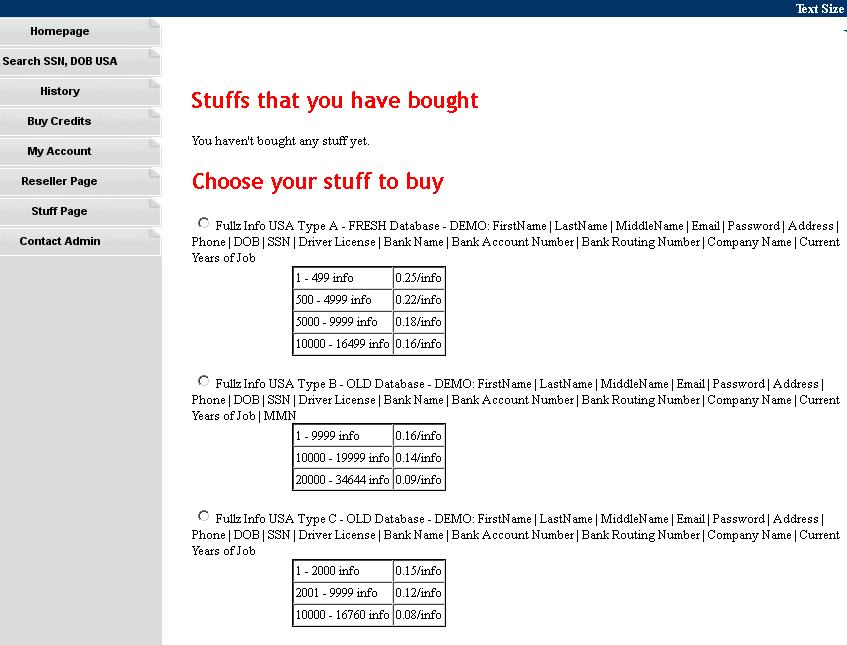
Ngo’s service, variously named superget[.]info and findget[.]me, gave customers access to personal and financial data on more than 200 million Americans. He gained that access by posing as a private investigator to a data broker subsidiary acquired by Experian, one of the three major credit bureaus in the United States.

Ngo’s ID theft service superget.info

Experian was hauled before Congress to account for the lapse, and assured lawmakers there was no evidence that consumers had been harmed by Ngo’s access. But as follow-up reporting showed, Ngo’s service was frequented by ID thieves who specialized in filing fraudulent tax refund requests with the Internal Revenue Service, and was relied upon heavily by an identity theft ring operating in the New York-New Jersey region.

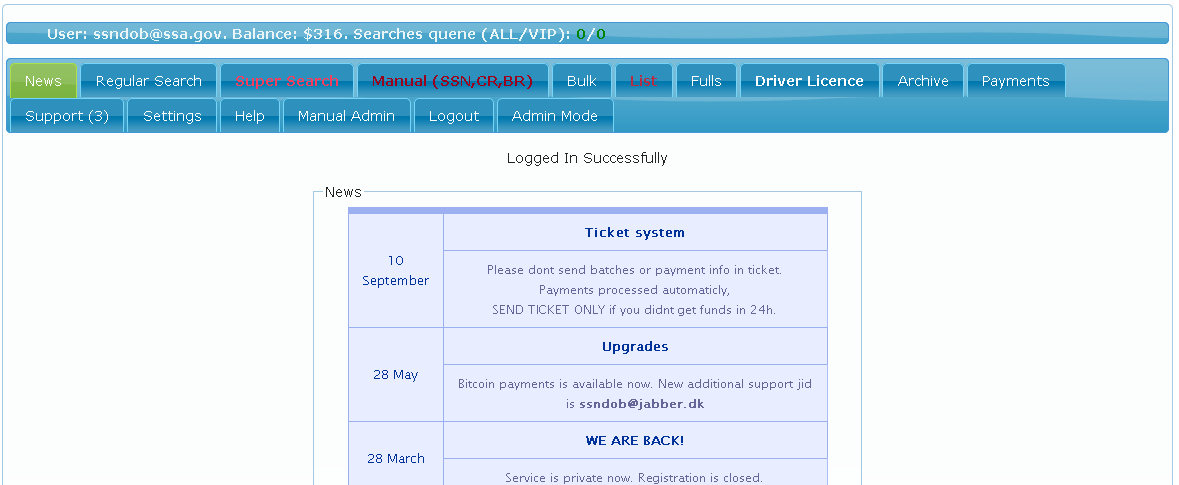
Also in 2013, KrebsOnSecurity broke the news that ssndob[.]ms, then a major identity theft service in the cybercrime underground, had infiltrated computers at some of America’s large consumer and business data aggregators, including LexisNexis Inc., Dun & Bradstreet, and Kroll Background America Inc.

The now defunct SSNDOB identity theft service.

In 2006, The Washington Post reported that a group of five men used stolen or illegally created accounts at LexisNexis subsidiaries to lookup SSNs and other personal information more than 310,000 individuals. And in 2004, it emerged that identity thieves masquerading as customers of data broker Choicepoint had stolen the personal and financial records of more than 145,000 Americans.

Those compromises were noteworthy because the consumer information warehoused by these data brokers can be used to find the answers to so-called knowledge-based authentication (KBA) questions used by companies seeking to validate the financial history of people applying for new lines of credit.

In that sense, thieves involved in ID theft may be better off targeting data brokers like IDI and their customers than the major credit bureaus, said Nicholas Weaver, a researcher at the International Computer Science Institute and lecturer at UC Berkeley.

“This means you have access not only to the consumer’s SSN and other static information, but everything you need for knowledge-based authentication because these are the types of companies that are providing KBA data.”

The fraud group communications reviewed by this author suggest they are cashing out primarily through financial instruments like prepaid cards and a small number of online-only banks that allow consumers to establish accounts and move money just by providing a name and associated date of birth and SSN.

While most of these instruments place daily or monthly limits on the amount of money users can deposit into and withdraw from the accounts, some of the more popular instruments for ID thieves appear to be those that allow spending, sending or withdrawal of between $5,000 to $7,000 per transaction, with high limits on the overall number or dollar value of transactions allowed in a given time period.

KrebsOnSecurity is investigating the extent to which a small number of these financial instruments may be massively over-represented in the incidence of unemployment insurance benefit fraud at the state level, and in SBA loan fraud at the federal level. Anyone in the financial sector or state agencies with information about these apparent trends may confidentially contact this author at krebsonsecurity @ gmail dot com, or via the encrypted message service Wickr at “krebswickr“.

The looting of state unemployment insurance programs by identity thieves has been well documented of late, but far less public attention has centered on fraud targeting Economic Injury Disaster Loan (EIDL) and advance grant programs run by the U.S. Small Business Administration in response to the COVID-19 crisis.

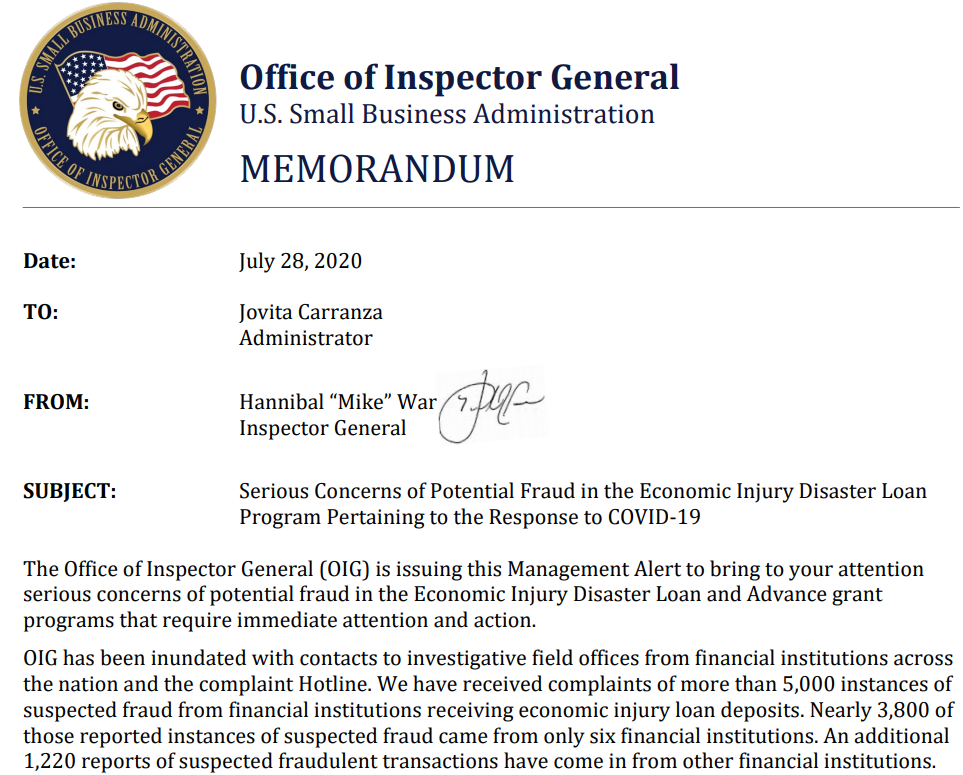
Late last month, the SBA Office of Inspector General (OIG) released a scathing report (PDF) saying it has been inundated with complaints from financial institutions reporting suspected fraudulent EIDL transactions, and that it has so far identified $250 million in loans given to “potentially ineligible recipients.” The OIG said many of the complaints were about credit inquiries for individuals who had never applied for an economic injury loan or grant.

The figures released by the SBA OIG suggest the financial impact of the fraud may be severely under-reported at the moment. For example, the OIG said nearly 3,800 of the 5,000 complaints it received came from just six financial institutions (out of several thousand across the United States). One credit union reportedly told the U.S. Justice Department that 59 out of 60 SBA deposits it received appeared to be fraudulent.

source https://krebsonsecurity.com/2020/08/hacked-data-broker-accounts-fueled-phony-covid-loans-unemployment-claims/

Porn Clip Disrupts Virtual Court Hearing for Alleged Twitter Hacker

Perhaps fittingly, a Web-streamed court hearing for the 17-year-old alleged mastermind of the July 15 mass hack against Twitter was cut short this morning after mischief makers injected a pornographic video clip into the proceeding.

17-year-old Graham Clark of Tampa, Fla. was among those charged in the July 15 Twitter hack. Image: Hillsborough County Sheriff’s Office.

The incident occurred at a bond hearing held via the videoconferencing service Zoom by the Hillsborough County, Fla. criminal court in the case of Graham Clark. The 17-year-old from Tampa was arrested earlier this month on suspicion of social engineering his way into Twitter’s internal computer systems and tweeting out a bitcoin scam through the accounts of high-profile Twitter users.

Notice of the hearing was available via public records filed with the Florida state attorney’s office. The notice specified the Zoom meeting time and ID number, essentially allowing anyone to participate in the proceeding.

Even before the hearing officially began it was clear that the event would likely be “zoom bombed.” That’s because while participants were muted by default, they were free to unmute their microphones and transmit their own video streams to the channel.

Sure enough, less than a minute had passed before one attendee not party to the case interrupted a discussion between Clark’s attorney and the judge by streaming a live video of himself adjusting his face mask. Just a few minutes later, someone began interjecting loud music.

It became clear that presiding Judge Christopher C. Nash was personally in charge of administering the video hearing when, after roughly 15 seconds worth of random chatter interrupted the prosecution’s response, Nash told participants he was removing the troublemakers as quickly as he could.

Judge Nash, visibly annoyed immediately after one of the many disruptions to today’s hearing.

What transpired a minute later was almost inevitable given the permissive settings of this particular Zoom conference call: Someone streamed a graphic video clip from Pornhub for approximately 15 seconds before Judge Nash abruptly terminated the broadcast.

With the ongoing pestilence that is the COVID-19 pandemic, the nation’s state and federal courts have largely been forced to conduct proceedings remotely via videoconferencing services. While Zoom and others do offer settings that can prevent participants from injecting their own audio and video into the stream unless invited to do so, those settings evidently were not enabled in today’s meeting.

At issue before the court today was a defense motion to modify the amount of the defendant’s bond, which has been set at $750,000. The prosecution had argued that Clark should be required to show that any funds used toward securing that bond were gained lawfully, and were not merely the proceeds from his alleged participation in the Twitter bitcoin scam or some other form of cybercrime.

Florida State Attorney Andrew Warren’s reaction as a Pornhub clip began streaming to everyone in today’s Zoom proceeding.

Mr. Clark’s attorneys disagreed, and spent most of the uninterrupted time in today’s hearing explaining why their client could safely be released under a much smaller bond and close supervision restrictions.

On Sunday, The New York Times published an in-depth look into Clark’s wayward path from a small-time cheater and hustler in online games like Minecraft to big-boy schemes involving SIM swapping, a form of fraud that involves social engineering employees at mobile phone companies to gain control over a target’s phone number and any financial, email and social media accounts associated with that number.

According to The Times, Clark was suspected of being involved in a 2019 SIM swapping incident which led to the theft of 164 bitcoins from Gregg Bennett, a tech investor in the Seattle area. That theft would have been worth around $856,000 at the time; these days 164 bitcoins is worth approximately $1.8 million.

The Times said that soon after the theft, Bennett received an extortion note signed by Scrim, one of the hacker handles alleged to have been used by Clark. From that story:

“We just want the remainder of the funds in the Bittrex,” Scrim wrote, referring to the Bitcoin exchange from which the coins had been taken. “We are always one step ahead and this is your easiest option.”

In April, the Secret Service seized 100 Bitcoins from Mr. Clark, according to government forfeiture documents. A few weeks later, Mr. Bennett received a letter from the Secret Service saying they had recovered 100 of his Bitcoins, citing the same code that was assigned to the coins seized from Mr. Clark.

Florida prosecutor Darrell Dirks was in the middle of explaining to the judge that investigators are still in the process of discovering the extent of Clark’s alleged illegal hacking activities since the Secret Service returned the 100 bitcoin when the porn clip was injected into the Zoom conference.

Ultimately, Judge Nash decided to keep the bond amount as is, but to remove the condition that Clark prove the source of the funds.

Clark has been charged with 30 felony counts and is being tried as an adult. Federal prosecutors also have charged two other young men suspected of playing roles in the Twitter hack, including a 22-year-old from Orlando, Fla. and a 19-year-old from the United Kingdom.

source https://krebsonsecurity.com/2020/08/porn-clip-disrupts-virtual-court-hearing-for-alleged-twitter-hacker/

Robocall Legal Advocate Leaks Customer Data

A California company that helps telemarketing firms avoid getting sued for violating a federal law that seeks to curb robocalls has leaked the phone numbers, email addresses and passwords of all its customers, as well as the mobile phone numbers and other data on people who have hired lawyers to go after telemarketers.

The Blacklist Alliance provides technologies and services to marketing firms concerned about lawsuits under the Telephone Consumer Protection Act (TCPA), a 1991 law that restricts the making of telemarketing calls through the use of automatic telephone dialing systems and artificial or prerecorded voice messages. The TCPA prohibits contact with consumers — even via text messages — unless the company has “prior express consent” to contact the consumer.

With statutory damages of $500 to $1,500 per call, the TCPA has prompted a flood of lawsuits over the years. From the telemarketer’s perspective, the TCPA can present something of a legal minefield in certain situations, such as when a phone number belonging to someone who’d previously given consent gets reassigned to another subscriber.

Enter The Blacklist Alliance, which promises to help marketers avoid TCPA legal snares set by “professional plaintiffs and class action attorneys seeking to cash in on the TCPA.” According to the Blacklist, one of the “dirty tricks” used by TCPA “frequent filers” includes “phone flipping,” or registering multiple prepaid cell phone numbers to receive calls intended for the person to whom a number was previously registered.

Lawyers representing TCPA claimants typically redact their clients’ personal information from legal filings to protect them from retaliation and to keep their contact information private. The Blacklist Alliance researches TCPA cases to uncover the phone numbers of plaintiffs and sells this data in the form of list-scrubbing services to telemarketers.

“TCPA predators operate like malware,” The Blacklist explains on its website. “Our Litigation Firewall isolates the infection and protects you from harm. Scrub against active plaintiffs, pre litigation complainers, active attorneys, attorney associates, and more. Use our robust API to seamlessly scrub these high-risk numbers from your outbound campaigns and inbound calls, or adjust your suppression settings to fit your individual requirements and appetite for risk.”

Unfortunately for the Blacklist paying customers and for people represented by attorneys filing TCPA lawsuits, the Blacklist’s own Web site until late last week leaked reams of data to anyone with a Web browser. Thousands of documents, emails, spreadsheets, images and the names tied to countless mobile phone numbers all could be viewed or downloaded without authentication from the domain theblacklist.click.

The directory also included all 388 Blacklist customer API keys, as well as each customer’s phone number, employer, username and password (scrambled with the relatively weak MD5 password hashing algorithm).

The leaked Blacklist customer database points to various companies you might expect to see using automated calling systems to generate business, including real estate and life insurance providers, credit repair companies and a long list of online advertising firms and individual digital marketing specialists.
The very first account in the leaked Blacklist user database corresponds to its CEO Seth Heyman, an attorney southern California. Mr. Heyman did not respond to multiple requests for comment, although The Blacklist stopped leaking its database not long after that contact request.

Two other accounts marked as administrators were among the third and sixth registered users in the database; those correspond to two individuals at Riip Digital, a California-based email marketing concern that serves a diverse range of clients in the lead generation business, from debt relief and timeshare companies, to real estate firms and CBD vendors.

Riip Digital did not respond to requests for comment. But According to Spamhaus, an anti-spam group relied upon by many Internet service providers (ISPs) to block unsolicited junk email, the company has a storied history of so-called “snowshoe spamming,” which involves junk email purveyors who try to avoid spam filters and blacklists by spreading their spam-sending systems across a broad swath of domains and Internet addresses.

The irony of this data leak is that marketers who constantly scrape the Web for consumer contact data may not realize the source of the information, and end up feeding it into automated systems that peddle dubious wares and services via automated phone calls and text messages. To the extent this data is used to generate sales leads that are then sold to others, such a leak could end up causing more legal problems for The Blacklist’s customers.

The Blacklist and their clients talk a lot about technologies that they say separate automated telephonic communications from dime-a-dozen robocalls, such as software that delivers recorded statements that are manually selected by a live agent. But for your average person, this is likely a distinction without a difference.

Robocalls are permitted for political candidates, but beyond that if the recording is a sales message and you haven’t given your written permission to get calls from the company on the other end, the call is illegal. According to the Federal Trade Commission (FTC), companies are using auto-dialers to send out thousands of phone calls every minute for an incredibly low cost.

In fiscal year 2019, the FTC received 3.78 million complaints about robocalls. Readers may be able to avoid some marketing calls by registering their mobile number with the Do Not Call registry, but the list appears to do little to deter all automated calls — particularly scam calls that spoof their real number. If and when you do receive robocalls, consider reporting them to the FTC.

Some wireless providers now offer additional services and features to help block automated calls. For example, AT&T offers wireless customers its free Call Protect app, which screens incoming calls and flags those that are likely spam calls. See the FCC’s robocall resource page for links to resources at your mobile provider. In addition, there are a number of third-party mobile apps designed to block spammy calls, such as Nomorobo and TrueCaller.

Obviously, not all telemarketing is spammy or scammy. I have friends and relatives who’ve worked at non-profits that rely a great deal on fundraising over the phone. Nevertheless, readers who are fed up with telemarketing calls may find some catharsis in the Jolly Roger Telephone Company, which offers subscribers a choice of automated bots that keep telemarketers engaged for several minutes. The service lets subscribers choose which callers should get the bot treatment, and then records the result.

For my part, the volume of automated calls hitting my mobile number got so bad that I recently enabled a setting on my smart phone to simply send to voicemail all calls from numbers that aren’t already in my contacts list. This may not be a solution for everyone, but since then I haven’t received a single spammy jingle.

source https://krebsonsecurity.com/2020/08/robocall-legal-advocate-leaks-customer-data/

Three Charged in July 15 Twitter Compromise

Three individuals have been charged for their alleged roles in the July 15 hack on Twitter, an incident that resulted in Twitter profiles for some of the world’s most recognizable celebrities, executives and public figures sending out tweets advertising a bitcoin scam.

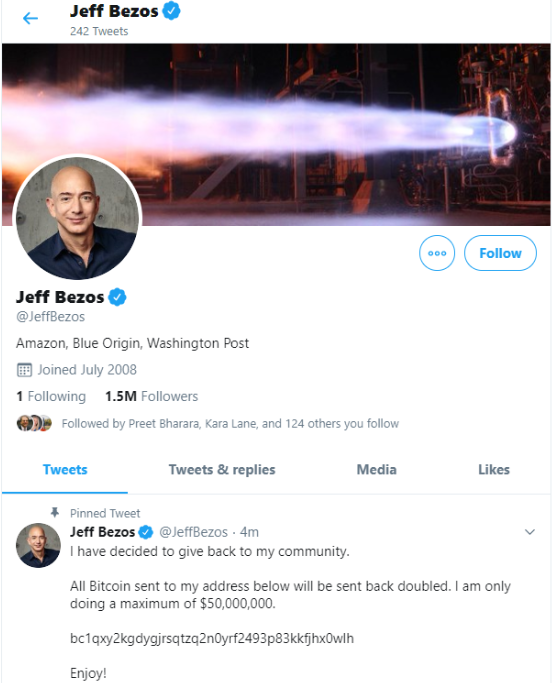
Amazon CEO Jeff Bezos’s Twitter account on the afternoon of July 15.

Nima “Rolex” Fazeli, a 22-year-old from Orlando, Fla., was charged in a criminal complaint in Northern California with aiding and abetting intentional access to a protected computer.

Mason “Chaewon” Sheppard, a 19-year-old from Bognor Regis, U.K., also was charged in California with conspiracy to commit wire fraud, money laundering and unauthorized access to a computer.

A U.S. Justice Department statement on the matter does not name the third defendant charged in the case, saying juvenile proceedings in federal court are sealed to protect the identity of the youth. But an NBC News affiliate in Tampa reported today that authorities had arrested 17-year-old Graham Clark as the alleged mastermind of the hack.

17-year-old Graham Clark of Tampa, Fla. was among those charged in the July 15 Twitter hack. Image: Hillsborough County Sheriff’s Office.

Wfla.com said Clark was hit with 30 felony charges, including organized fraud, communications fraud, one count of fraudulent use of personal information with over $100,000 or 30 or more victims, 10 counts of fraudulent use of personal information and one count of access to a computer or electronic device without authority. Clark’s arrest report is available here (PDF).

On Thursday, Twitter released more details about how the hack went down, saying the intruders “targeted a small number of employees through a phone spear phishing attack,” that “relies on a significant and concerted attempt to mislead certain employees and exploit human vulnerabilities to gain access to our internal systems.”

By targeting specific Twitter employees, the perpetrators were able to gain access to internal Twitter tools. From there, Twitter said, the attackers targeted 130 Twitter accounts, tweeting from 45 of them, accessing the direct messages of 36 accounts, and downloading the Twitter data of seven.

Among the accounts compromised were democratic presidential candidate Joe BidenAmazon CEO Jeff BezosPresident Barack ObamaTesla CEO Elon Musk, former New York Mayor Michael Bloomberg and investment mogul Warren Buffett.

The hacked Twitter accounts were made to send tweets suggesting they were giving away bitcoin, and that anyone who sent bitcoin to a specified account would be sent back double the amount they gave. All told, the bitcoin accounts associated with the scam received more than 400 transfers totaling more than $100,000.

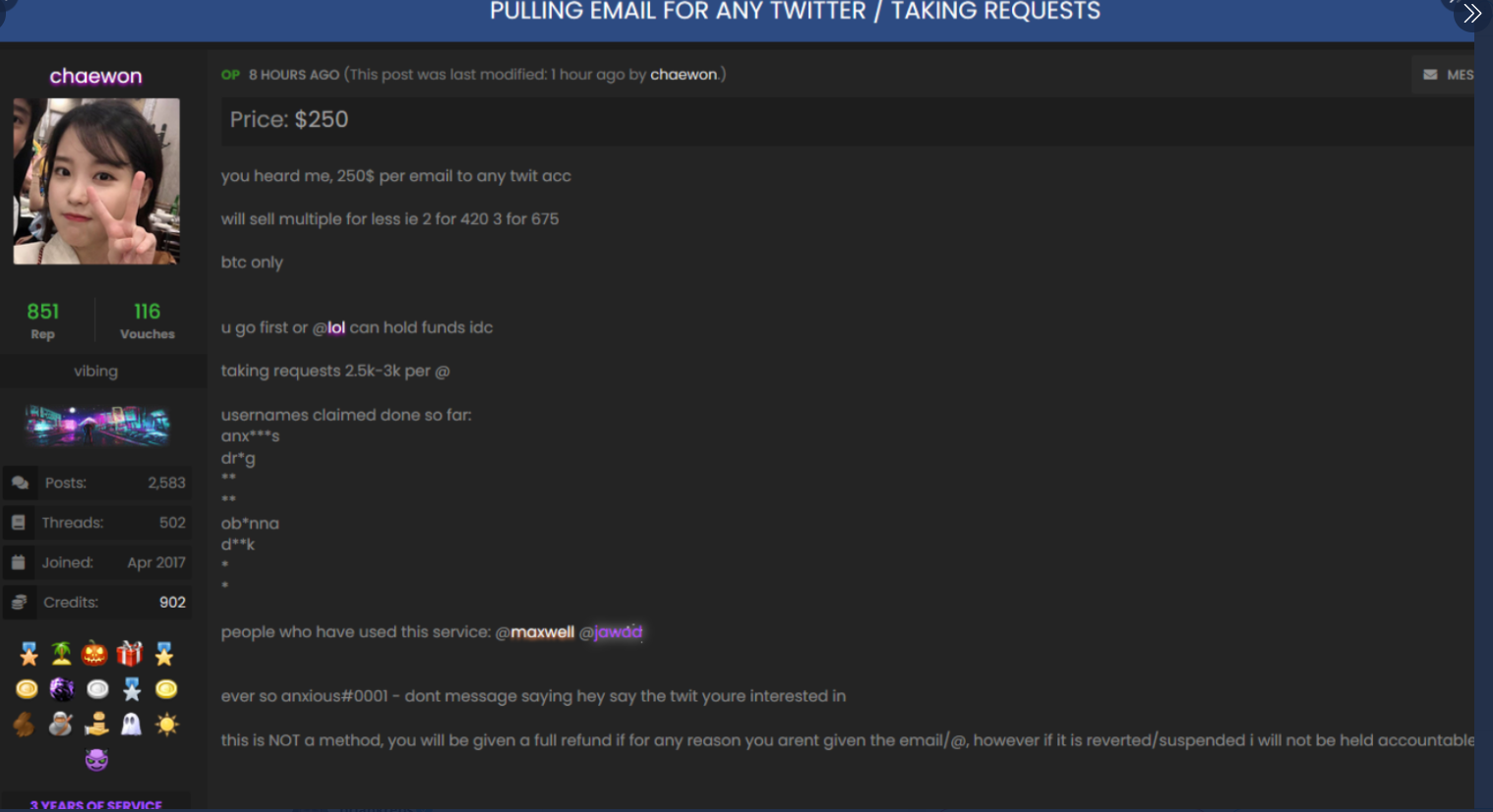
Sheppard’s alleged alias Chaewon was mentioned twice in stories here since the July 15 incident. On July 16, KrebsOnSecurity wrote that just before the Twitter hack took place, a member of the social media account hacking forum OGUsers advertised they could change email address tied to any Twitter account for $250, and provide direct access to accounts for between $2,000 and $3,000 apiece.

The OGUsers forum user “Chaewon” taking requests to modify the email address tied to any twitter account.

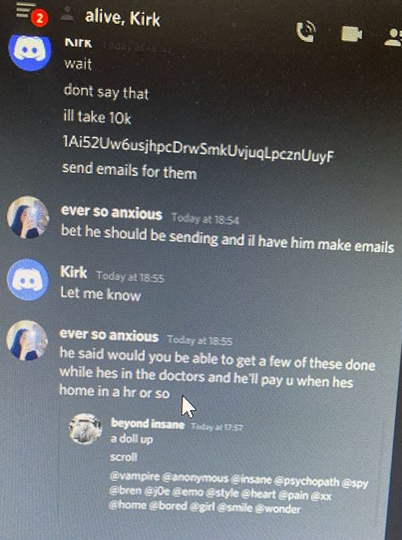
On July 17, The New York Times ran a story that featured interviews with several people involved in the attack, who told The Times they weren’t responsible for the Twitter bitcoin scam and had only purchased accounts from the Twitter hacker — who they referred to only as “Kirk.”

One of the people interviewed by The Times used the alias “Ever So Anxious,” and said he was a 19-year from the U.K. In my follow-up story on July 22, it emerged that Ever So Anxious was in fact Chaewon.

The person who shared that information was the principal subject of my July 16 post, which followed clues from tweets sent from one of the accounts claimed during the Twitter compromise back to a 21-year-old from the U.K. who uses the nickname PlugWalkJoe.

That individual shared a series of screenshots showing he had been in communications with Chaewon/Ever So Anxious just prior to the Twitter hack, and had asked him to secure several desirable Twitter usernames from the Twitter hacker. He added that Chaewon/Ever So Anxious also was known as “Mason.”

The negotiations over highly-prized Twitter usernames took place just prior to the hijacked celebrity accounts tweeting out bitcoin scams. PlugWalkJoe is pictured here chatting with Ever So Anxious/Chaewon/Mason using his Discord username “Beyond Insane.”

On July 22, KrebsOnSecurity interviewed Sheppard/Mason/Chaewon, who confirmed that PlugWalkJoe had indeed asked him to ask Kirk to change the profile picture and display name for a specific Twitter account on July 15. He acknowledged that while he did act as a “middleman” between Kirk and others seeking to claim desirable Twitter usernames, he had nothing to do with the hijacking of the VIP Twitter accounts for the bitcoin scam that same day.

“Encountering Kirk was the worst mistake I’ve ever made due to the fact it has put me in issues I had nothing to do with,” he said. “If I knew Kirk was going to do what he did, or if even from the start if I knew he was a hacker posing as a rep I would not have wanted to be a middleman.”

source https://krebsonsecurity.com/2020/07/three-charged-in-july-15-twitter-compromise/

Is Your Chip Card Secure? Much Depends on Where You Bank

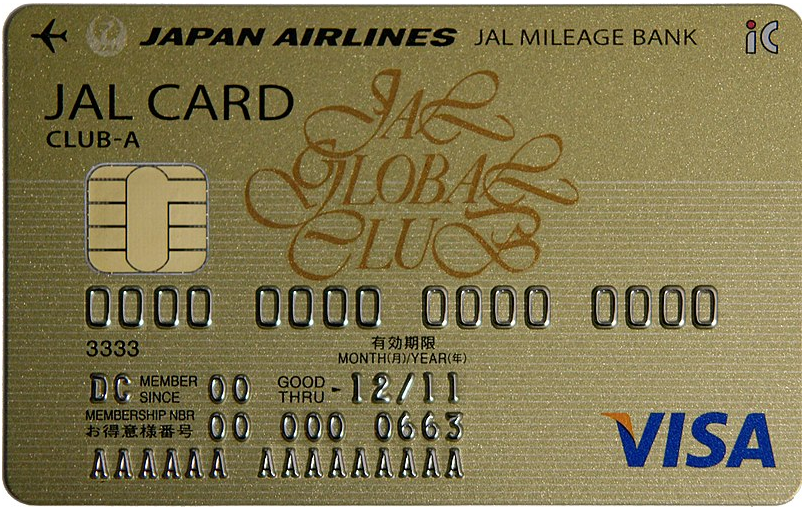
Chip-based credit and debit cards are designed to make it infeasible for skimming devices or malware to clone your card when you pay for something by dipping the chip instead of swiping the stripe. But a recent series of malware attacks on U.S.-based merchants suggest thieves are exploiting weaknesses in how certain financial institutions have implemented the technology to sidestep key chip card security features and effectively create usable, counterfeit cards.

A chip-based credit card. Image: Wikipedia.

Traditional payment cards encode cardholder account data in plain text on a magnetic stripe, which can be read and recorded by skimming devices or malicious software surreptitiously installed in payment terminals. That data can then be encoded onto anything else with a magnetic stripe and used to place fraudulent transactions.

Newer, chip-based cards employ a technology known as EMV that encrypts the account data stored in the chip. The technology causes a unique encryption key — referred to as a token or “cryptogram” — to be generated each time the chip card interacts with a chip-capable payment terminal.

Virtually all chip-based cards still have much of the same data that’s stored in the chip encoded on a magnetic stripe on the back of the card. This is largely for reasons of backward compatibility since many merchants — particularly those in the United States — still have not fully implemented chip card readers. This dual functionality also allows cardholders to swipe the stripe if for some reason the card’s chip or a merchant’s EMV-enabled terminal has malfunctioned.

But there are important differences between the cardholder data stored on EMV chips versus magnetic stripes. One of those is a component in the chip known as an integrated circuit card verification value or “iCVV” for short — also known as a “dynamic CVV.”

The iCVV differs from the card verification value (CVV) stored on the physical magnetic stripe, and protects against the copying of magnetic-stripe data from the chip and the use of that data to create counterfeit magnetic stripe cards. Both the iCVV and CVV values are unrelated to the three-digit security code that is visibly printed on the back of a card, which is used mainly for e-commerce transactions or for card verification over the phone.

The appeal of the EMV approach is that even if a skimmer or malware manages to intercept the transaction information when a chip card is dipped, the data is only valid for that one transaction and should not allow thieves to conduct fraudulent payments with it going forward.

However, for EMV’s security protections to work, the back-end systems deployed by card-issuing financial institutions are supposed to check that when a chip card is dipped into a chip reader, only the iCVV is presented; and conversely, that only the CVV is presented when the card is swiped. If somehow these do not align for a given transaction type, the financial institution is supposed to decline the transaction.

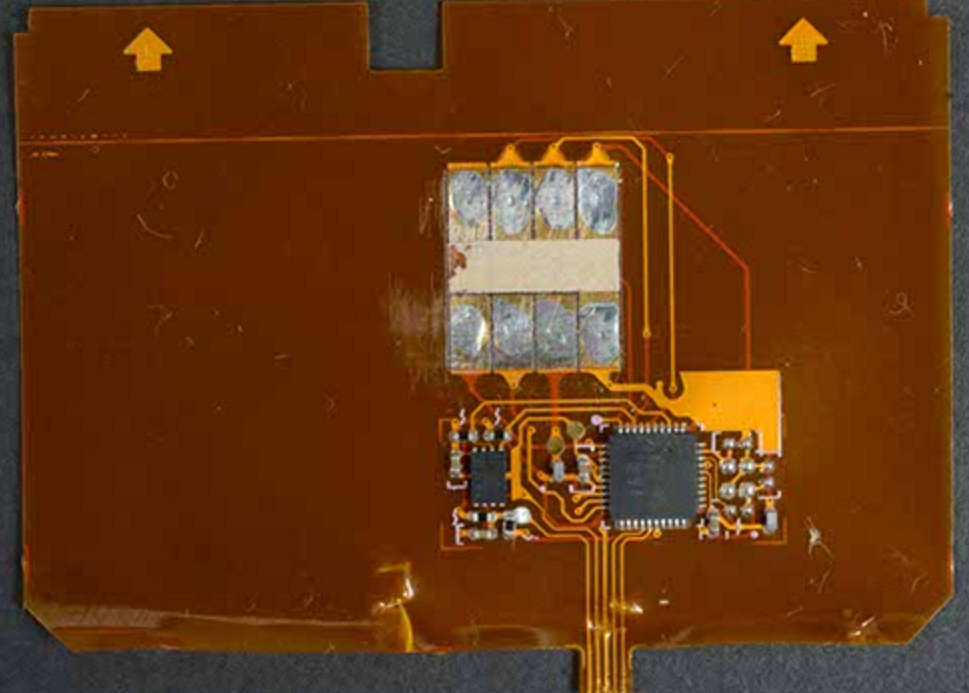
The trouble is that not all financial institutions have properly set up their systems this way. Unsurprisingly, thieves have known about this weakness for years. In 2017, I wrote about the increasing prevalence of “shimmers,” high-tech card skimming devices made to intercept data from chip card transactions.

A close-up of a shimmer found on a Canadian ATM. Source: RCMP.

More recently, researchers at Cyber R&D Labs published a paper detailing how they tested 11 chip card implementations from 10 different banks in Europe and the U.S. The researchers found they could harvest data from four of them and create cloned magnetic stripe cards that were successfully used to place transactions.

There are now strong indications the same method detailed by Cyber R&D Labs is being used by point-of-sale (POS) malware to capture EMV transaction data that can then be resold and used to fabricate magnetic stripe copies of chip-based cards.

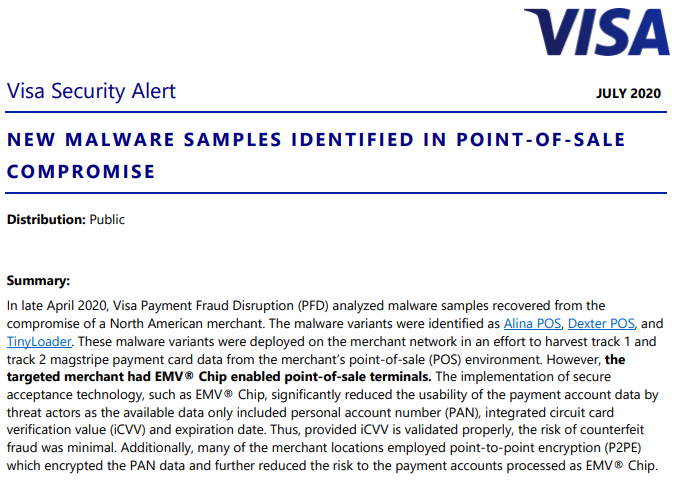
Earlier this month, the world’s largest payment card network Visa released a security alert regarding a recent merchant compromise in which known POS malware families were apparently modified to target EMV chip-enabled POS terminals.

“The implementation of secure acceptance technology, such as EMV® Chip, significantly reduced the usability of the payment account data by threat actors as the available data only included personal account number (PAN), integrated circuit card verification value (iCVV) and expiration date,” Visa wrote. “Thus, provided iCVV is validated properly, the risk of counterfeit fraud was minimal. Additionally, many of the merchant locations employed point-to-point encryption (P2PE) which encrypted the PAN data and further reduced the risk to the payment accounts processed as EMV® Chip.”

Visa did not name the merchant in question, but something similar seems to have happened at Key Food Stores Co-Operative Inc., a supermarket chain in the northeastern United States. Key Food initially disclosed a card breach in March 2020, but two weeks ago updated its advisory to clarify that EMV transaction data also was intercepted.

“The POS devices at the store locations involved were EMV enabled,” Key Foods explained. “For EMV transactions at these locations, we believe only the card number and expiration date would have been found by the malware (but not the cardholder name or internal verification code).”

While Key Food’s statement may be technically accurate, it glosses over the reality that the stolen EMV data could still be used by fraudsters to create magnetic stripe versions of EMV cards presented at the compromised store registers in cases where the card-issuing bank hadn’t implemented EMV correctly.

Earlier today, fraud intelligence firm Gemini Advisory released a blog post with more information on recent merchant compromises — including Key Food — in which EMV transaction data was stolen and ended up for sale in underground shops that cater to card thieves.

“The payment cards stolen during this breach were offered for sale in the dark web,” Gemini explained. “Shortly after discovering this breach, several financial institutions confirmed that the cards compromised in this breach were all processed as EMV and did not rely on the magstripe as a fallback.”

Gemini says it has verified that another recent breach — at a liquor store in Georgia — also resulted in compromised EMV transaction data showing up for sale at dark web stores that sell stolen card data. As both Gemini and Visa have noted, in both cases proper iCVV verification from banks should render this intercepted EMV data useless to crooks.

Gemini determined that due to the sheer number of stores affected, it’s extremely unlikely the thieves involved in these breaches intercepted the EMV data using physically installed EMV card shimmers.

“Given the extreme impracticality of this tactic, they likely used a different technique to remotely breach POS systems to collect enough EMV data to perform EMV-Bypass Cloning,” the company wrote.

Stas Alforov, Gemini’s director of research and development, said financial institutions that aren’t performing these checks risk losing the ability to notice when those cards are used for fraud.

That’s because many banks that have issued chip-based cards may assume that as long as those cards are used for chip transactions, there is virtually no risk that the cards will be cloned and sold in the underground. Hence, when these institutions are looking for patterns in fraudulent transactions to determine which merchants might be compromised by POS malware, they may completely discount any chip-based payments and focus only on those merchants at which a customer has swiped their card.

“The card networks are catching on to the fact that there’s a lot more EMV-based breaches happening right now,” Alforov said. “The larger card issuers like Chase or Bank of America are indeed checking [for a mismatch between the iCVV and CVV], and will kick back transactions that don’t match. But that is clearly not the case with some smaller institutions.”

For better or worse, we don’t know which financial institutions have failed to properly implement the EMV standard. That’s why it always pays to keep a close eye on your monthly statements, and report any unauthorized transactions immediately. If your institution lets you receive transaction alerts via text message, this can be a near real-time way to keep an eye out for such activity.

source https://krebsonsecurity.com/2020/07/is-your-chip-card-secure-much-depends-on-where-you-bank/

Here’s Why Credit Card Fraud is Still a Thing

Most of the civilized world years ago shifted to requiring computer chips in payment cards that make it far more expensive and difficult for thieves to clone and use them for fraud. One notable exception is the United States, which is still lurching toward this goal. Here’s a look at the havoc that lag has wrought, as seen through the purchasing patterns at one of the underground’s biggest stolen card shops that was hacked last year.

In October 2019, someone hacked BriansClub, a popular stolen card bazaar that uses this author’s likeness and name in its marketing. Whoever compromised the shop siphoned data on millions of card accounts that were acquired over four years through various illicit means from legitimate, hacked businesses around the globe — but mostly from U.S. merchants. That database was leaked to KrebsOnSecurity, which in turn shared it with multiple sources that help fight payment card fraud.

An ad for BriansClub has been using my name and likeness for years to peddle millions of stolen credit cards.

Among the recipients was Damon McCoy, an associate professor at New York University’s Tandon School of Engineering [full disclosure: NYU has been a longtime advertiser on this blog]. McCoy’s work in probing the credit card systems used by some of the world’s biggest purveyors of junk email greatly enriched the data that informed my 2014 book Spam Nation, and I wanted to make sure he and his colleagues had a crack at the BriansClub data as well.

McCoy and fellow NYU researchers found BriansClub earned close to $104 million in gross revenue from 2015 to early 2019, and listed over 19 million unique card numbers for sale. Around 97% of the inventory was stolen magnetic stripe data, commonly used to produce counterfeit cards for in-person payments.

“What surprised me most was there are still a lot of people swiping their cards for transactions here,” McCoy said.

In 2015, the major credit card associations instituted new rules that made it riskier and potentially more expensive for U.S. merchants to continue allowing customers to swipe the stripe instead of dip the chip. Complicating this transition was the fact that many card-issuing U.S. banks took years to replace their customer card stocks with chip-enabled cards, and countless retailers dragged their feet in updating their payment terminals to accept chip-based cards.

Indeed, three years later the U.S. Federal Reserve estimated (PDF) that 43.3 percent of in-person card payments were still being processed by reading the magnetic stripe instead of the chip. This might not have been such a big deal if payment terminals at many of those merchants weren’t also compromised with malicious software that copied the data when customers swiped their cards.

Following the 2015 liability shift, more than 84 percent of the non-chip cards advertised by BriansClub were sold, versus just 35 percent of chip-based cards during the same time period.

“All cards without a chip were in much higher demand,” McCoy said.

Perhaps surprisingly, McCoy and his fellow NYU researchers found BriansClub customers purchased only 40% of its overall inventory. But what they did buy supports the notion that crooks generally gravitate toward cards issued by financial institutions that are perceived as having fewer or more lax protections against fraud.

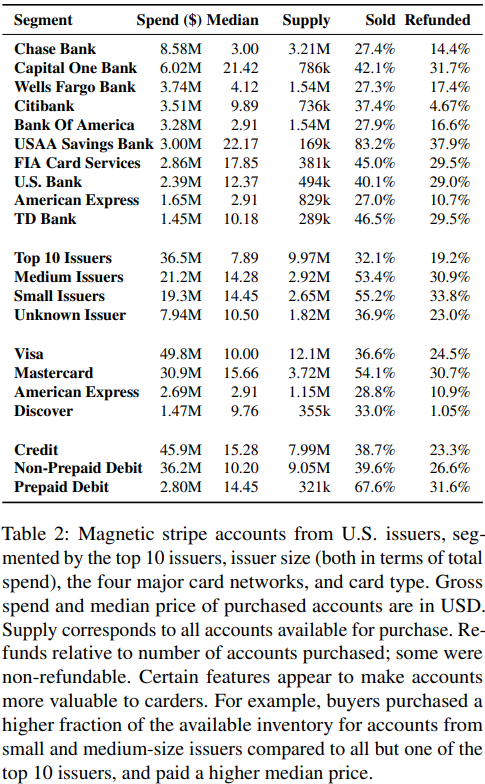
Source: NYU.

While the top 10 largest card issuers in the United States accounted for nearly half of the accounts put up for sale at BriansClub, only 32 percent of those accounts were sold — and at a roughly half the median price of those issued by small- and medium-sized institutions.

In contrast, more than half of the stolen cards issued by small and medium-sized institutions were purchased from the fraud shop. This was true even though by the end of 2018, 91 percent of cards for sale from medium-sized institutions were chip-based, and 89 percent from smaller banks and credit unions. Nearly all cards issued by the top ten largest U.S. card issuers (98 percent) were chip-enabled by that time.

REGION LOCK

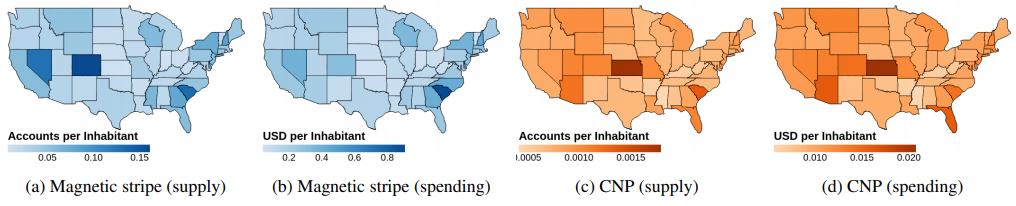
The researchers found BriansClub customers strongly preferred cards issued by financial institutions in specific regions of the United States, specifically Colorado, Nevada, and South Carolina.

“For whatever reason, those regions were perceived as having lower anti-fraud systems or those that were not as effective,” McCoy said.

Cards compromised from merchants in South Carolina were in especially high demand, with fraudsters willing to spend twice as much on those cards per capita than any other state — roughly $1 per resident.

That sales trend also was reflected in the support tickets filed by BriansClub customers, who frequently were informed that cards tied to the southeastern United States were less likely to be restricted for use outside of the region.

Image: NYU.

McCoy said the lack of region locking also made stolen cards issued by banks in China something of a hot commodity, even though these cards demanded much higher prices (often more than $100 per account): The NYU researchers found virtually all available Chinese cards were sold soon after they were put up for sale. Ditto for the relatively few corporate and business cards for sale.

A lack of region locks may also have caused card thieves to gravitate toward buying up as many cards as they could from USAA, a savings bank that caters to active and former military service members and their immediate families. More than 83 percent of the available 3 million USAA cards were sold between 2015 and 2019, the researchers found.

Although Visa cards made up more than half of accounts put up for sale (12.1 million), just 36 percent were sold. MasterCards were the second most-plentiful (3.72 million), and yet more than 54 percent of them sold.

American Express and Discover, which unlike Visa and MasterCard are so-called “closed loop” networks that do not rely on third-party financial institutions to issue cards and manage fraud on them, saw 28.8 percent and 33 percent of their stolen cards purchased, respectively.

PREPAIDS

Some people concerned about the scourge of debit and credit card fraud opt to purchase prepaid cards, which generally enjoy the same cardholder protections against fraudulent transactions. But the NYU team found compromised prepaid accounts were purchased at a far higher rate than regular debit and credit cards.

Several factors may be at play here. For starters, relatively few prepaid cards for sale were chip-based. McCoy said there was some data to suggest many of these prepaids were issued to people collecting government benefits such as unemployment and food assistance. Specifically, the “service code” information associated with these prepaid cards indicated that many were restricted for use at places like liquor stores and casinos.

“This was a pretty sad finding, because if you don’t have a bank this is probably how you get your wages,” McCoy said. “These cards were disproportionately targeted. The unfortunate and striking thing was the sheer demand and lack of [chip] support for prepaid cards. Also, these cards were likely more attractive to fraudsters because [the issuer’s] anti-fraud countermeasures weren’t up to par, possibly because they know less about their customers and their typical purchase history.”

PROFITS

The NYU researchers estimate BriansClub pulled in approximately $24 million in profit over four years. They calculated this number by taking the more than $100 million in total sales and subtracting commissions paid to card thieves who supplied the shop with fresh goods, as well as the price of cards that were refunded to buyers. BriansClub, like many other stolen card shops, offers refunds on certain purchases if the buyer can demonstrate the cards were no longer active at the time of purchase.

On average, BriansClub paid suppliers commissions ranging from 50-60 percent of the total value of the cards sold. Card-not-present (CNP) accounts — or those stolen from online retailers and purchased by fraudsters principally for use in defrauding other online merchants — fetched a much steeper supplier commission of 80 percent, but mainly because these cards were in such high demand and low supply.

The NYU team found card-not-present sales accounted for just 7 percent of all revenue, even though card thieves clearly now have much higher incentives to target online merchants.

A story here last year observed that this exact supply and demand tug-of-war had helped to significantly increase prices for card-not-present accounts across multiple stolen credit card shops in the underground. Not long ago, the price of CNP accounts was less than half that of card-present accounts. These days, those prices are roughly equivalent.

One likely reason for that shift is the United States is the last of the G20 nations to fully transition to more secure chip-based payment cards. In every other country that long ago made the chip card transition, they saw the same dynamic: As they made it harder for thieves to counterfeit physical cards, the fraud didn’t go away but instead shifted to online merchants.

The same progression is happening now in the United States, only the demand for stolen CNP data still far outstrips supply. Which might explain why we’ve seen such a huge uptick over the past few years in e-commerce sites getting hacked.

“Everyone points to this displacement effect from card-present to card-not-present fraud,” McCoy said. “But if the supply isn’t there, there’s only so much room for that displacement to occur.”

No doubt the epidemic of card fraud has benefited mightily from hacked retail chains — particularly restaurants — that still allow customers to swipe chip-based cards. But as we’ll see in a post to be published tomorrow, new research suggests thieves are starting to deploy ingenious methods for converting card data from certain compromised chip-based transactions into physical counterfeit cards.

A copy of the NYU research paper is available here (PDF).

source https://krebsonsecurity.com/2020/07/heres-why-credit-card-fraud-is-still-a-thing/