Are You One of the 533M People Who Got Facebooked?

Ne’er-do-wells leaked personal data — including phone numbers — for some 553 million Facebook users this week. Facebook says the data was collected before 2020 when it changed things to prevent such information from being scraped from profiles. To my mind, this just reinforces the need to remove mobile phone numbers from all of your online accounts wherever feasible. Meanwhile, if you’re a Facebook product user and want to learn if your data was leaked, there are easy ways to find out.

The HaveIBeenPwned project, which collects and analyzes hundreds of database dumps containing information about billions of leaked accounts, has incorporated the data into his service. Facebook users can enter the mobile number (in international format) associated with their account and see if those digits were exposed in the new data dump (HIBP doesn’t show you any data, just gives you a yes/no on whether your data shows up).
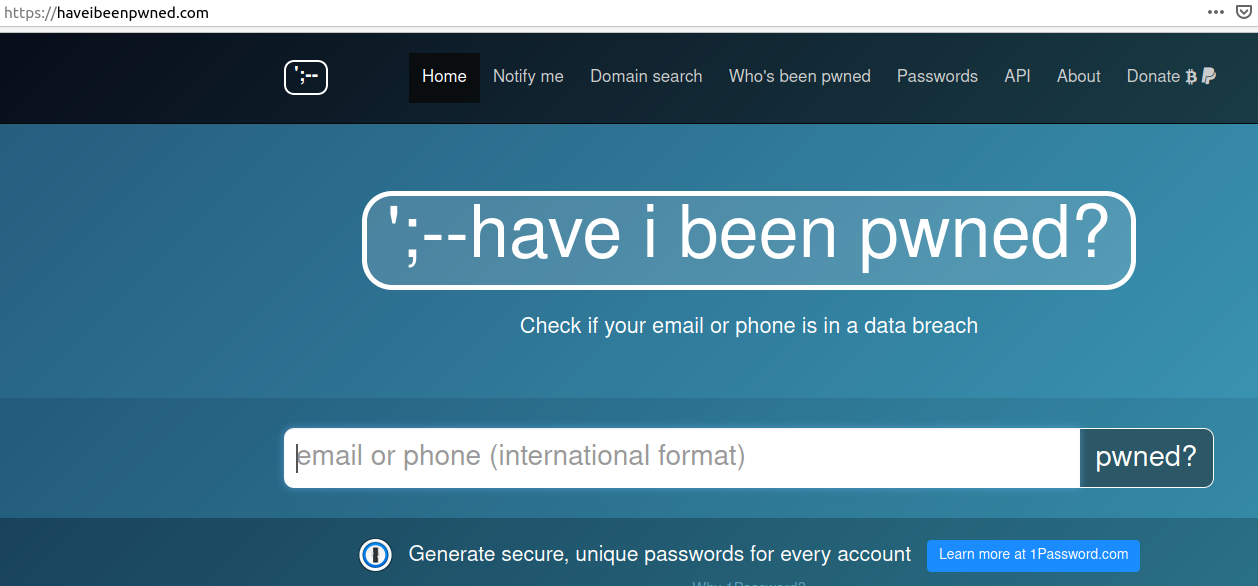
The phone number associated with my late Facebook account (which I deleted in Jan. 2020) was not in HaveIBeenPwned, but then again Facebook claims to have more than 2.7 billion active monthly users.

It appears much of this database has been kicking around the cybercrime underground in one form or another since last summer at least. According to a Jan. 14, 2021 Twitter post from Under the Breach’s Alon Gal, the 533 million Facebook accounts database was first put up for sale back in June 2020, offering Facebook profile data from 100 countries, including name, mobile number, gender, occupation, city, country, and marital status.

Under The Breach also said back in January that someone had created a Telegram bot allowing users to query the database for a low fee, and enabling people to find the phone numbers linked to a large number of Facebook accounts.
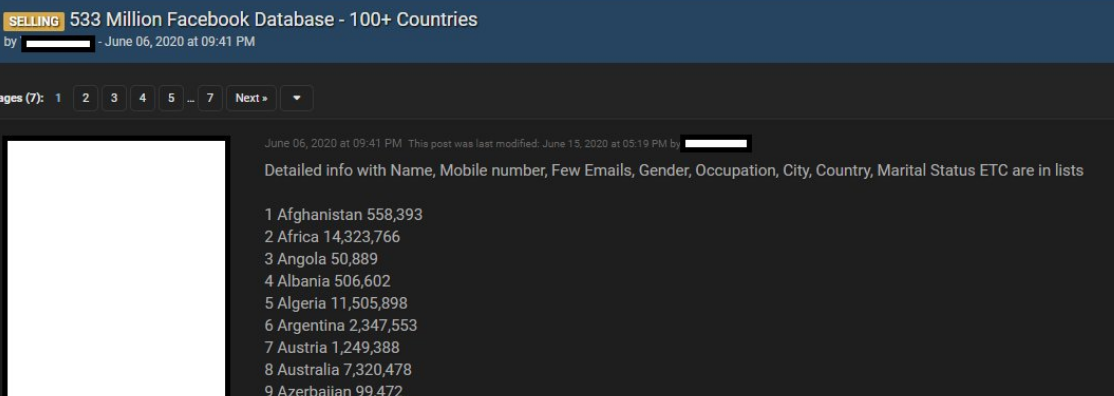
A cybercrime forum ad from June 2020 selling a database of 533 Million Facebook users. Image: @UnderTheBreach

Many people may not consider their mobile phone number to be private information, but there is a world of misery that bad guys, stalkers and creeps can visit on your life just by knowing your mobile number. Sure they could call you and harass you that way, but more likely they will see how many of your other accounts — at major email providers and social networking sites like Facebook, Twitter, Instagram, e.g. — rely on that number for password resets.

From there, the target is primed for a SIM-swapping attack, where thieves trick or bribe employees at mobile phone stores into transferring ownership of the target’s phone number to a mobile device controlled by the attackers. From there, the bad guys can reset the password of any account to which that mobile number is tied, and of course intercept any one-time tokens sent to that number for the purposes of multi-factor authentication.

Or the attackers take advantage of some other privacy and security wrinkle in the way SMS text messages are handled. Last month, a security researcher showed how easy it was to abuse services aimed at helping celebrities manage their social media profiles to intercept SMS messages for any mobile user. That weakness has supposedly been patched for all the major wireless carriers now, but it really makes you question the ongoing sanity of relying on the Internet equivalent of postcards (SMS) to securely handle quite sensitive information.

My advice has long been to remove phone numbers from your online accounts wherever you can, and avoid selecting SMS or phone calls for second factor or one-time codes. Phone numbers were never designed to be identity documents, but that’s effectively what they’ve become. It’s time we stopped letting everyone treat them that way.

Any online accounts that you value should be secured with a unique and strong password, as well as the most robust form of multi-factor authentication available. Usually, this is a mobile app like Authy or Google Authenticator that generates a one-time code. Some sites like Twitter and Facebook now support even more robust options — such as physical security keys.

Removing your phone number may be even more important for any email accounts you may have. Sign up with any service online, and it will almost certainly require you to supply an email address. In nearly all cases, the person who is in control of that address can reset the password of any associated services or accounts– merely by requesting a password reset email.

Unfortunately, many email providers still let users reset their account passwords by having a link sent via text to the phone number on file for the account. So remove the phone number as a backup for your email account, and ensure a more robust second factor is selected for all available account recovery options.

Here’s the thing: Most online services require users to supply a mobile phone number when setting up the account, but do not require the number to remain associated with the account after it is established. I advise readers to remove their phone numbers from accounts wherever possible, and to take advantage of a mobile app to generate any one-time codes for multifactor authentication.

Why did KrebsOnSecurity delete its Facebook account early last year? Sure, it might had something to do with the incessant stream of breaches, leaks and privacy betrayals by Facebook over the years. But what really bothered me were the number of people who felt comfortable sharing extraordinarily sensitive information with me on things like Facebook Messenger, all the while expecting that I can vouch for the privacy and security of that message just by virtue of my presence on the platform.

In case readers want to get in touch for any reason, my email here is krebsonsecurity at gmail dot com, or krebsonsecurity at protonmail.com. I also respond at Krebswickr on the encrypted messaging platform Wickr.

source https://krebsonsecurity.com/2021/04/are-you-one-of-the-533m-people-who-got-facebooked/
Ransom Gangs Emailing Victim Customers for Leverage

Some of the top ransomware gangs are deploying a new pressure tactic to push more victim organizations into paying an extortion demand: Emailing the victim’s customers and partners directly, warning that their data will be leaked to the dark web unless they can convince the victim firm to pay up.

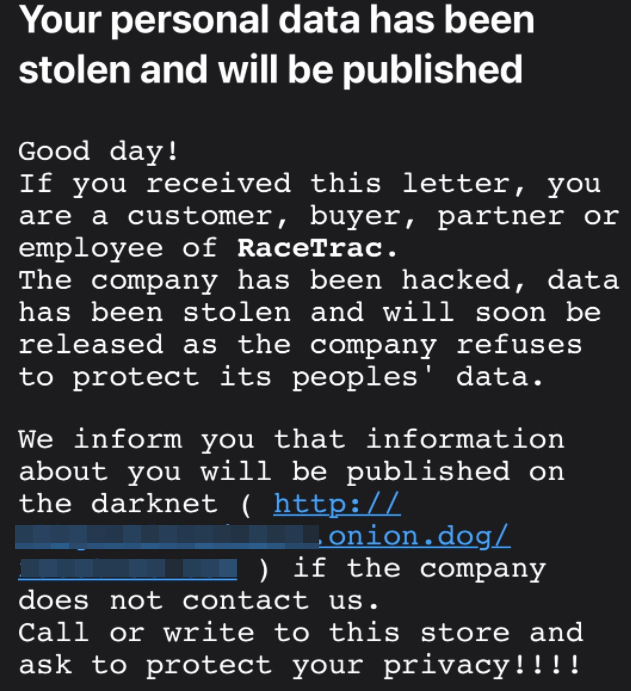
This letter is from the Clop ransomware gang, putting pressure on a recent victim named on Clop’s dark web shaming site.

“Good day! If you received this letter, you are a customer, buyer, partner or employee of [victim],” the missive reads. “The company has been hacked, data has been stolen and will soon be released as the company refuses to protect its peoples’ data.”

“We inform you that information about you will be published on the darknet [link to dark web victim shaming page] if the company does not contact us,” the message concludes. “Call or write to this store and ask to protect your privacy!!!!”

The message above was sent to a customer of RaceTrac Petroleum, an Atlanta company that operates more than 650 retail gasoline convenience stores in 12 southeastern states. The person who shared that screenshot above isn’t a distributor or partner of RaceTrac, but they said they are a RaceTrac rewards member, so the company definitely has their email address and other information.

Several gigabytes of the company’s files — including employee tax and financial records — have been posted to the victim shaming site for the Clop ransomware gang.

In response to questions from KrebsOnSecurity, RaceTrac said it was recently impacted by a security incident affecting one of its third-party service providers, Accellion Inc.

For the past few months, attackers have been exploiting a a zero-day vulnerability in Accellion File Transfer Appliance (FTA) software, a flaw that has been seized upon by Clop to break into dozens of other major companies like oil giant Shell and security firm Qualys.

“By exploiting a previously undetected software vulnerability, unauthorized parties were able to access a subset of RaceTrac data stored in the Accellion File Transfer Service, including email addresses and first names of some of our RaceTrac Rewards Loyalty users,” the company wrote. “This incident was limited to the aforementioned Accellion services and did not impact RaceTrac’s corporate network. The systems used for processing guest credit, debit and RaceTrac Rewards transactions were not impacted.”

The same extortion pressure email has been going out to people associated with the University of California, which was one of several large U.S. universities that got hit with Clop ransomware recently. Most of those university ransomware incidents appeared to be tied to attacks on attacks on the same Accellion vulnerability, and the company has acknowledged roughly a third of its customers on that appliance got compromised as a result.

Clop is one of several ransom gangs that will demand two ransoms: One for a digital key needed to unlock computers and data from file encryption, and a second to avoid having stolen data published or sold online. That means even victims who opt not to pay to get their files and servers back still have to decide whether to pay the second ransom to protect the privacy of their customers.

As I noted in Why Paying to Delete Stolen Data is Bonkers, leaving aside the notion that victims might have any real expectation the attackers will actually destroy the stolen data, new research suggests a fair number of victims who do pay up may see some or all of the stolen data published anyway.

The email in the screenshot above differs slightly from those covered last week by Bleeping Computer, which was the first to spot the new victim notification wrinkle. Those emails say that the recipient is being contacted as they are a customer of the store, and their personal data, including phone numbers, email addresses, and credit card information, will soon be published if the store does not pay a ransom, writes Lawrence Abrams.

“Perhaps you bought something there and left your personal data. Such as phone, email, address, credit card information and social security number,” the Clop gang states in the email.

Fabian Wosar, chief technology officer at computer security firm Emsisoft, said the direct appeals to victim customers is a natural extension of other advertising efforts by the ransomware gangs, which recently included using hacked Facebook accounts to post victim shaming advertisements.

Wosar said Clop isn’t the only ransomware gang emailing victim customers.

“Clop likes to do it and I think REvil started as well,” Wosar said.

Earlier this month, Bleeping Computer reported that the REvil ransomware operation was planning on launching crippling distributed denial of service (DDoS) attacks against victims, or making VOIP calls to victims’ customers to apply further pressure.

“Sadly, regardless of whether a ransom is paid, consumers whose data has been stolen are still at risk as there is no way of knowing if ransomware gangs delete the data as they promise,” Abrams wrote.

source https://krebsonsecurity.com/2021/04/ransom-gangs-emailing-victim-customers-for-leverage/

Ubiquiti All But Confirms Breach Response Iniquity

For four days this past week, Internet-of-Things giant Ubiquiti failed to respond to requests for comment on a whistleblower’s allegations the company had massively downplayed a “catastrophic” two-month breach ending in January to save its stock price, and that Ubiquiti’s insinuation that a third-party was to blame was a fabrication. I was happy to add their eventual public response to the top of Tuesday’s story on the whistleblower’s claims, but their statement deserves a post of its own because it actually confirms and reinforces those claims.

Ubiquiti’s IoT gear includes things like WiFi routers, security cameras, and network video recorders. Their products have long been popular with security nerds and DIY types because they make it easy for users to build their own internal IoT networks without spending many thousands of dollars.

But some of that shine started to come off recently for Ubiquiti’s more security-conscious customers after the company began pushing everyone to use a unified authentication and access solution that makes it difficult to administer these devices without first authenticating to Ubiquiti’s cloud infrastructure.

All of a sudden, local-only networks were being connected to Ubiquiti’s cloud, giving rise to countless discussion threads on Ubiquiti’s user forums from customers upset over the potential for introducing new security risks.

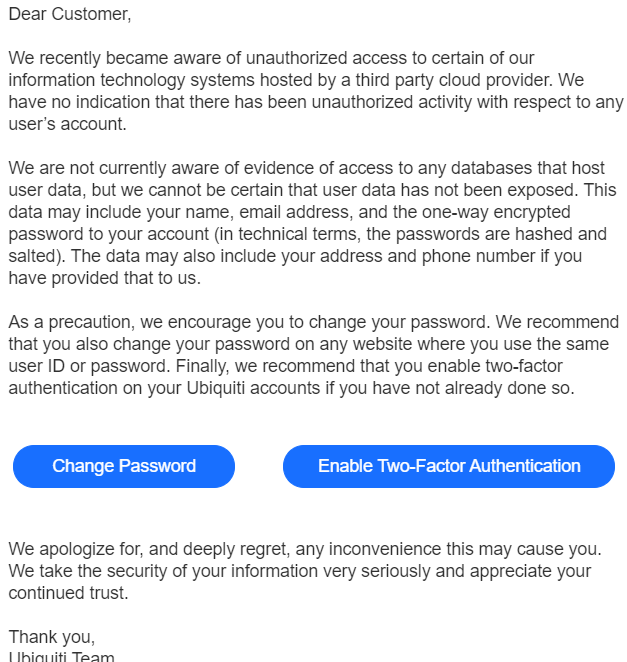
And on Jan. 11, Ubiquiti gave weight to that angst: It told customers to reset their passwords and enable multifactor authentication, saying a breach involving a third-party cloud provider might have exposed user account data. Ubiquiti told customers they were “not currently aware of evidence of access to any databases that host user data, but we cannot be certain that user data has not been exposed.”

Ubiquiti’s notice on Jan. 12, 2021.

On Tuesday, KrebsOnSecurity reported that a source who participated in the response to the breach said Ubiquiti should have immediately invalidated all credentials because all of the company’s key administrator passwords had been compromised as well. The whistleblower also said Ubiquiti never kept any logs of who was accessing its databases.

The whistleblower, “Adam,” spoke on condition of anonymity for fear of reprisals from Ubiquiti. Adam said the place where those key administrator credentials were compromised — Ubiquiti’s presence on Amazon’s Web Services (AWS) cloud services — was in fact the “third party” blamed for the hack.

From Tuesday’s piece:

“In reality, Adam said, the attackers had gained administrative access to Ubiquiti’s servers at Amazon’s cloud service, which secures the underlying server hardware and software but requires the cloud tenant (client) to secure access to any data stored there.

“They were able to get cryptographic secrets for single sign-on cookies and remote access, full source code control contents, and signing keys exfiltration,” Adam said.

Adam says the attacker(s) had access to privileged credentials that were previously stored in the LastPass account of a Ubiquiti IT employee, and gained root administrator access to all Ubiquiti AWS accounts, including all S3 data buckets, all application logs, all databases, all user database credentials, and secrets required to forge single sign-on (SSO) cookies.

Such access could have allowed the intruders to remotely authenticate to countless Ubiquiti cloud-based devices around the world. According to its website, Ubiquiti has shipped more than 85 million devices that play a key role in networking infrastructure in over 200 countries and territories worldwide.

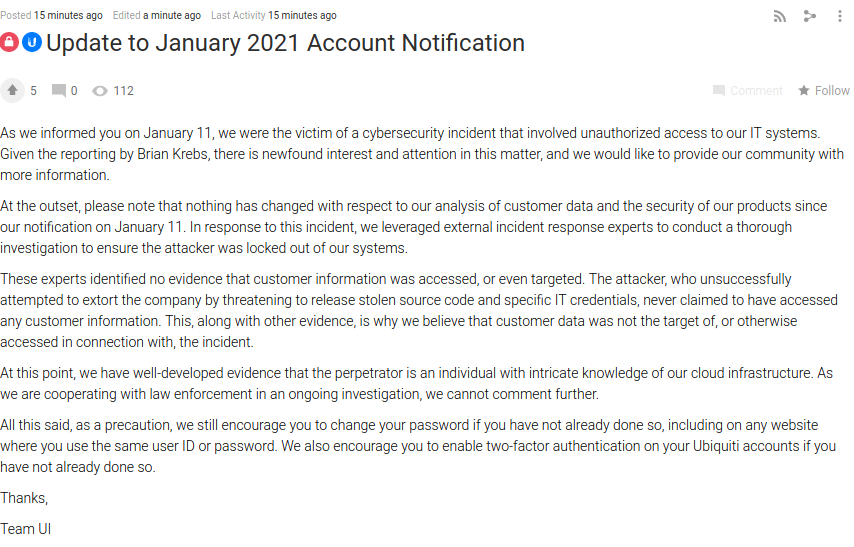
Ubiquiti finally responded on Mar. 31, in a post signed “Team UI” on the company’s community forum online.

“Nothing has changed with respect to our analysis of customer data and the security of our products since our notification on January 11. In response to this incident, we leveraged external incident response experts to conduct a thorough investigation to ensure the attacker was locked out of our systems.”

“These experts identified no evidence that customer information was accessed, or even targeted. The attacker, who unsuccessfully attempted to extort the company by threatening to release stolen source code and specific IT credentials, never claimed to have accessed any customer information. This, along with other evidence, is why we believe that customer data was not the target of, or otherwise accessed in connection with, the incident.”

Ubiquiti’s response this week on its user forum.

Ubiquiti also hinted it had an idea of who was behind the attack, saying it has “well-developed evidence that the perpetrator is an individual with intricate knowledge of our cloud infrastructure. As we are cooperating with law enforcement in an ongoing investigation, we cannot comment further.”

Ubiquiti’s statement largely confirmed the reporting here by not disputing any of the facts raised in the piece. And while it may seem that Ubiquiti is quibbling over whether data was in fact stolen, Adam said Ubiquiti can say there is no evidence that customer information was accessed because Ubiquiti failed to keep logs of who was accessing its databases.

“Ubiquiti had negligent logging (no access logging on databases) so it was unable to prove or disprove what they accessed, but the attacker targeted the credentials to the databases, and created Linux instances with networking connectivity to said databases,” Adam wrote in a whistleblower letter to European privacy regulators last month. “Legal overrode the repeated requests to force rotation of all customer credentials, and to revert any device access permission changes within the relevant period.”

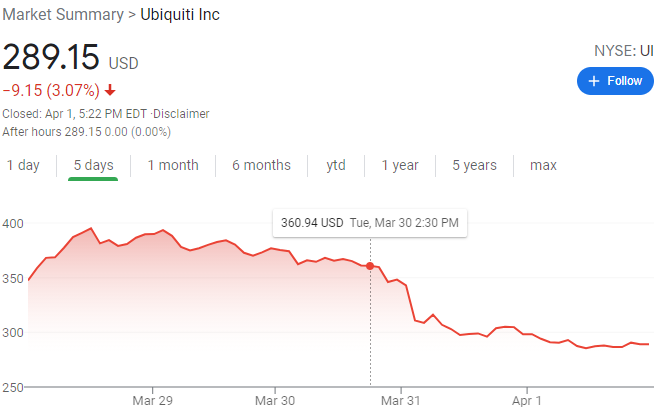
It appears investors noticed the incongruity as well. Ubiquiti’s share price hardly blinked at the January breach disclosure. On the contrary, from Jan. 13 to Tuesday’s story its stock had soared from $243 to $370. By the end of trading day Mar. 30, UI had slipped to $349. By close of trading on Thursday (markets were closed Friday) the stock had fallen to $289.

source https://krebsonsecurity.com/2021/04/ubiquiti-all-but-confirms-breach-response-iniquity/

New KrebsOnSecurity Mobile-Friendly Site

Dear Readers, this has been long overdue, but at last I give you a more responsive, mobile-friendly version of KrebsOnSecurity. We tried to keep the visual changes to a minimum and focus on a simple theme that presents information in a straightforward, easy-to-read format. Please bear with us over the next few days as we hunt down the gremlins in the gears.

We were shooting for responsive (fast) and uncluttered. Hopefully, we achieved that and this new design will render well in whatever device you use to view it. If something looks amiss, please don’t hesitate to drop a note in the comments below.

NB: KrebsOnSecurity has not changed any of its advertising practices: The handful of ads we run are still image-only creatives that are vetted by me and served in-house. If you’re blocking ads on this site, please consider adding an exception here. Thank you!

source https://krebsonsecurity.com/2021/04/new-krebsonsecurity-mobile-friendly-site/

Whistleblower: Ubiquiti Breach “Catastrophic”

On Jan. 11, Ubiquiti Inc. [NYSE:UI] — a major vendor of cloud-enabled Internet of Things (IoT) devices such as routers, network video recorders and security cameras — disclosed that a breach involving a third-party cloud provider had exposed customer account credentials. Now a source who participated in the response to that breach alleges Ubiquiti massively downplayed a “catastrophic” incident to minimize the hit to its stock price, and that the third-party cloud provider claim was a fabrication.

A security professional at Ubiquiti who helped the company respond to the two-month breach beginning in December 2020 contacted KrebsOnSecurity after raising his concerns with both Ubiquiti’s whistleblower hotline and with European data protection authorities. The source — we’ll call him Adam — spoke on condition of anonymity for fear of retribution by Ubiquiti.

“It was catastrophically worse than reported, and legal silenced and overruled efforts to decisively protect customers,” Adam wrote in a letter to the European Data Protection Supervisor. “The breach was massive, customer data was at risk, access to customers’ devices deployed in corporations and homes around the world was at risk.”

Ubiquiti has not responded to repeated requests for comment.

According to Adam, the hackers obtained full read/write access to Ubiquiti databases at Amazon Web Services (AWS), which was the alleged “third party” involved in the breach. Ubiquiti’s breach disclosure, he wrote, was “downplayed and purposefully written to imply that a 3rd party cloud vendor was at risk and that Ubiquiti was merely a casualty of that, instead of the target of the attack.”

In its Jan. 11 public notice, Ubiquiti said it became aware of “unauthorized access to certain of our information technology systems hosted by a third party cloud provider,” although it declined to name the third party.

In reality, Adam said, the attackers had gained administrative access to Ubiquiti’s servers at Amazon’s cloud service, which secures the underlying server hardware and software but requires the cloud tenant (client) to secure access to any data stored there.

“They were able to get cryptographic secrets for single sign-on cookies and remote access, full source code control contents, and signing keys exfiltration,” Adam said.

Adam says the attacker(s) had access to privileged credentials that were previously stored in the LastPass account of a Ubiquiti IT employee, and gained root administrator access to all Ubiquiti AWS accounts, including all S3 data buckets, all application logs, all databases, all user database credentials, and secrets required to forge single sign-on (SSO) cookies.

Such access could have allowed the intruders to remotely authenticate to countless Ubiquiti cloud-based devices around the world. According to its website, Ubiquiti has shipped more than 85 million devices that play a key role in networking infrastructure in over 200 countries and territories worldwide.

Adam says Ubiquiti’s security team picked up signals in late December 2020 that someone with administrative access had set up several Linux virtual machines that weren’t accounted for.

Then they found a backdoor that an intruder had left behind in the system.

When security engineers removed the backdoor account in the first week of January, the intruders responded by sending a message saying they wanted 50 bitcoin (~$2.8 million USD) in exchange for a promise to remain quiet about the breach. The attackers also provided proof they’d stolen Ubiquiti’s source code, and pledged to disclose the location of another backdoor if their ransom demand was met.

Ubiquiti did not engage with the hackers, Adam said, and ultimately the incident response team found the second backdoor the extortionists had left in the system. The company would spend the next few days furiously rotating credentials for all employees, before Ubiquiti started alerting customers about the need to reset their passwords.

But he maintains that instead of asking customers to change their passwords when they next log on — as the company did on Jan. 11 — Ubiquiti should have immediately invalidated all of its customer’s credentials and forced a reset on all accounts, mainly because the intruders already had credentials needed to remotely access customer IoT systems.

“Ubiquiti had negligent logging (no access logging on databases) so it was unable to prove or disprove what they accessed, but the attacker targeted the credentials to the databases, and created Linux instances with networking connectivity to said databases,” Adam wrote in his letter. “Legal overrode the repeated requests to force rotation of all customer credentials, and to revert any device access permission changes within the relevant period.”

If you have Ubiquiti devices installed and haven’t yet changed the passwords on the devices since Jan. 11 this year, now would be a good time to care of that.

It might also be a good idea to just delete any profiles you had on these devices, make sure they’re up to date on the latest firmware, and then re-create those profiles with new [and preferably unique] credentials. And seriously consider disabling any remote access on the devices.

Ubiquiti’s stock price has grown remarkably since the company’s breach disclosure Jan. 16. After a brief dip following the news, Ubiquiti’s shares have surged from $243 on Jan. 13 to $370 as of today.

source https://krebsonsecurity.com/2021/03/whistleblower-ubiquiti-breach-catastrophic/

No, I Did Not Hack Your MS Exchange Server

New data suggests someone has compromised more than 21,000 Microsoft Exchange Server email systems worldwide and infected them with malware that invokes both KrebsOnSecurity and Yours Truly by name.

Let’s just get this out of the way right now: It wasn’t me.

The Shadowserver Foundation, a nonprofit that helps network owners identify and fix security threats, says it has found 21,248 different Exchange servers which appear to be compromised by a backdoor and communicating with brian[.]krebsonsecurity[.]top (NOT a safe domain, hence the hobbling).

Shadowserver has been tracking wave after wave of attacks targeting flaws in Exchange that Microsoft addressed earlier this month in an emergency patch release. The group looks for attacks on Exchange systems using a combination of active Internet scans and “honeypots” — systems left vulnerable to attack so that defenders can study what attackers are doing to the devices and how.

David Watson, a longtime member and director of the Shadowserver Foundation Europe, says his group has been keeping a close eye on hundreds of unique variants of backdoors (a.k.a. “web shells”) that various cybercrime groups worldwide have been using to commandeer any unpatched Exchange servers. These backdoors give an attacker complete, remote control over the Exchange server (including any of the server’s emails).

On Mar. 26, Shadowserver saw an attempt to install a new type of backdoor in compromised Exchange Servers, and with each hacked host it installed the backdoor in the same place: “/owa/auth/babydraco.aspx.

“The web shell path that was dropped was new to us,” said Watson said. “We have been testing 367 known web shell paths via scanning of Exchange servers.”

OWA refers to Outlook Web Access, the Web-facing portion of on-premises Exchange servers. Shadowserver’s honeypots saw multiple hosts with the Babydraco backdoor doing the same thing: Running a Microsoft Powershell script that fetches the file “krebsonsecurity.exe” from the Internet address 159.65.136[.]128. Oddly, none of the several dozen antivirus tools available to scan the file at Virustotal.com currently detect it as malicious.

The Krebsonsecurity file also installs a root certificate, modifies the system registry, and schedules a task to run in perpetuity. Which task, you ask? It runs Windows Defender, which is a security product Microsoft ships with Windows devices that can help block attacks such as those we’ve seen targeting Exchange servers.

Turning on Windows Defender ensures that the machines won’t be compromised by other attackers going forward. While it may be tempting to think this Krebsonsecurity file is some kind of benign worm trying to inoculate vulnerable Exchange Server systems, whoever unleashed this thing is  likely still in control of these 21,000+ Exchange servers.

Indeed, Watson said the Krebsonsecurity file will attempt to open up an encrypted connection between the Exchange server and the above-mentioned IP address, and send a small amount of traffic to it each minute.

Shadowserver found more than 21,000 Exchange Server systems that had the Babydraco backdoor installed. But Watson said they don’t know how many of those systems also ran the secondary download from the rogue Krebsonsecurity domain.

“Despite the abuse, this is potentially a good opportunity to highlight how vulnerable/compromised MS Exchange servers are being exploited in the wild right now, and hopefully help get the message out to victims that they need to sign up our free daily network reports,” Watson said.

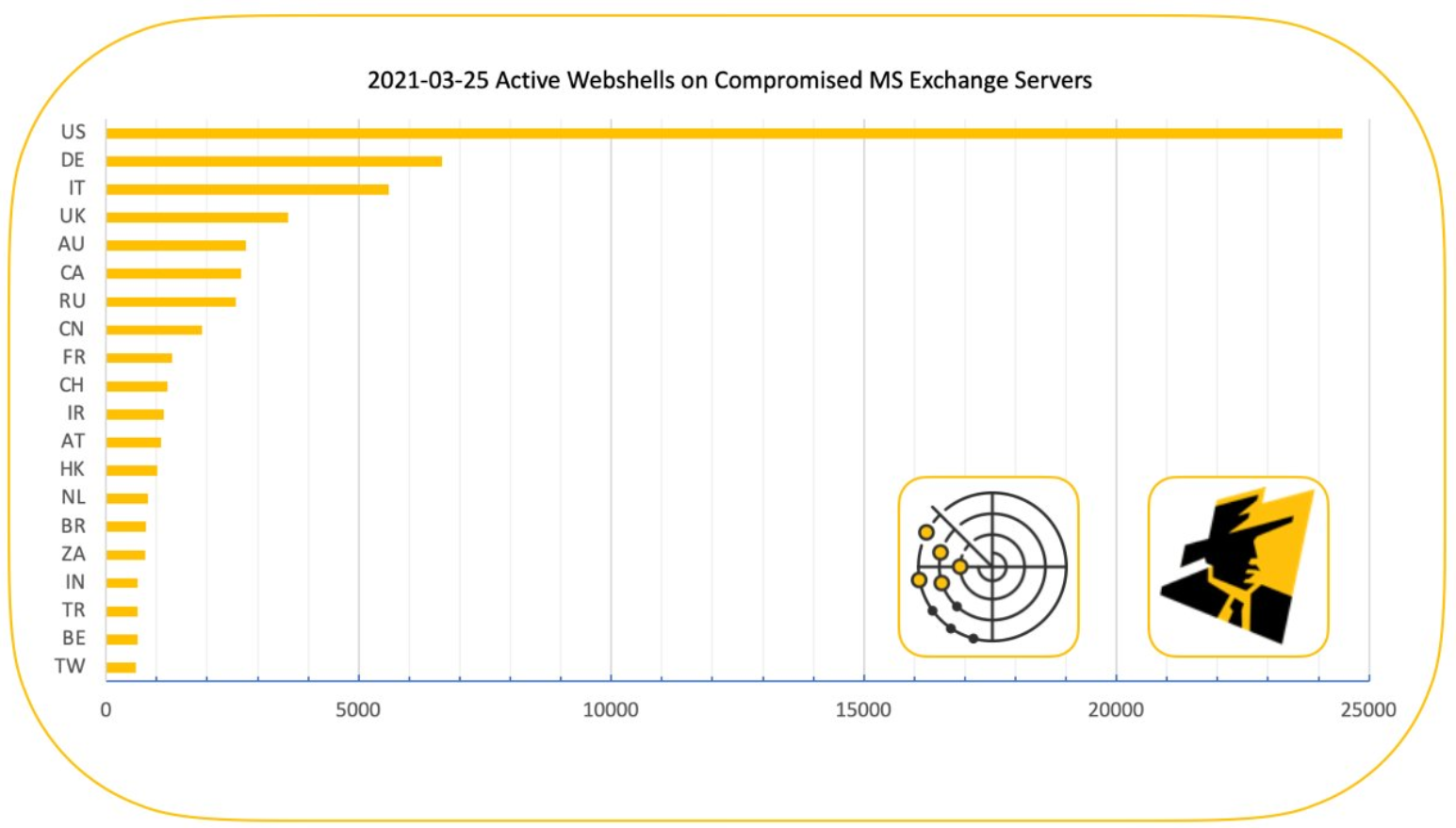
There are hundreds of thousands of Exchange Server systems worldwide that were vulnerable to attack (Microsoft suggests the number is about 400,000), and most of those have been patched over the last few weeks. However, there are still tens of thousands of vulnerable Exchange servers exposed online. On Mar. 25, Shadowserver tweeted that it was tracking 73,927 unique active webshell paths across 13,803 IP addresses.

Image: Shadowserver.org

Exchange Server users that haven’t yet patched against the four flaws Microsoft fixed earlier this month can get immediate protection by deploying Microsoft’s “One-Click On-Premises Mitigation Tool.”

The motivations of the cybercriminals behind the Krebonsecurity dot top domain are unclear, but the domain itself has a recent association with other cybercrime activity — and of harassing this author. I first heard about the domain in December 2020, when a reader told me how his entire network had been hijacked by a cryptocurrency mining botnet that called home to it.

“This morning, I noticed a fan making excessive noise on a server in my homelab,” the reader said. “I didn’t think much of it at the time, but after a thorough cleaning and test, it still was noisy. After I was done with some work-related things, I checked up on it – and found that a cryptominer had been dropped on my box, pointing to XXX-XX-XXX.krebsonsecurity.top’. In all, this has infected all three linux boxes on my network.”

What was the subdomain I X’d out of his message? Just my Social Security number. I’d been doxed via DNS.

This is hardly the first time malware or malcontents have abused my name, likeness and website trademarks as a cybercrime meme, for harassment, or just to besmirch my reputation. Here are a few of the more notable examples, although all of those events are almost a decade old. That same list today would be pages long.

Further reading:

A Basic Timeline of the Exchange Mass-Hack

Warning the World of a Ticking Timebomb

At Least 30,000 U.S. Organizations Newly Hacked Via Holes in Microsoft’s Email Software

Microsoft: Chinese Cyberspies Used 4 Exchange Server Flaws to Plunder Emails

source https://krebsonsecurity.com/2021/03/no-i-did-not-hack-your-ms-exchange-server/

Phish Leads to Breach at Calif. State Controller

A phishing attack last week gave attackers access to email and files at the California State Controller’s Office (SCO), an agency responsible for handling more than $100 billion in public funds each year. The phishers had access for more than 24 hours, and sources tell KrebsOnSecurity the intruders used that time to steal Social Security numbers and sensitive files on thousands of state workers, and to send targeted phishing messages to at least 9,000 other workers and their contacts.

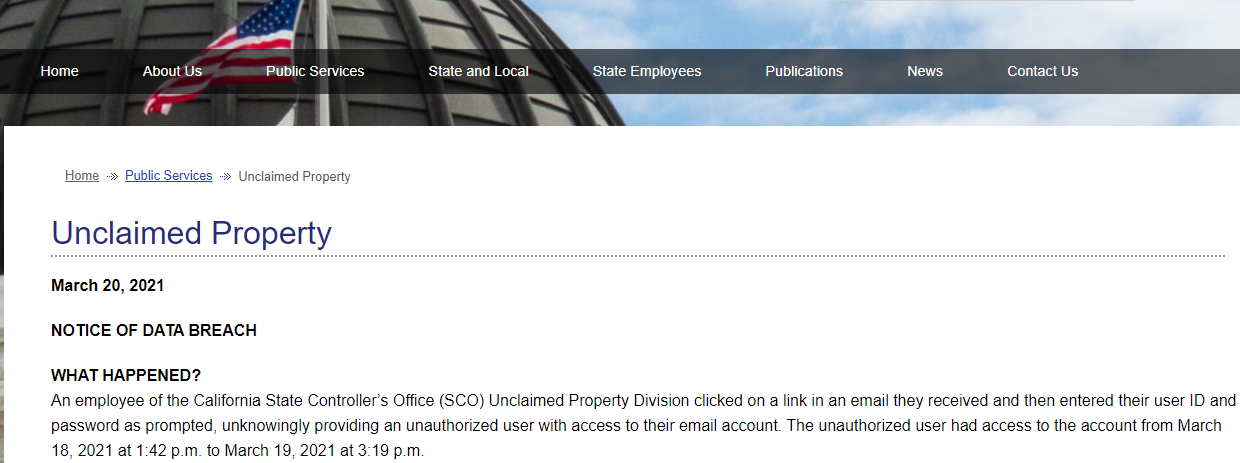
A notice of breach posted by the California State Controller’s Office.

In a “Notice of Data Breach” message posted on Saturday, Mar. 20, the Controller’s Office said that for more than 24 hours starting on the afternoon of March 18 attackers had access to the email records of an employee in its Unclaimed Property Division after the employee clicked a phishing link and then entered their email ID and password.

“The SCO has reason to believe the compromised email account had personal identifying information contained in Unclaimed Property Holder Reports,” the agency said, urging state employees contacted by the agency to place fraud alerts on their credit files with the major consumer bureaus.  “The unauthorized user also sent potentially malicious emails to some of the SCO employee’s contacts.”

The SCO has not responded to requests for comment first sent Monday. But an always-reliable source in an adjacent California state agency who’s been tracking the incident internally with other employees says the SCO forgot to mention the intruders also had access to the phished employee’s Microsoft Office 365 files — and potentially any files shared with that account across the state network.

“This isn’t even the full extent of the breach,” said the California state employee, who spoke on condition of anonymity.

The source said the intruders stole several documents with personal and financial data on thousands of state employees, and then used the phished employee’s inbox to send targeted phishing emails to at least 9,000 California state workers and their contacts.

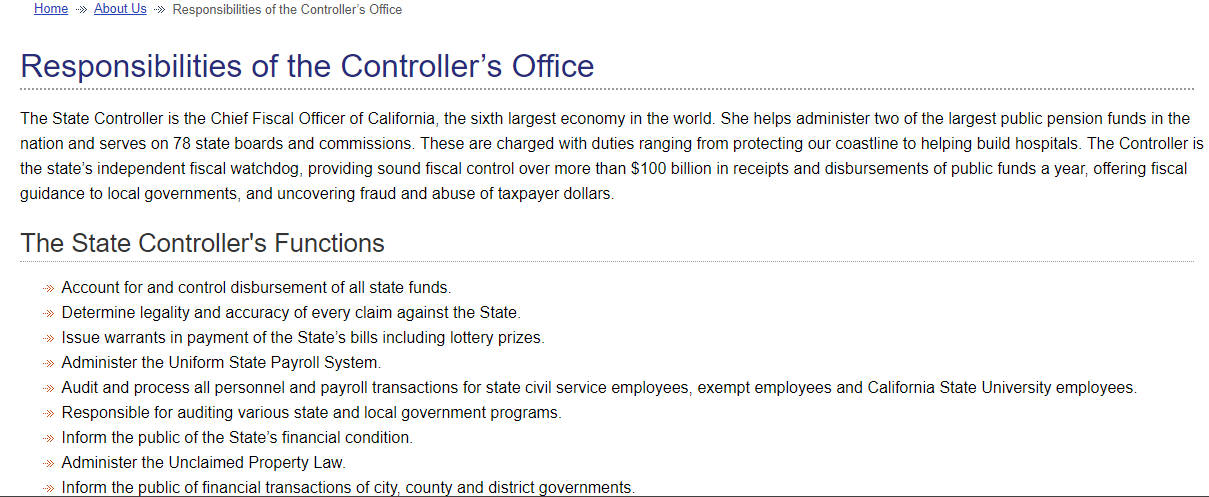
The State Controller is the Chief Fiscal Officer of California, the sixth largest economy in the world. Source: sco.ca.gov.

Many attackers can do a great deal of damage with 24 hours of access to a user’s account. And spear-phishing others that frequently interact with the SCO via email could land the bad guys even more access to state systems. The SCO holds an enormous amount of personal and financial information on millions of people and companies that do business with or in the state.

Organizations hoping to improve internal security often turn to companies that help employees learn how to detect and dodge email phishing attacks — by sending them simulated phishing emails and then grading employees on their responses. The employee said that until very recently California was using one such company to help them conduct regular employee training on phishing.

Then in October 2020, the California Department of Technology (CDT) issued a new set of guidelines that effectively require all executives, managers and supervisors to know all of the details of a phishing exercise before it occurs. Which suggests plenty of people who definitely should get phish tested along with everyone else won’t get the same ongoing training.

“Meaning, such people will be tested ever again,” the state agency source said. “It’s utterly absurd and no one at CDT is taking ownership of this kludge. The standard was also written in such a way to effectively ban dynamic testing like you see in KnowBe4, where even an administrator won’t know what phishing template they might receive.” [Full disclosure: KnowBe4 is an advertiser on this site].

KrebsOnSecurity reached out to the CDT for comment, and will update this post if they reply.

source https://krebsonsecurity.com/2021/03/phish-leads-to-breach-at-calif-state-controller/

RedTorch Formed from Ashes of Norse Corp.

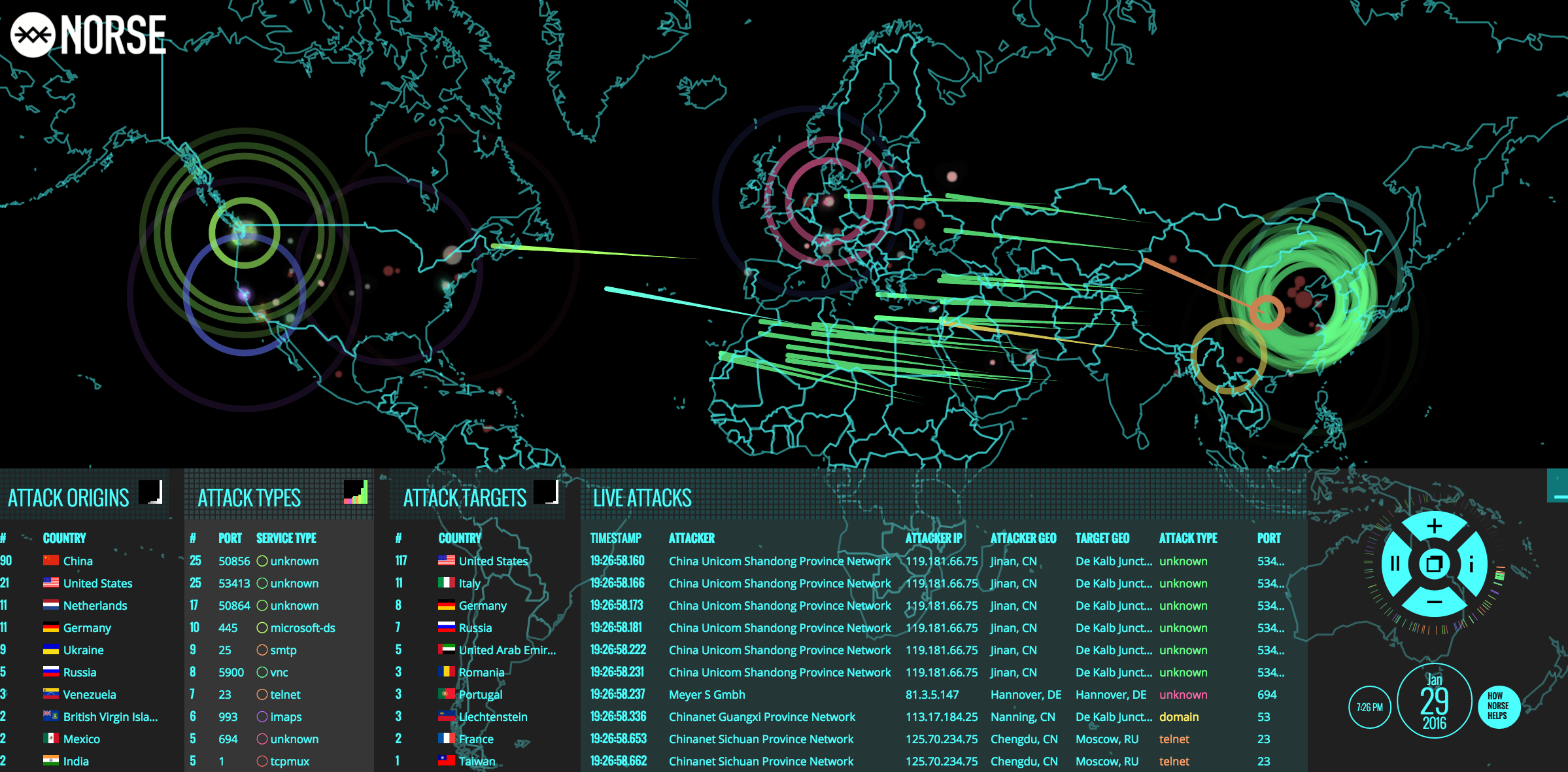
Remember Norse Corp., the company behind the interactive “pew-pew” cyber attack map shown in the image blow? Norse imploded rather suddenly in 2016 following a series of managerial missteps and funding debacles. Now, the founders of Norse have launched a new company with a somewhat different vision: RedTorch, which for the past two years has marketed a mix of services to high end celebrity clients, including spying and anti-spying tools and services.

A snapshot of Norse’s semi-live attack map, circa Jan. 2016.

Norse’s attack map was everywhere for several years, and even became a common sight in the “brains” of corporate security operations centers worldwide. Even if the data that fueled the maps was not particularly useful, the images never failed to enthrall visitors viewing them on room-sized screens.

“In the tech-heavy, geek-speak world of cybersecurity, these sorts of infographics and maps are popular because they promise to make complicated and boring subjects accessible and sexy,” I wrote in a January 2016 story about Norse’s implosion. “And Norse’s much-vaunted interactive attack map was indeed some serious eye candy: It purported to track the source and destination of countless Internet attacks in near real-time, and showed what appeared to be multicolored fireballs continuously arcing across the globe.”

That story showed the core Norse team had a history of ambitious but ultimately failed or re-branded companies. One company proclaimed it was poised to spawn a network of cyber-related firms, but instead ended up selling cigarettes online. That company, which later came under investigation by state regulators concerned about underage smokers, later rebranded to another start-up that tried to be an online copyright cop.

Flushed with venture capital funding in 2012, Norse’s founders started hiring dozens of talented cybersecurity professionals. By 2014 was throwing lavish parties at top internet security conferences. It spent quite a bit of money on marketing gimmicks and costly advertising stunts, burning through millions in investment funding. In 2016, financial reality once again would catch up with the company’s leadership when Norse abruptly ceased operations and was forced to lay off most of its staff.

Now the top executives behind Norse Corp. are working on a new venture: A corporate security and investigations company called RedTorch that’s based in Woodland Hills, Calif, the home of many Hollywood celebrities.

RedTorch’s website currently displays a “We’re coming soon” placeholder page. But a version of the site that ran for two years beginning in 2018 explained what clients can expect from the company’s services:

  • “Frigg Mobile Intelligence,” for helping celebrities and other wealthy clients do background checks on the people in their lives;
  • “Cheetah Counter Surveillance” tools/services to help deter others from being able to spy on clients electronically;
  • A “Centurion Research” tool for documenting said snooping on others.

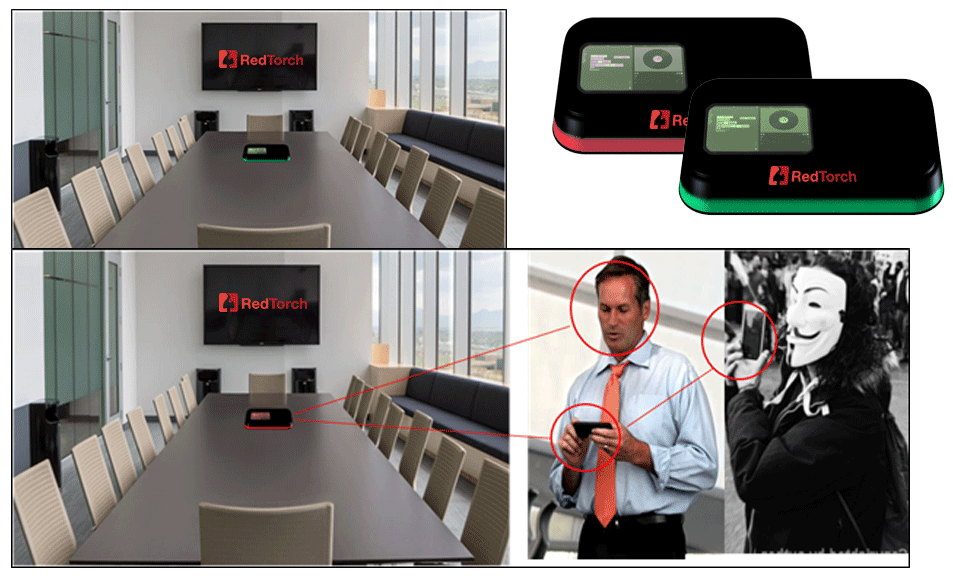
An ad for RedTorch’s “Cheetah” counter-surveillance tech. The Guy Fawkes mask/Anonymous threat featured prominently and often on RedTorch’s website.

The closest thing to eye candy for RedTorch is its Cheetah Counter Surveillance product line, a suite of hardware and software meant to be integrated into other security products which — according to RedTorch — constantly sweeps the client’s network and physical office space with proprietary technology designed to detect remote listening bugs and other spying devices.

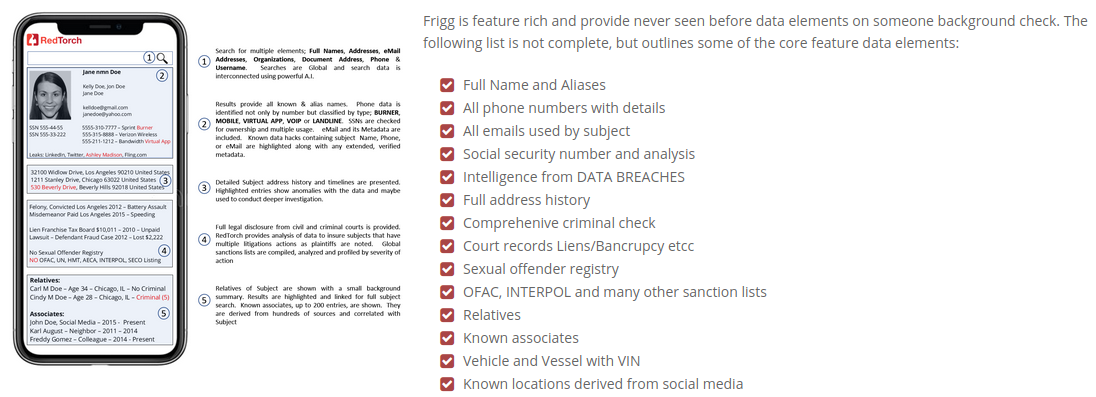
Frigg, another core RedTorch offering, is…well, friggin’ spooky:

“Frigg is the easiest way to do a full background check and behavioral analysis on people,” the product pitch reads. “Frigg not only shows background checks, but social profiles and a person’s entire internet footprint, too. This allows one to evaluate a person’s moral fiber and ethics. Frigg employs machine learning and analytics on all known data from a subject’s footprint, delivering instant insight so you can make safer decisions, instantly.”

The background checking service from RedTorch, called Frigg, says it’s building “one of the world’s largest facial recognition databases and a very accurate facial recognition match standard.”

Frigg promises to include “elements that stems [sic] from major data hacks of known systems like Ashley Madison, LinkedIn, Dropbox, Fling.com, AdultFriendFinder and hundreds more. Victims of those breaches lost a lot of private data including passwords, and Frigg will help them secure their private data in the future. The matching that is shown will use email, phone and full name correlation.”

From the rest of Frigg:

Frigg references sanction lists such as OFAC, INTERPOL wanted persons, and many more international and domestic lists. Known locations results are based on social media profiles and metadata where, for example, there was an image posted that showed GPS location, or the profile mentions locations among its comments.

Frigg provides the option of continuous monitoring on searched background reports. Notification will be sent or shown once an important update or change has been detected

The flagship version of Frigg will allow a user to upload a picture of a face and get a full background check instantly. RedTorch is working to develop one of the world’s largest facial recognition databases and a very accurate facial recognition match standard.

WHO IS REDTORCH?

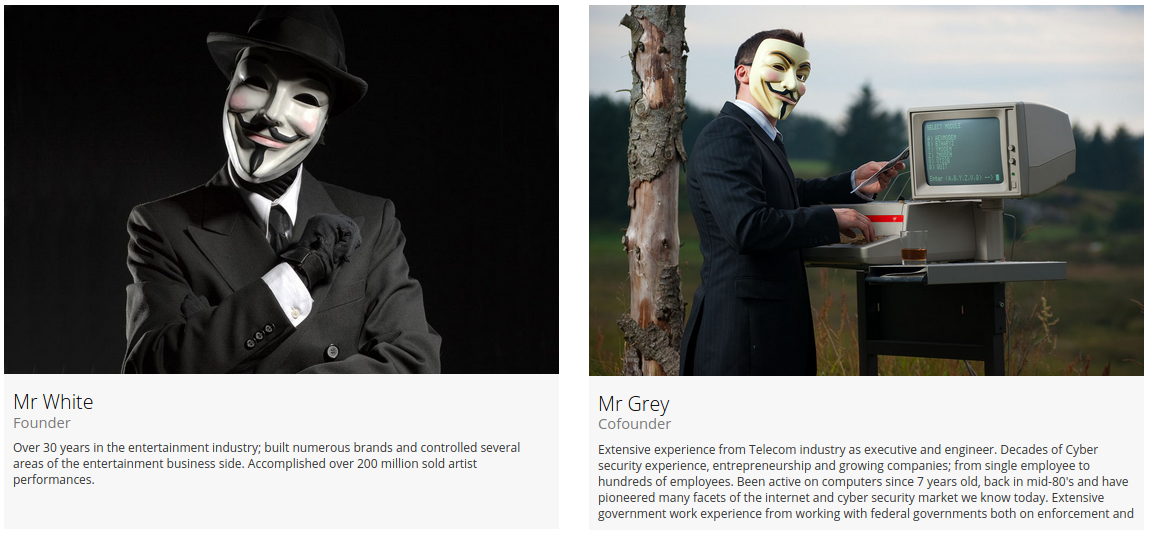
The co-founders of Norse Networks, “Mr. White” (left) Norse Corp. co-founder and RedTorch CEO Henry Marx;, and “Mr. Grey,” CTO and Norse Corp. co-founder Tommy Stiansen.

RedTorch claims it is building a huge facial recognition database, so it’s perhaps no surprise that its founders prefer to obscure theirs. The contact email on RedTorch says henry @retorch dot com. That address belongs to RedTorch Inc. CEO Henry Marx, a former music industry executive and co-founder of Norse Networks.

Marx did not respond to requests for comment. Nor did any of the other former Norse Corp. executives mentioned throughout this story. So I should emphasize that it’s not even clear whether the above-mentioned products and services from RedTorch actually exist.

One executive at Red Torch told this author privately that the company had plenty of high-paying clients, although that person declined to be more specific about what RedTorch might do for those clients or why the company’s site was currently in transition.

Now a cadre of former Norse Corp. employees who have been tracking the company’s past executives say they’ve peered through the playful subterfuge in the anonymous corporate identities on the archived RedTorch website.

Marx appears to be the “Mr. White” referenced in the screenshot below, taken from an archived Aug. 2020 version of RedTorch.com. He is wearing a Guy Fawkes mask, a symbol favored by the Anonymous hacker collective, the doomed man behind the failed Gunpowder plot of 1604 in England, and by possibly the most annoying costumes that darken your front door each Halloween.

Mr. White says he has “over 30 years in the entertainment industry; built numerous brands and controlled several areas of the entertainment business side,” and that he’s “accomplished over 200 million sold artist performances.”

Pictured beside Mr. White is RedTorch’s co-founder, “Mr. Grey.” Norse watchers say that would be Tommy Stiansen, the Norwegian former co-founder of Norse Corp. whose LinkedIn profile says is now chief technology officer at RedTorch. One of his earliest companies provided “operational billing solutions for telecom networks.”

“Extensive experience from Telecom industry as executive and engineer,” reads Mr. Grey’s profile at RedTorch. “Decades of Cyber security experience, entrepreneurship and growing companies; from single employee to hundreds of employees. Been active on computers since 7 years old, back in mid-80’s and have pioneered many facets of the internet and cyber security market we know today. Extensive government work experience from working with federal governments.”

Stiansen’s leadership at Norse coincided with the company’s release of a report in 2014 on Iran’s cyber prowess that was widely trounced as deeply flawed and headline-grabbing. Norse’s critics said the company’s founders had gone from selling smokes to selling smoke and mirrors.

In its report, Norse said it saw a half-million attacks on industrial control systems by Iran in the previous 24 months — a 115 percent increase in attacks! But there was just one problem: The spike in attacks Norse cited weren’t real attacks against actual industrial targets. Rather, they were against “honeypot” systems set up by Norse to mimic a broad range of devices online.

Translation: The threats Norse warned about weren’t actionable, and weren’t anything that people could use to learn about actual attack events hitting sensitive control system networks.

In a scathing analysis of Norse’s findings, critical infrastructure security expert Robert M. Lee said Norse’s claim of industrial control systems being attacked and implying it was definitively the Iranian government was disingenuous at best. Lee had obtained an advanced copy of a draft version of the Norse report that was shared with unclassified government and private industry channels, and said the data in the report simply did not support its conclusions.

Around the same time, Stiansen was reportedly telling counterparts at competing security firms that Norse had data showing that the Sony Pictures hack in November 2014 — in which Sony’s internal files and emails were published online — was in fact the work of a disgruntled insider at Sony.

Norse’s crack team of intelligence analysts had concluded that the FBI and other intelligence sources were wrong in publicly blaming the massive breach on North Korean hackers. But Norse never published that report, nor did it produce any data that might support their insider claim in the Sony hack.

Last month, the U.S. Justice Department unsealed indictments against three North Korean hackers accused of plundering and pillaging Sony Pictures, launching the WannaCry ransomware contagion of 2017, and stealing more than $200 million from banks and other victims worldwide.

Norse’s conclusions on Iran and Sony were supported by Tyson Yee, a former Army intelligence analyst who worked at Norse from 2012 to Jan. 2016. Yee is listed on LinkedIn as director of intelligence at RedTorch, and his LinkedIn profile says his work prior to RedTorch in Nov. 2018 was for two years as a “senior skunk works analyst” at an unnamed employer.

source https://krebsonsecurity.com/2021/03/redtorch-formed-from-ashes-of-norse-corp/

Fintech Giant Fiserv Used Unclaimed Domain

If you sell Web-based software for a living and ship code that references an unregistered domain name, you are asking for trouble. But when the same mistake is made by a Fortune 500 company, the results can range from costly to disastrous. Here’s the story of one such goof committed by Fiserv [NASDAQ:FISV], a $6 billion firm that provides online banking software and other technology solutions to thousands of financial institutions.

In November 2020, KrebsOnSecurity heard from security researcher Abraham Vegh, who noticed something odd while inspecting an email from his financial institution.

Vegh could see the message from his bank referenced a curious domain: defaultinstitution.com. A quick search of WHOIS registration records showed the domain was unregistered. Wondering whether he might receive email communications to that address if he registered the domain, Vegh snapped it up for a few dollars, set up a catch-all email account for it, and waited.

“It appears that the domain is provided as a default, and customer bank IT departments are either assuming they don’t need to change it, or are not aware that they could/should,” Vegh said, noting that a malicious person who stumbled on his discovery earlier could have had a powerful, trusted domain from which to launch email phishing attacks.

At first, only a few wayward emails arrived. Ironically enough, one was from a “quality assurance” manager at Fiserv. The automatic reply message stated that the employee was out of the office “on R&R” and would be back to work on Dec. 14.

Many other emails poured in, including numerous “bounced” messages delivered in reply to missives from Cashedge.com, a money transfer service that Fiserv acquired in 2011.

Emails get bounced — or returned to the sender — when they are sent to an address that doesn’t exist or that is no longer active. The messages had been sent to an email address for a former client solutions director at Fiserv; the “reply-to:” address in those missives was “donotreply@defaultinstitution.com”.

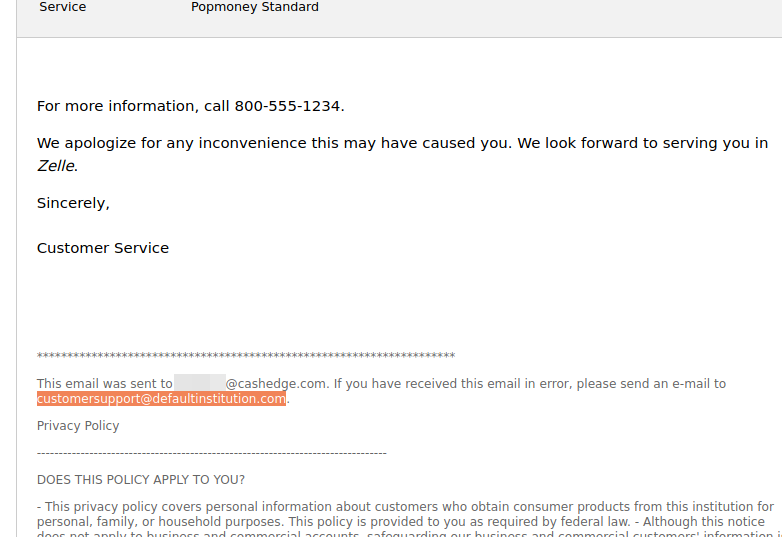
The messages were informing customers of CashEdge’s main service Popmoney — which lets users send, request and receive money directly from bank accounts — that Popmoney was being replaced with Zelle, a more modern bank-to-bank transfer service.

Each CashEdge missive included information about recurring transfers that were being canceled, such as the plan ID, send date, amount to be transferred, the name and last four digits of the account number the money was coming from, and the email address of the recipient account.

Incredibly, at the bottom of every message to CashEdge/Popmoney customers was a boilerplate text: “This email was sent to [recipient name here]. If you have received this email in error, please send an e-mail to customersupport@defaultinstitution.com.”

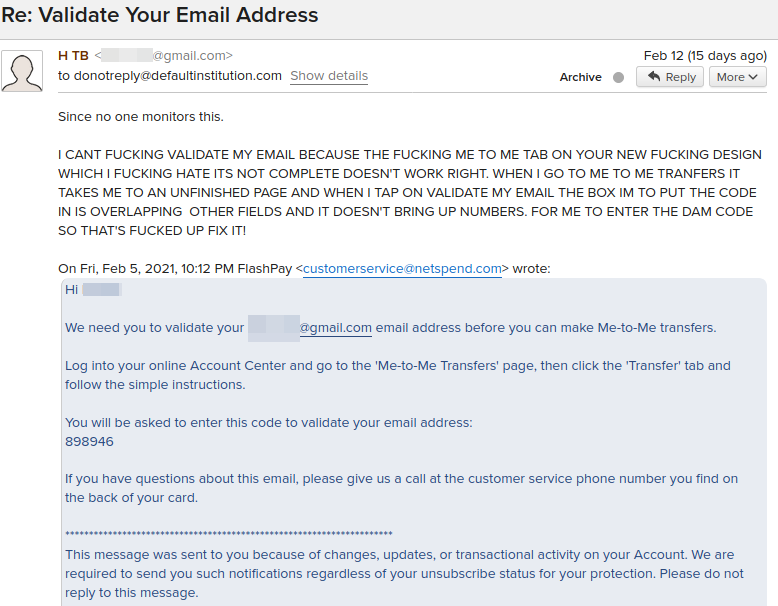
Other services that directed customers to reply to the researcher’s domain included Fiserv customer Netspend.com, a leading provider of prepaid debit cards that require no minimum balance or credit check. The messages from Netspend all were to confirm the email address tied to a new account, and concerned “me-to-me transfers” set up through its service.

Each message included a one-time code that recipients were prompted to enter at the company’s website. But from reading the many replies to these missives, it seems Netspend didn’t make it terribly obvious where users were supposed to input this code. Here’s one of the more profane examples of a customer response:

Many others emailed by Netspend expressed mystification as to why they were receiving such messages, stating they’d never signed up for the service. From the gist of those messages, the respondents were victims of identity fraud.

“My accounts were hacked and if any funding is gone your [sic] sued from me and federal trade commission,” one wrote. “I didn’t create the account. Please stop this account and let me know what’s going on,” replied another. “I never signed up for this service. Someone else is using my information,” wrote a third.

Those messages also concerned me-to-me transfers. Other emails came from Detroit-based TCF National Bank.

New York-based Union Bank also sent customer information to the researcher’s domain. Both of those messages were intended to confirm that the recipient had tied their accounts to those at another bank. And in both cases, the recipients replied that they had not authorized the linkage.

In response to questions from KrebsOnSecurity, Fiserv acknowledged that it had inadvertently included references to defaultinstitution.com as a placeholder in software solutions used by some partners.

“We have identified 5 clients for which auto-generated emails to their customers included the domain name “defaultinstitution.com” in the “reply-to” address,” Fiserv said in a written statement. “This placeholder URL was inadvertently left unchanged during implementation of these solutions. Upon being made aware of the situation we immediately conducted an analysis to locate and replace instances of the placeholder domain name. We have also notified the clients whose customers received these emails.”

Indeed, the last email Vegh’s inbox received was on Feb. 26.

This is not the first time an oversight by Fiserv has jeopardized the security and privacy of its customers. In 2018, KrebsOnSecurity revealed how a programming weakness in a software platform sold to hundreds of banks exposed personal and financial data of countless customers. Fiserv was later sued over the matter by a credit union customer; that lawsuit is still proceeding.

Vegh said he found a similar domain goof while working as a contractor at the Federal Reserve Bank of Philadelphia back in 2015. In that instance, he discovered an unregistered domain invoked by AirWatch, a mobile device management product since acquired by VMWare.

“After registering that domain I started getting traffic from all around the world from Fortune 500 company devices pinging the domain,” Vegh said.

Vegh said he plans to give Fiserv control over defaultinstitution.com, and hand over the messages intercepted by his inbox. He’s not asking for much in return.

“I had been promised a t-shirt and a case of beer for my efforts then, but alas, never received one,” he said of his interaction with AirWatch. “This time, I am hoping to actually receive a t-shirt!”

source https://krebsonsecurity.com/2021/03/fintech-giant-fiserv-used-unclaimed-domain/

Can We Stop Pretending SMS Is Secure Now?

SMS text messages were already the weakest link securing just about anything online, mainly because there are tens of thousands of people (many of them low-paid mobile store employees) who can be tricked or bribed into swapping control over a mobile phone number to someone else. Now we’re learning about an entire ecosystem of companies that anyone could use to silently intercept text messages intended for other mobile users.

Security researcher “Lucky225” worked with Vice.com’s Joseph Cox to intercept Cox’s incoming text messages with his permission. Lucky225 showed how anyone could do the same after creating an account at a service called Sakari, a company that helps celebrities and businesses do SMS marketing and mass messaging.

The “how they did it” was sickeningly simple. It cost just $16, and there was precious little to prevent someone from stealing your text messages without your knowledge. Cox writes:

Sakari offers a free trial to anyone wishing to see what the company’s dashboard looks like. The cheapest plan, which allows customers to add a phone number they want to send and receive texts as, is where the $16 goes. Lucky225 provided Motherboard with screenshots of Sakari’s interface, which show a red “+” symbol where users can add a number.

While adding a number, Sakari provides the Letter of Authorization for the user to sign. Sakari’s LOA says that the user should not conduct any unlawful, harassing, or inappropriate behavior with the text messaging service and phone number.

But as Lucky225 showed, a user can just sign up with someone else’s number and receive their text messages instead.

Lucky told KrebsOnSecurity that Sakari has since taken steps to block its service for being used with mobile telephone numbers. But he said Sakari is just one part of a much larger, unregulated industry that can be used to hijack SMS messages for many phone numbers.

“It’s not a Sakari thing,” Lucky225 replied when first approached for more details. “It’s an industry-wide thing. There are many of these ‘SMS enablement’ providers.”

The most common way thieves hijack SMS messages these days involves “sim swapping,” a crime that involves bribing or tricking employees at wireless phone companies into modifying customer account information.

In a SIM swap, the attackers redirect the target’s phone number to a device they control, and then can intercept the target’s incoming SMS messages and phone calls. From there, the attacker can reset the password of any account which uses that phone number for password reset links.

But the attacks Lucky225 has been demonstrating merely require customers of any number of firms to sign a sworn “letter of authorization” or LOA stating that they indeed do have the authority to act on behalf of the owner of the targeted number.

Allison Nixon is chief research officer at Unit221B, a New York City-based cyber investigations firm. An expert on SIM-swapping attacks who’s been quoted quite a bit on this blog, Nixon said she also had Lucky225 test his interception tricks on her mobile phone, only to watch her incoming SMS messages show up on his burner phone.

“This basically means the only thing standing between anyone and the equivalent of a SIM swap is a forged LOA,” Nixon said. “And the ‘fix’ put in seems to be temporary in nature.”

The interception method that Lucky225 described is still dangerously exposed by a number of systemic weaknesses in the global SMS network, he said.

Most large and legacy telecommunications providers validate transfer requests related to their customers by consulting NPAC, or the Number Portability Administration Center. When customers want to move their phone numbers — mobile or otherwise — that request is routed through NPAC to the customer’s carrier.

That change request carries what’s known as an ALT-SPID, which is a four-digit number that enables NPAC to identify the telecommunications company currently providing service to the customer. More importantly, as part of this process no changes can happen unless the customer’s carrier has verified the changes with the existing customer.

But Lucky225 said the class of SMS interception he’s been testing targets a series of authentication weaknesses tied to a system developed by NetNumber, a private company in Lowell, Mass. NetNumber developed its own proprietary system for mapping telecommunications providers that is used by Sakari and an entire industry of similar firms.

NetNumber developed its six-digit ALT SPIDs (NetNumber IDs) to better organize and track communications service providers that were all using other numbering systems (and differing numbers of digits). But NetNumber also works directly with dozens of voice-over-IP or Internet-based phone companies which do not play by the same regulatory rules that apply to legacy telecommunications providers.

“There are many VoIP providers that offer ‘off net’ ‘text enablement’,” Lucky225 explained. “Companies such as ZipWhip that promise to let you ‘Text enable your existing business phone number’ so that customers can text your main business line whether it be VoIP, toll-free or a landline number.”

As Lucky225 wrote in his comprehensive Medium article, there are a plethora of wholesale VoIP providers that let you become a reseller with little to no verification, many of them allow blanket Letters of Authorization (LOAs), where you as the reseller promise that you have an LOA on file for any number you want to text enable for your resellers or end-users.

“In essence, once you have a reseller account with these VoIP wholesalers you can change the Net Number ID of any phone number to your wholesale provider’s NNID and begin receiving SMS text messages with virtually no authentication whatsoever. No SIM Swap, SS7 attacks, or port outs needed — just type the target’s phone number in a text box and hit submit and within minutes you can start receiving SMS text messages for them. They won’t even be alerted that anything has happened as their voice & data services will continue to work as usual. Surprisingly, despite the fact that I publicly disclosed this in 2018, nothing has been done to stop this relatively unsophisticated attack.”

NetNumber declined to comment on the record, but instead referred to a statement from the CTIA, a trade association representing the wireless industry, which reads:

“After being made aware of this potential threat, we worked immediately to investigate it, and took precautionary measures. Since that time, no carrier has been able to replicate it. We have no indication of any malicious activity involving the potential threat or that any customers were impacted. Consumer privacy and safety is our top priority, and we will continue to investigate this matter.”

Lucky225 told KrebsOnSecurity many of the major mobile companies have moved to ensure none of their customers can be affected by changes requested through NetNumber or its partners. But he suspects some of the smaller wired and wireless telecommunications firms may still be vulnerable.

“I’m pretty sure it’s only the big carriers that they’re protecting now,” he said. “But there’s just so much we don’t know about what they patched because everyone is being so tight lipped about this right now.”

Nixon said it’s time for federal regulators to step up and protect consumers.

“Its clear this is a lot of foundational infrastructure mucky muck and some fundamental changes are going to need to happen here,” she said. “Regulators really need to get involved.”

WHAT CAN YOU DO?

Given the potentially broad impact of fraudsters abusing this and other weaknesses in the vast mobile ecosystem to completely subvert the security of SMS based communications and multi-factor authentication, it’s probably a good idea to rethink your relationship to your phone number. It’s now plainer than ever how foolish it is to trust SMS for anything.

My advice has long been to remove phone numbers from your online accounts wherever you can, and avoid selecting SMS or phone calls for second factor or one-time codes. Phone numbers were never designed to be identity documents, but that’s effectively what they’ve become. It’s time we stopped letting everyone treat them that way.

Any online accounts that you value should be secured with a unique and strong password, as well the most robust form of multi-factor authentication available. Usually, this is a mobile app like Authy or Google Authenticator that generates a one-time code. Some sites like Twitter and Facebook now support even more robust options — such as physical security keys.

Removing your phone number may be even more important for any email accounts you may have. Sign up with any service online, and it will almost certainly require you to supply an email address. In nearly all cases, the person who is in control of that address can reset the password of any associated services or accounts– merely by requesting a password reset email.

Unfortunately, many email providers still let users reset their account passwords by having a link sent via text to the phone number on file for the account. So remove the phone number as a backup for your email account, and ensure a more robust second factor is selected for all available account recovery options.

Here’s the thing: Most online services require users to supply a mobile phone number when setting up the account, but do not require the number to remain associated with the account after it is established. I advise readers to remove their phone numbers from accounts wherever possible, and to take advantage of a mobile app to generate any one-time codes for multifactor authentication.

source https://krebsonsecurity.com/2021/03/can-we-stop-pretending-sms-is-secure-now/