Russian Reshipping Service ‘SWAT USA Drop’ Exposed

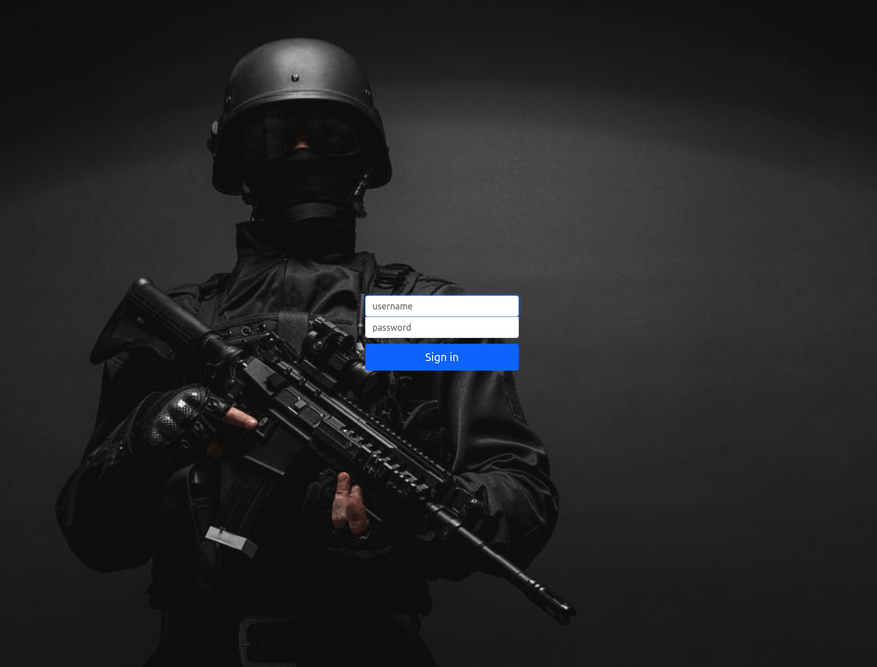
The login page for the criminal reshipping service SWAT USA Drop.

One of the largest cybercrime services for laundering stolen merchandise was hacked recently, exposing its internal operations, finances and organizational structure. Here’s a closer look at the Russia-based SWAT USA Drop Service, which currently employs more than 1,200 people across the United States who are knowingly or unwittingly involved in reshipping expensive consumer goods purchased with stolen credit cards.

Among the most common ways that thieves extract cash from stolen credit card accounts is through purchasing pricey consumer goods online and reselling them on the black market. Most online retailers grew wise to these scams years ago and stopped shipping to regions of the world most frequently associated with credit card fraud, including Eastern Europe, North Africa, and Russia.

But such restrictions have created a burgeoning underground market for reshipping scams, which rely on willing or unwitting residents in the United States and Europe to receive stolen goods and relay them to crooks living in the embargoed areas.

Services like SWAT are known as “Drops for stuff” on cybercrime forums. The “drops” are people who have responded to work-at-home package reshipping jobs advertised on craigslist.com and job search sites. Most reshipping scams promise employees a monthly salary and even cash bonuses. In reality, the crooks in charge almost always stop communicating with drops just before the first payday, usually about a month after the drop ships their first package.

The packages arrive with prepaid shipping labels that are paid for with stolen credit card numbers, or with hijacked online accounts at FedEx and the US Postal Service. Drops are responsible for inspecting and verifying the contents of shipments, attaching the correct shipping label to each package, and sending them off via the appropriate shipping company.

SWAT takes a percentage cut (up to 50 percent) where “stuffers” — thieves armed with stolen credit card numbers — pay a portion of each product’s retail value to SWAT as the reshipping fee. The stuffers use stolen cards to purchase high-value products from merchants and have the merchants ship the items to the drops’ address. Once the drops receive and successfully reship the stolen packages, the stuffers then sell the products on the local black market.

The SWAT drop service has been around in various names and under different ownership for almost a decade. But in early October 2023, SWAT’s current co-owner — a Russian-speaking individual who uses the handle “Fearlless” — took to his favorite cybercrime forum to lodge a formal complaint against the owner of a competing reshipping service, alleging his rival had hacked SWAT and was trying to poach his stuffers and reshippers by emailing them directly.

Milwaukee-based security firm Hold Security shared recent screenshots of a working SWAT stuffer’s user panel, and those images show that SWAT currently lists more than 1,200 drops in the United States that are available for stuffers to rent. The contact information for Kareem, a young man from Maryland, was listed as an active drop. Contacted by KrebsOnSecurity, Kareem agreed to speak on condition that his full name not be used in this story.
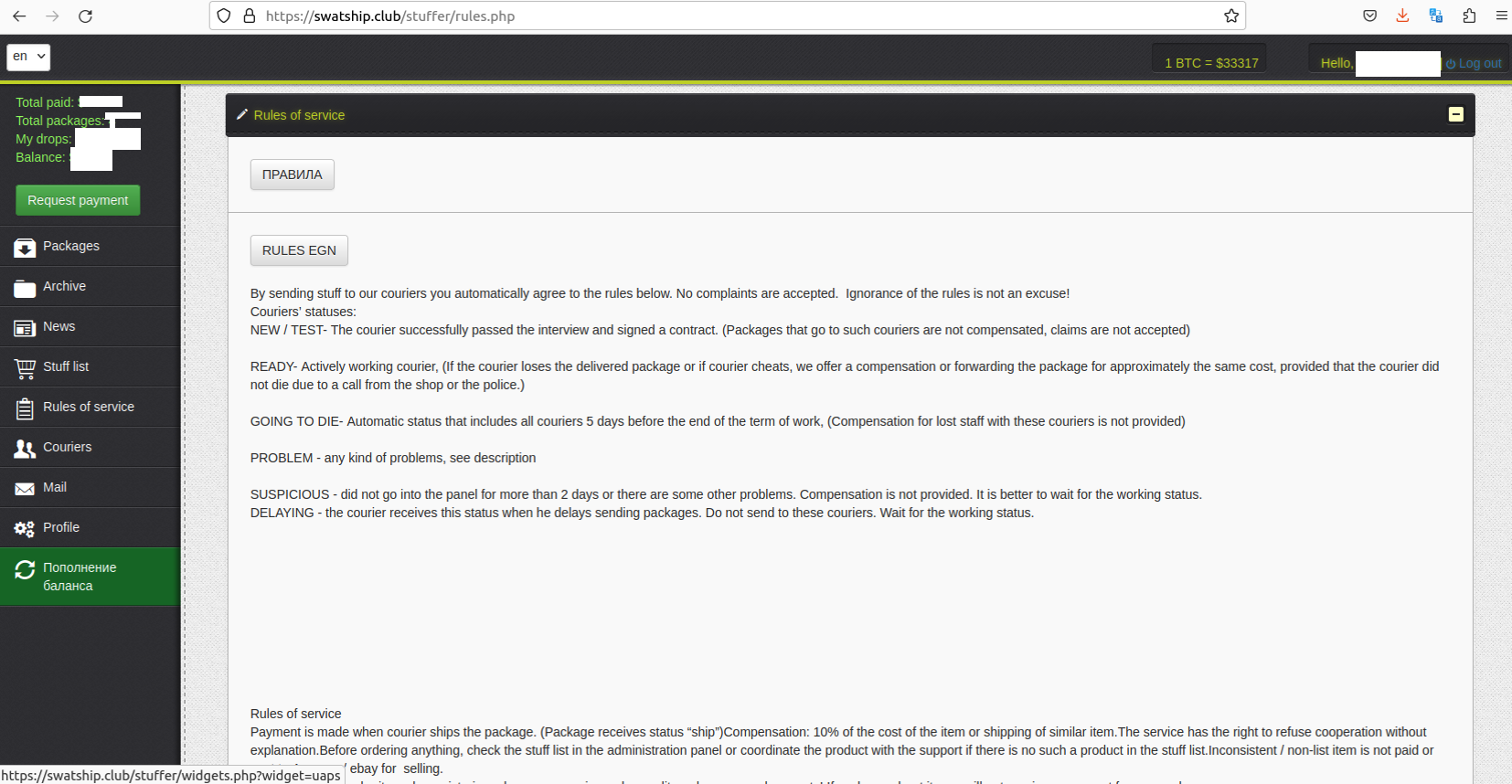
A SWAT panel for stuffers/customers. This page lists the rules of the service, which do not reimburse stuffers for “acts of god,” i.e. authorities seizing stolen goods or arresting the drop.

Kareem said he’d been hired via an online job board to reship packages on behalf of a company calling itself CTSI, and that he’s been receiving and reshipping iPads and Apple watches for several weeks now. Kareem was less than thrilled to learn he would probably not be getting his salary on the promised payday, which was coming up in a few days.

Kareem said he was instructed to create an account at a website called portal-ctsi[.]com, where each day he was expected to log in and check for new messages about pending shipments. Anyone can sign up at this website as a potential reshipping mule, although doing so requires applicants to share a great deal of personal and financial information, as well as copies of an ID or passport matching the supplied name.
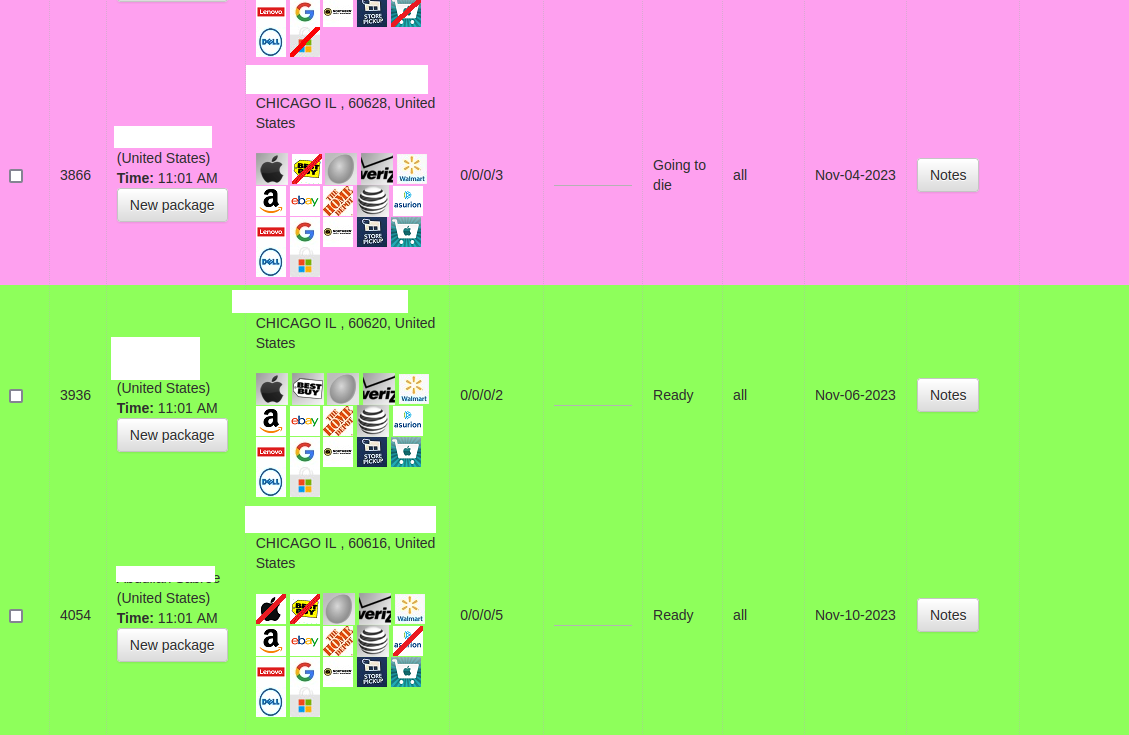
A SWAT panel for stuffers/customers, listing hundreds of drops in the United States by their status. “Going to die” are those who are about to be let go without promised payment, or who have quit on their own.

On a suspicion that the login page for portal-ctsi[.]com might be a custom coding job, KrebsOnSecurity selected “view source” from the homepage to expose the site’s HTML code. Grabbing a snippet of that code (e.g., “smarty/default/jui/js/jquery-ui-1.9.2.min.js”) and searching on it at publicwww.com reveals more than four dozen other websites running the same login panel. And all of those appear to be geared toward either stuffers or drops.

In fact, more than half of the domains that use this same login panel actually include the word “stuffer” in the login URL, according to publicwww. Each of the domains below that end in “/user/login.php” are sites for active and prospective drops, and each corresponds to a unique fake company that is responsible for managing its own stable of drops:

lvlup-store[.]com/stuffer/login.php
personalsp[.]com/user/login.php
destaf[.]com/stuffer/login.php
jaderaplus[.]com/stuffer/login.php
33cow[.]com/stuffer/login.php
panelka[.]net/stuffer/login.php
aaservice[.]net/stuffer/login.php
re-shipping[.]ru/stuffer/login.php
bashar[.]cc/stuffer/login.php
marketingyoursmall[.]biz/stuffer/login.php
hovard[.]xyz/stuffer/login.php
pullback[.]xyz/stuffer/login.php
telollevoexpress[.]com/stuffer/login.php
postme[.]today/stuffer/login.php
wint-job[.]com/stuffer/login.php
squadup[.]club/stuffer/login.php
mmmpack[.]pro/stuffer/login.php
yoursmartpanel[.]com/user/login.php
opt257[.]org/user/login.php
touchpad[.]online/stuffer/login.php
peresyloff[.]top/stuffer/login.php
ruzke[.]vodka/stuffer/login.php
staf-manager[.]net/stuffer/login.php
data-job[.]club/stuffer/login.php
logistics-services[.]org/user/login.php
swatship[.]club/stuffer/login.php
logistikmanager[.]online/user/login.php
endorphine[.]world/stuffer/login.php
burbon[.]club/stuffer/login.php
bigdropproject[.]com/stuffer/login.php
jobspaket[.]net/user/login.php
yourcontrolboard[.]com/stuffer/login.php
packmania[.]online/stuffer/login.php
shopping-bro[.]com/stuffer/login.php
dash-redtag[.]com/user/login.php
mnger[.]net/stuffer/login.php
begg[.]work/stuffer/login.php
dashboard-lime[.]com/user/login.php
control-logistic[.]xyz/user/login.php
povetru[.]biz/stuffer/login.php
dash-nitrologistics[.]com/user/login.php
cbpanel[.]top/stuffer/login.php
hrparidise[.]pro/stuffer/login.php
d-cctv[.]top/user/login.php
versandproject[.]com/user/login.php
packitdash[.]com/user/login.php
avissanti-dash[.]com/user/login.php
e-host[.]life/user/login.php
pacmania[.]club/stuffer/login.php

Why so many websites? In practice, all drops are cut loose within approximately 30 days of their first shipment — just before the promised paycheck is due. Because of this constant churn, each stuff shop operator must be constantly recruiting new drops. Also, with this distributed setup, even if one reshipping operation gets shut down (or exposed online), the rest can keep on pumping out dozens of packages a day.

A 2015 academic study (PDF) on criminal reshipping services found the average financial hit from a reshipping scheme per cardholder was $1,156.93. That study looked into the financial operations of several reshipping schemes, and estimated that approximately 1.6 million credit and debit cards are used to commit at least $1.8 billion in reshipping fraud each year.

It’s not hard to see how reshipping can be a profitable enterprise for card crooks. For example, a stuffer buys a stolen payment card off the black market for $10, and uses that card to purchase more than $1,100 worth of goods. After the reshipping service takes its cut (~$550), and the stuffer pays for his reshipping label (~$100), the stuffer receives the stolen goods and sells them on the black market in Russia for $1,400. He has just turned a $10 investment into more than $700. Rinse, wash, and repeat.

The breach at SWAT exposed not only the nicknames and contact information for all of its stuffers and drops, but also the group’s monthly earnings and payouts. SWAT apparently kept its books in a publicly accessible Google Sheets document, and that document reveals Fearlless and his business partner each routinely made more than $100,000 every month operating their various reshipping businesses.

The exposed SWAT financial records show this crime group has tens of thousands of dollars worth of expenses each month, including payments for the following recurring costs:

-advertising the service on crime forums and via spam;
-people hired to re-route packages, usually by voice over the phone;
-third-party services that sell hacked/stolen USPS/Fedex labels;
-“drops test” services, contractors who will test the honesty of drops by sending them fake jewelry;
-“documents,” e.g. sending drops to physically pick up legal documents for new phony front companies.

The spreadsheet also included the cryptocurrency account numbers that were to be credited each month with SWAT’s earnings. Unsurprisingly, a review of the blockchain activity tied to the bitcoin addresses listed in that document shows that many of them have a deep association with cybercrime, including ransomware activity and transactions at darknet sites that peddle stolen credit cards and residential proxy services.

The information leaked from SWAT also has exposed the real-life identity and financial dealings of its principal owner — Fearlless, a.k.a. “SwatVerified.” We’ll hear more about Fearlless in Part II of this story. Stay tuned.

source https://krebsonsecurity.com/2023/11/russian-reshipping-service-swat-usa-drop-exposed/
.US Harbors Prolific Malicious Link Shortening Service

The top-level domain for the United States — .US — is home to thousands of newly-registered domains tied to a malicious link shortening service that facilitates malware and phishing scams, new research suggests. The findings come close on the heels of a report that identified .US domains as among the most prevalent in phishing attacks over the past year.

Researchers at Infoblox say they’ve been tracking what appears to be a three-year-old link shortening service that is catering to phishers and malware purveyors. Infoblox found the domains involved are typically three to seven characters long, and hosted on bulletproof hosting providers that charge a premium to ignore any abuse or legal complaints. The short domains don’t host any content themselves, but are used to obfuscate the real address of landing pages that try to phish users or install malware.

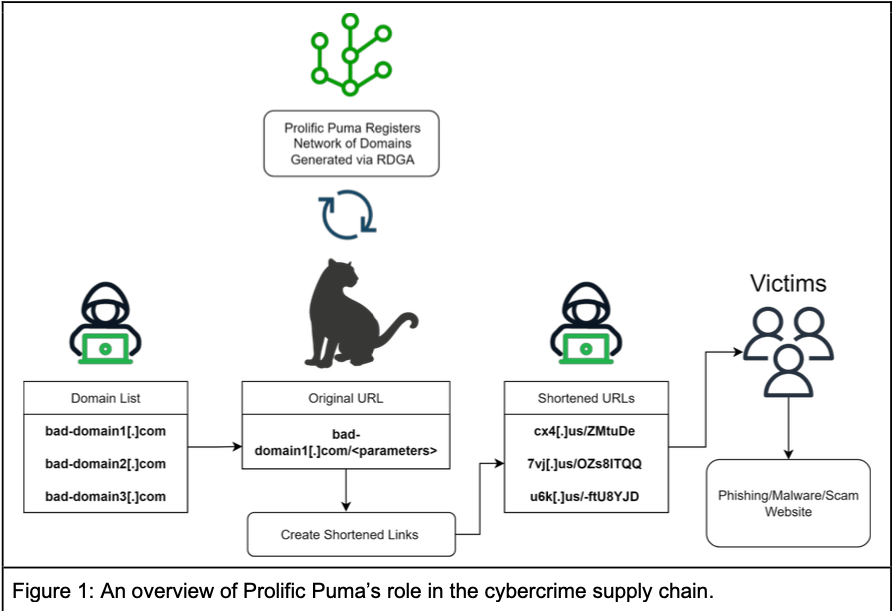
A graphic describing the operations of a malicious link shortening service that Infoblox has dubbed “Prolific Puma.”

Infoblox says it’s unclear how the phishing and malware landing pages tied to this service are being initially promoted, although they suspect it is mainly through scams targeting people on their phones via SMS. A new report says the company mapped the contours of this link shortening service thanks in part to pseudo-random patterns in the short domains, which all appear on the surface to be a meaningless jumble of letters and numbers.

“This came to our attention because we have systems that detect registrations that use domain name generation algorithms,” said Renee Burton, head of threat intelligence at Infoblox. “We have not found any legitimate content served through their shorteners.”

Infoblox determined that until May 2023, domains ending in .info accounted for the bulk of new registrations tied to the malicious link shortening service, which Infoblox has dubbed “Prolific Puma.” Since then, they found that whoever is responsible for running the service has used .US for approximately 55 percent of the total domains created, with several dozen new malicious .US domains registered daily.

.US is overseen by the National Telecommunications and Information Administration (NTIA), an executive branch agency of the U.S. Department of Commerce. But Uncle Sam has long outsourced the management of .US to various private companies, which have gradually allowed the United States’s top-level domain to devolve into a cesspool of phishing activity.

Or so concludes The Interisle Consulting Group, which gathers phishing data from multiple industry sources and publishes an annual report on the latest trends. As far back as 2018, Interisle found .US domains were the worst in the world for spam, botnet (attack infrastructure for DDOS etc.) and illicit or harmful content.

Interisle’s newest study examined six million phishing reports between May 1, 2022 and April 30, 2023, and identified approximately 30,000 .US phishing domains. Interisle found significant numbers of .US domains were registered to attack some of the United States’ most prominent companies, including Bank of America, Amazon, Apple, AT&T, Citi, Comcast, Microsoft, Meta, and Target. Others were used to impersonate or attack U.S. government agencies.

Under NTIA regulations, domain registrars processing .US domain registrations must take certain steps (PDF) to verify that those customers actually reside in the United States, or else own organizations based in the U.S. However, if one registers a .US domain through GoDaddy — the largest domain registrar and the current administrator of the .US contract — the way one “proves” their U.S. nexus is simply by choosing from one of three pre-selected affirmative responses.

In an age when most domain registrars are automatically redacting customer information from publicly accessible registration records to avoid running afoul of European privacy laws, .US has remained something of an outlier because its charter specifies that all registration records be made public. However, Infoblox said it found more than 2,000 malicious link shortener domains ending in .US registered since October 2023 through NameSilo that have somehow subverted the transparency requirements for the usTLD and converted to private registrations.

“Through our own experience with NameSilo, it is not possible to select private registration for domains in the usTLD through their interface,” Infoblox wrote. “And yet, it was done. Of the total domains with private records, over 99% were registered with NameSilo. At this time, we are not able to explain this behavior.”

NameSilo CEO Kristaps Ronka said the company actively responds to reports about abusive domains, but that it hasn’t seen any abuse reports related to Infoblox’s findings.

“We take down hundreds to thousands of domains, lots of them proactively to combat abuse,” Ronka said. “Our current abuse rate on abuseIQ for example is currently at 0%. AbuseIQ receives reports from countless sources and we are yet to see these ‘Puma’ abuse reports.”

Experts who track domains associated with malware and phishing say even phony information supplied at registration is useful in identifying potentially malicious or phishous domains before they can be used for abuse.

For example, when it was registered through NameSilo in July 2023, the domain 1ox[.]us — like thousands of others — listed its registrant as “Leila Puma” at a street address in Poland, and the email address blackpumaoct33@ukr.net. But according to DomainTools.com, on Oct. 1, 2023 those records were redacted and hidden by NameSilo.

Infoblox notes that the username portion of the email address appears to be a reference to the song October 33 by the Black Pumas, an Austin, Texas based psychedelic soul band. The Black Pumas aren’t exactly a household name, but they did recently have a popular Youtube video that featured a cover of the Kinks song “Strangers,” which included an emotional visual narrative about Ukrainians seeking refuge from the Russian invasion, titled “Ukraine Strangers.” Also, Leila Puma’s email address is at a Ukrainian email provider.

DomainTools shows that hundreds of other malicious domains tied to Prolific Puma previously were registered through NameCheap to a “Josef Bakhovsky” at a different street address in Poland. According to ancestry.com, the anglicized version of this surname — Bakovski — is the traditional name for someone from Bakowce, which is now known as Bakivtsi and is in Ukraine.

This possible Polish and/or Ukrainian connection may or may not tell us something about the “who” behind this link shortening service, but those details are useful for identifying and grouping these malicious short domains. However, even this meager visibility into .US registration data is now under threat.

The NTIA recently published a proposal that would allow registrars to redact all registrant data from WHOIS registration records for .US domains. A broad array of industry groups have filed comments opposing the proposed changes, saying they threaten to remove the last vestiges of accountability for a top-level domain that is already overrun with cybercrime activity.

Infoblox’s Burton says Prolific Puma is remarkable because they’ve been able to facilitate malicious activities for years while going largely unnoticed by the security industry.

“This exposes how persistent the criminal economy can be at a supply chain level,” Burton said. “We’re always looking at the end malware or phishing page, but what we’re finding here is that there’s this middle layer of DNS threat actors persisting for years without notice.”

Infoblox’s full report on Prolific Puma is here.

source https://krebsonsecurity.com/2023/10/us-harbors-prolific-malicious-link-shortening-service/

NJ Man Hired Online to Firebomb, Shoot at Homes Gets 13 Years in Prison

A 22-year-old New Jersey man has been sentenced to more than 13 years in prison for participating in a firebombing and a shooting at homes in Pennsylvania last year. Patrick McGovern-Allen was the subject of a Sept. 4, 2022 story here about the emergence of “violence-as-a-service” offerings, where random people from the Internet hire themselves out to perform a variety of local, physical attacks, including firebombing a home, “bricking” windows, slashing tires, or performing a drive-by shooting at someone’s residence.

McGovern-Allen, of Egg Harbor Township, N.J., was arrested Aug. 12, 2022 on an FBI warrant, which showed he was part of a group of cybercriminals who are settling scores with one another by hiring people to carry out violent attacks on their rivals.

That Sept. 2022 story about his arrest included links to two videos released on Telegram that were recorded and shared by McGovern-Allen and/or a co-conspirator as “proof” that they had carried out the attacks as hired.

The first showed two young men tossing a Molotov Cocktail at the side of a residence in Abington Township, Pa, setting it ablaze. The second featured two men with handguns unloading multiple rounds haphazardly into the first story of a house in West Chester, Pa. Fortunately in both cases, the occupants of the homes were unharmed in the attacks.

Federal prosecutors said McGovern-Allen went by the alias “Tongue” on Discord, and that in one chat he was quite explicit about his violence-as-a-service offering.

“In the chats, [Tongue] tells other Discord users that he was the person who shot K.M.’s house and that he was willing to commit firebombings using Molotov Cocktails,” the complaint against McGovern-Allen explains. “For example, in one Discord chat from March 2022, [the defendant] states ‘if you need anything done for $ lmk [“let me know”]/I did a shooting/Molotov/but I can also do things for ur entertainment.”

The chat channels that Tongue frequented have hundreds to thousands of members each, and some of the more interesting solicitations on these communities are job offers for in-person assignments and tasks that can be found if one searches for posts titled, “If you live near,” or “IRL job” — short for “in real life” job. A number of these classified ads are in service of performing “brickings,” where someone is hired to visit a specific address and toss a brick through the target’s window.

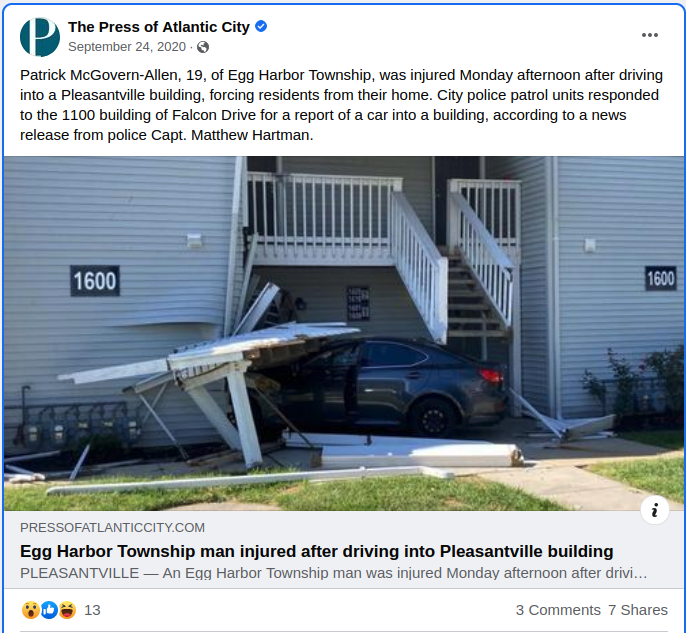
McGovern-Allen was in the news not long ago. According to a Sept. 2020 story from The Press of Atlantic City, a then 19-year-old Patrick McGovern-Allen was injured after driving into a building and forcing residents from their home.

“Police found a 2007 Lexus, driven by Patrick McGovern-Allen, 19, that had lost control and left the road, crashing into the eastern end of the 1600 building,” the story recounted. “The car was driven through the steps that provide access to the second-floor apartments, destroying them, and also caused damage to the outer wall.”

A copy of McGovern-Allen’s sentencing statement says he pleaded guilty to three criminal counts, including two for stalking, and one for the use of fire in commission of a federal felony. The judge in the case gave McGovern-Allen 160 months in prison — about 13.3 years. After completing his sentence, McGovern-Allen will be on supervised release for three years.

source https://krebsonsecurity.com/2023/10/nj-man-hired-online-to-firebomb-shoot-at-homes-gets-13-years-in-prison/

Hackers Stole Access Tokens from Okta’s Support Unit

Okta, a company that provides identity tools like multi-factor authentication and single sign-on to thousands of businesses, has suffered a security breach involving a compromise of its customer support unit, KrebsOnSecurity has learned. Okta says the incident affected a “very small number” of customers, however it appears the hackers responsible had access to Okta’s support platform for at least two weeks before the company fully contained the intrusion.

In an advisory sent to an undisclosed number of customers on Oct. 19, Okta said it “has identified adversarial activity that leveraged access to a stolen credential to access Okta’s support case management system. The threat actor was able to view files uploaded by certain Okta customers as part of recent support cases.”

Okta explained that when it is troubleshooting issues with customers it will often ask for a recording of a Web browser session (a.k.a. an HTTP Archive or HAR file). These are sensitive files because in this case they include the customer’s cookies and session tokens, which intruders can then use to impersonate valid users.

“Okta has worked with impacted customers to investigate, and has taken measures to protect our customers, including the revocation of embedded session tokens,” their notice continued. “In general, Okta recommends sanitizing all credentials and cookies/session tokens within a HAR file before sharing it.”

The security firm BeyondTrust is among the Okta customers who received Thursday’s alert from Okta. BeyondTrust CEO Marc Maiffret said that alert came more than two weeks after his company alerted Okta to a potential problem.

Maiffret emphasized that BeyondTrust caught the attack earlier this month as it was happening, and that none of its own customers were affected. He said that on Oct 2., BeyondTrust’s security team detected that someone was trying to use an Okta account assigned to one of their engineers to create an all-powerful administrator account within their Okta environment.

When BeyondTrust reviewed the activity of the employee account that tried to create the new administrative profile, they found that — just 30 minutes prior to the unauthorized activity — one of their support engineers shared with Okta one of these HAR files that contained a valid Okta session token, Maiffret said.

“Our admin sent that [HAR file] over at Okta’s request, and 30 minutes after that the attacker started doing session hijacking, tried to replay the browser session and leverage the cookie in that browser recording to act on behalf of that user,” he said.

Maiffret said BeyondTrust followed up with Okta on Oct. 3 and said they were fairly confident Okta had suffered an intrusion, and that he reiterated that conclusion in a phone call with Okta on October 11 and again on Oct. 13.

In an interview with KrebsOnSecurity, Okta’s Deputy Chief Information Security Officer Charlotte Wylie said Okta initially believed that BeyondTrust’s alert on Oct. 2 was not a result of a breach in its systems. But she said that by Oct. 17, the company had identified and contained the incident — disabling the compromised customer case management account, and invalidating Okta access tokens associated with that account.

Wylie declined to say exactly how many customers received alerts of a potential security issue, but characterized it as a “very, very small subset” of its more than 18,000 customers.

The disclosure from Okta comes just weeks after casino giants Caesar’s Entertainment and MGM Resorts were hacked. In both cases, the attackers managed to social engineer employees into resetting the multi-factor login requirements for Okta administrator accounts.

In March 2022, Okta disclosed a breach from the hacking group LAPSUS$, a criminal hacking group that specialized in social-engineering employees at targeted companies. An after-action report from Okta on that incident found that LAPSUS$ had social engineered its way onto the workstation of a support engineer at Sitel, a third-party outsourcing company that had access to Okta resources.

Okta’s Wylie declined to answer questions about how long the intruder may have had access to the company’s case management account, or who might have been responsible for the attack. However, she did say the company believes this is an adversary they have seen before.

“This is a known threat actor that we believe has targeted us and Okta-specific customers,” Wylie said.

Update, 2:57 p.m. ET: Okta has published a blog post about this incident that includes some “indicators of compromise” that customers can use to see if they were affected. But the company stressed that “all customers who were impacted by this have been notified. If you’re an Okta customer and you have not been contacted with another message or method, there is no impact to your Okta environment or your support tickets.”

This is a fast-moving story. Updates will be noted and timestamped here.

source https://krebsonsecurity.com/2023/10/hackers-stole-access-tokens-from-oktas-support-unit/

The Fake Browser Update Scam Gets a Makeover

One of the oldest malware tricks in the book — hacked websites claiming visitors need to update their Web browser before they can view any content — has roared back to life in the past few months. New research shows the attackers behind one such scheme have developed an ingenious way of keeping their malware from being taken down by security experts or law enforcement: By hosting the malicious files on a decentralized, anonymous cryptocurrency blockchain.

In August 2023, security researcher Randy McEoin blogged about a scam he dubbed ClearFake, which uses hacked WordPress sites to serve visitors with a page that claims you need to update your browser before you can view the content.

The fake browser alerts are specific to the browser you’re using, so if you’re surfing the Web with Chrome, for example, you’ll get a Chrome update prompt. Those who are fooled into clicking the update button will have a malicious file dropped on their system that tries to install an information stealing trojan.

Earlier this month, researchers at the Tel Aviv-based security firm Guardio Labs said they tracked an updated version of the ClearFake scam that included an important evolution. Previously, the group had stored its malicious update files on Cloudflare, Guard.io said.

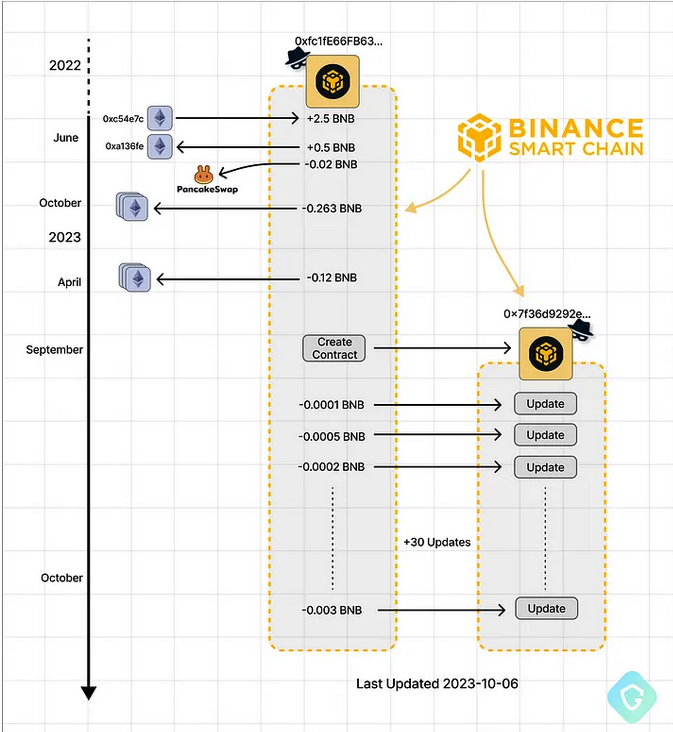
But when Cloudflare blocked those accounts the attackers began storing their malicious files as cryptocurrency transactions in the Binance Smart Chain (BSC), a technology designed to run decentralized apps and “smart contracts,” or coded agreements that execute actions automatically when certain conditions are met.

Nati Tal, head of security at Guardio Labs, said the malicious scripts stitched into hacked WordPress sites will create a new smart contract on the BSC Blockchain, starting with a unique, attacker-controlled blockchain address and a set of instructions that defines the contract’s functions and structure. When that contract is queried by a compromised website, it will return an obfuscated and malicious payload.

“These contracts offer innovative ways to build applications and processes,” Tal wrote along with his Guardio colleague Oleg Zaytsev. “Due to the publicly accessible and unchangeable nature of the blockchain, code can be hosted ‘on-chain’ without the ability for a takedown.”

Tal said hosting malicious files on the Binance Smart Chain is ideal for attackers because retrieving the malicious contract is a cost-free operation that was originally designed for the purpose of debugging contract execution issues without any real-world impact.

“So you get a free, untracked, and robust way to get your data (the malicious payload) without leaving traces,” Tal said.

Attacker-controlled BSC addresses — from funding, contract creation, and ongoing code updates. Image: Guard.io.

In response to questions from KrebsOnSecurity, the BNB Smart Chain (BSC) said its team is aware of the malware abusing its blockchain, and is actively addressing the issue. The company said all addresses associated with the spread of the malware have been blacklisted, and that its technicians had developed a model to detect future smart contracts that use similar methods to host malicious scripts.

“This model is designed to proactively identify and mitigate potential threats before they can cause harm,” BNB Smart Chain wrote. “The team is committed to ongoing monitoring of addresses that are involved in spreading malware scripts on the BSC. To enhance their efforts, the tech team is working on linking identified addresses that spread malicious scripts to centralized KYC [Know Your Customer] information, when possible.”

Gaurdio says the crooks behind the BSC malware scheme are using the same malicious code as the attackers that McEoin wrote about in August, and are likely the same group. But a report published today by email security firm Proofpoint says the company is currently tracking at least four distinct threat actor groups that use fake browser updates to distribute malware.

Proofpoint notes that the core group behind the fake browser update scheme has been using this technique to spread malware for the past five years, primarily because the approach still works well.

“Fake browser update lures are effective because threat actors are using an end-user’s security training against them,” Proofpoint’s Dusty Miller wrote. “In security awareness training, users are told to only accept updates or click on links from known and trusted sites, or individuals, and to verify sites are legitimate. The fake browser updates abuse this training because they compromise trusted sites and use JavaScript requests to quietly make checks in the background and overwrite the existing website with a browser update lure. To an end user, it still appears to be the same website they were intending to visit and is now asking them to update their browser.”

More than a decade ago, this site published Krebs’s Three Rules for Online Safety, of which Rule #1 was, “If you didn’t go looking for it, don’t install it.” It’s nice to know that this technology-agnostic approach to online safety remains just as relevant today.

source https://krebsonsecurity.com/2023/10/the-fake-browser-update-scam-gets-a-makeover/

Tech CEO Sentenced to 5 Years in IP Address Scheme

Amir Golestan, the 40-year-old CEO of the Charleston, S.C. based technology company Micfo LLC, has been sentenced to five years in prison for wire fraud. Golestan’s sentencing comes nearly two years after he pleaded guilty to using an elaborate network of phony companies to secure more than 735,000 Internet Protocol (IP) addresses from the American Registry for Internet Numbers (ARIN), the nonprofit which oversees IP addresses assigned to entities in the U.S., Canada, and parts of the Caribbean.

Amir Golestan, the former CEO of Micfo.

In 2018, ARIN sued Golestan and Micfo, alleging they had obtained hundreds of thousands of IP addresses under false pretenses. ARIN and Micfo settled that dispute in arbitration, with Micfo returning most of the addresses that it hadn’t already sold.

ARIN’s civil case caught the attention of federal prosecutors in South Carolina, who in May 2019 filed criminal wire fraud charges against Golestan, alleging he’d orchestrated a network of shell companies and fake identities to prevent ARIN from knowing the addresses were all going to the same buyer.

Prosecutors showed that each of those shell companies involved the production of notarized affidavits in the names of people who didn’t exist. As a result, the government was able to charge Golestan with 20 counts of wire fraud — one for each payment made by the phony companies that bought the IP addresses from ARIN.

Golestan initially sought to fight those charges. But on just the second day of his trial in November 2021, Golestan changed his mind and pleaded guilty to 20 counts of wire fraud in connection with the phantom companies he used to secure the IP addresses. Prosecutors estimated those addresses were valued at between $10 million and $14 million.

ARIN says the 5-year sentence handed down by the South Carolina judge “sends an important message of deterrence to other parties contemplating fraudulent schemes to obtain or transfer Internet resources.”

“Those who seek to defraud ARIN (or other Regional Internet Registries) are subject to costly and serious civil litigation, criminal charges, and, ultimately, a lengthy term of incarceration,” reads a statement from ARIN on Golestan’s sentencing.

By 2013, a number of Micfo’s customers had landed on the radar of Spamhaus, a group that many network operators rely upon to stem the tide of junk email. Shortly after Spamhaus started blocking Micfo’s IP address ranges, Micfo shifted gears and began reselling IP addresses mainly to companies marketing “virtual private networking” or VPN services that help customers hide their real IP addresses online.

Golestan did not respond to a request for comment. But in a 2020 interview with KrebsOnSecurity, Golestan claimed that Micfo was at one point responsible for brokering roughly 40 percent of the IP addresses used by the world’s largest VPN providers. Throughout that conversation, Golestan maintained his innocence, even as he explained that the creation of the phony companies was necessary to prevent entities like Spamhaus from interfering with his business going forward.

There are fewer than four billion so-called “Internet Protocol version 4” or IPv4 addresses available for use, but the vast majority of them have already been allocated. The global dearth of available IP addresses has turned them into a commodity wherein each IPv4 address can fetch between $15-$25 on the open market.

This has led to boom times for those engaged in the acquisition and sale of IP address blocks, but it has likewise emboldened those who specialize in absconding with and spamming from dormant IP address blocks without permission from the rightful owners.

The U.S Department of Justice says Golestan will serve 60 months in prison, followed by a 2-year term of court-ordered supervision. The Micfo CEO also was ordered to pay nearly $77,000 in restitution to ARIN for its work in assisting federal prosecutors.

source https://krebsonsecurity.com/2023/10/tech-ceo-sentenced-to-5-years-in-ip-address-scheme/

Patch Tuesday, October 2023 Edition

Microsoft today issued security updates for more than 100 newly-discovered vulnerabilities in its Windows operating system and related software, including four flaws that are already being exploited. In addition, Apple recently released emergency updates to quash a pair of zero-day bugs in iOS.

Apple last week shipped emergency updates in iOS 17.0.3 and iPadOS 17.0.3 in response to active attacks. The patch fixes CVE-2023-42724, which attackers have been using in targeted attacks to elevate their access on a local device.

Apple said it also patched CVE-2023-5217, which is not listed as a zero-day bug. However, as Bleeping Computer pointed out, this flaw is caused by a weakness in the open-source “libvpx” video codec library, which was previously patched as a zero-day flaw by Google in the Chrome browser and by Microsoft in Edge, Teams, and Skype products. For anyone keeping count, this is the 17th zero-day flaw that Apple has patched so far this year.

Fortunately, the zero-days affecting Microsoft customers this month are somewhat less severe than usual, with the exception of CVE-2023-44487. This weakness is not specific to Windows but instead exists within the HTTP/2 protocol used by the World Wide Web: Attackers have figured out how to use a feature of HTTP/2 to massively increase the size of distributed denial-of-service (DDoS) attacks, and these monster attacks reportedly have been going on for several weeks now.

Amazon, Cloudflare and Google all released advisories today about how they’re addressing CVE-2023-44487 in their cloud environments. Google’s Damian Menscher wrote on Twitter/X that the exploit — dubbed a “rapid reset attack” — works by sending a request and then immediately cancelling it (a feature of HTTP/2). “This lets attackers skip waiting for responses, resulting in a more efficient attack,” Menscher explained.

Natalie Silva, lead security engineer at Immersive Labs, said this flaw’s impact to enterprise customers could be significant, and lead to prolonged downtime.

“It is crucial for organizations to apply the latest patches and updates from their web server vendors to mitigate this vulnerability and protect against such attacks,” Silva said. In this month’s Patch Tuesday release by Microsoft, they have released both an update to this vulnerability, as well as a temporary workaround should you not be able to patch immediately.”

Microsoft also patched zero-day bugs in Skype for Business (CVE-2023-41763) and Wordpad (CVE-2023-36563). The latter vulnerability could expose NTLM hashes, which are used for authentication in Windows environments.

“It may or may not be a coincidence that Microsoft announced last month that WordPad is no longer being updated, and will be removed in a future version of Windows, although no specific timeline has yet been given,” said Adam Barnett, lead software engineer at Rapid7. “Unsurprisingly, Microsoft recommends Word as a replacement for WordPad.”

Other notable bugs addressed by Microsoft include CVE-2023-35349, a remote code execution weakness in the Message Queuing (MSMQ) service, a technology that allows applications across multiple servers or hosts to communicate with each other. This vulnerability has earned a CVSS severity score of 9.8 (10 is the worst possible). Happily, the MSMQ service is not enabled by default in Windows, although Immersive Labs notes that Microsoft Exchange Server can enable this service during installation.

Speaking of Exchange, Microsoft also patched CVE-2023-36778,  a vulnerability in all current versions of Exchange Server that could allow attackers to run code of their choosing. Rapid7’s Barnett said successful exploitation requires that the attacker be on the same network as the Exchange Server host, and use valid credentials for an Exchange user in a PowerShell session.

For a more detailed breakdown on the updates released today, see the SANS Internet Storm Center roundup. If today’s updates cause any stability or usability issues in Windows, AskWoody.com will likely have the lowdown on that.

Please consider backing up your data and/or imaging your system before applying any updates. And feel free to sound off in the comments if you experience any difficulties as a result of these patches.

source https://krebsonsecurity.com/2023/10/patch-tuesday-october-2023-edition/

Phishers Spoof USPS, 12 Other Natl’ Postal Services

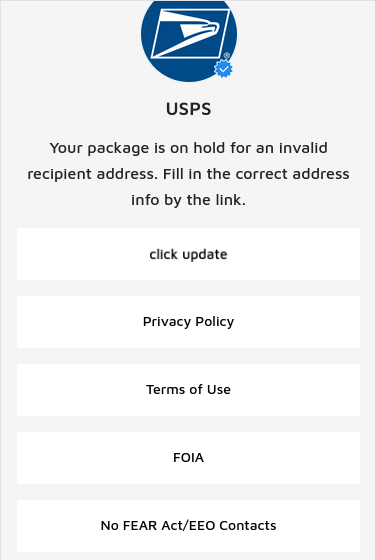
The fake USPS phishing page.

Recent weeks have seen a sizable uptick in the number of phishing scams targeting U.S. Postal Service (USPS) customers. Here’s a look at an extensive SMS phishing operation that tries to steal personal and financial data by spoofing the USPS, as well as postal services in at least a dozen other countries worldwide.

KrebsOnSecurity recently heard from a reader who received an SMS purporting to have been sent by the USPS, saying there was a problem with a package destined for the reader’s address. Clicking the link in the text message brings one to the domain usps.informedtrck[.]com.

The landing page generated by the phishing link includes the USPS logo, and says “Your package is on hold for an invalid recipient address. Fill in the correct address info by the link.” Below that message is a “Click update” button that takes the visitor to a page that asks for more information.

The remaining buttons on the phishing page all link to the real USPS.com website. After collecting your address information, the fake USPS site goes on to request additional personal and financial data.

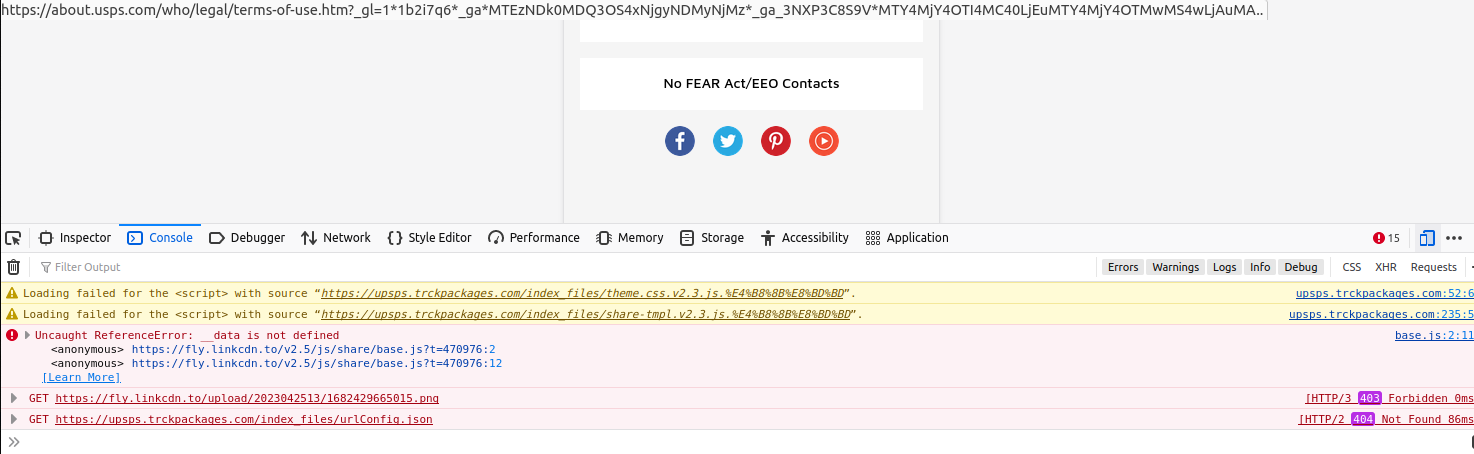
This phishing domain was recently registered and its WHOIS ownership records are basically nonexistent. However, we can find some compelling clues about the extent of this operation by loading the phishing page in Developer Tools, a set of debugging features built into Firefox, Chrome and Safari that allow one to closely inspect a webpage’s code and operations.

Check out the bottom portion of the screenshot below, and you’ll notice that this phishing site fails to load some external resources, including an image from a link called fly.linkcdn[.]to.

Click the image to enlarge.

A search on this domain at the always-useful URLscan.io shows that fly.linkcdn[.]to is tied to a slew of USPS-themed phishing domains. Here are just a few of those domains (links defanged to prevent accidental clicking):

usps.receivepost[.]com
usps.informedtrck[.]com
usps.trckspost[.]com
postreceive[.]com
usps.trckpackages[.]com
usps.infortrck[.]com
usps.quicktpos[.]com
usps.postreceive].]com
usps.revepost[.]com
trackingusps.infortrck[.]com
usps.receivepost[.]com
usps.trckmybusi[.]com
postreceive[.]com
tackingpos[.]com
usps.trckstamp[.]com
usa-usps[.]shop
usps.infortrck[.]com
unlistedstampreceive[.]com
usps.stampreceive[.]com
usps.stamppos[.]com
usps.stampspos[.]com
usps.trckmypost[.]com
usps.trckintern[.]com
usps.tackingpos[.]com
usps.posinformed[.]com

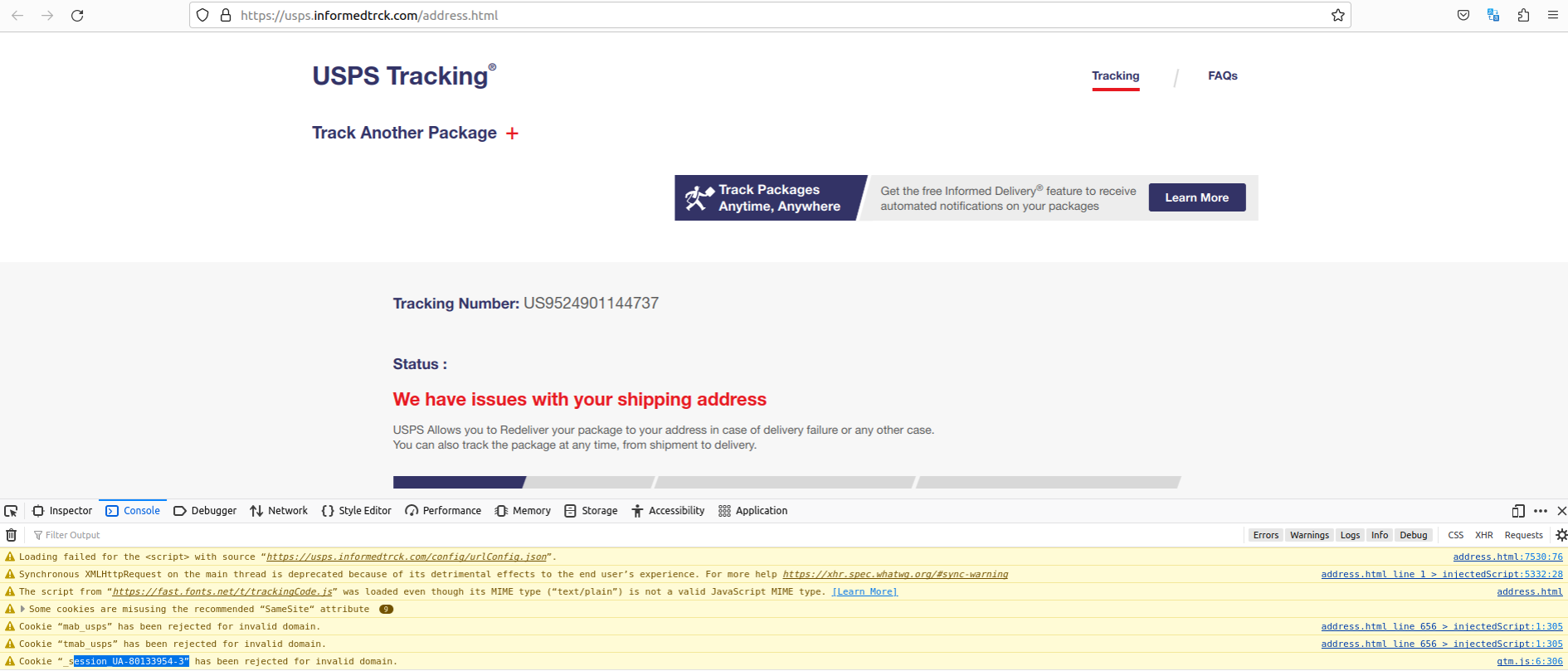
As we can see in the screenshot below, the developer tools console for informedtrck[.]com complains that the site is unable to load a Google Analytics code — UA-80133954-3 — which apparently was rejected for pointing to an invalid domain.

Notice the highlighted Google Analytics code exposed by a faulty Javascript element on the phishing website. Click to enlarge. That code actually belongs to the USPS.

The valid domain for that Google Analytics code is the official usps.com website. According to dnslytics.com, that same analytics code has shown up on at least six other nearly identical USPS phishing pages dating back nearly as many years, including onlineuspsexpress[.]com, which DomainTools.com says was registered way back in September 2018 to an individual in Nigeria.

A different domain with that same Google Analytics code that was registered in 2021 is peraltansepeda[.]com, which archive.org shows was running a similar set of phishing pages targeting USPS users. DomainTools.com indicates this website name was registered by phishers based in Indonesia.

DomainTools says the above-mentioned USPS phishing domain stamppos[.]com was registered in 2022 via Singapore-based Alibaba.com, but the registrant city and state listed for that domain says “Georgia, AL,” which is not a real location.

Alas, running a search for domains registered through Alibaba to anyone claiming to reside in Georgia, AL reveals nearly 300 recent postal phishing domains ending in “.top.” These domains are either administrative domains obscured by a password-protected login page, or are .top domains phishing customers of the USPS as well as postal services serving other countries.

Those other nations include the Australia Post, An Post (Ireland), Correos.es (Spain), the Costa Rican post, the Chilean Post, the Mexican Postal Service, Poste Italiane (Italy), PostNL (Netherlands), PostNord (Denmark, Norway and Sweden), and Posti (Finland). A complete list of these domains is available here (PDF).

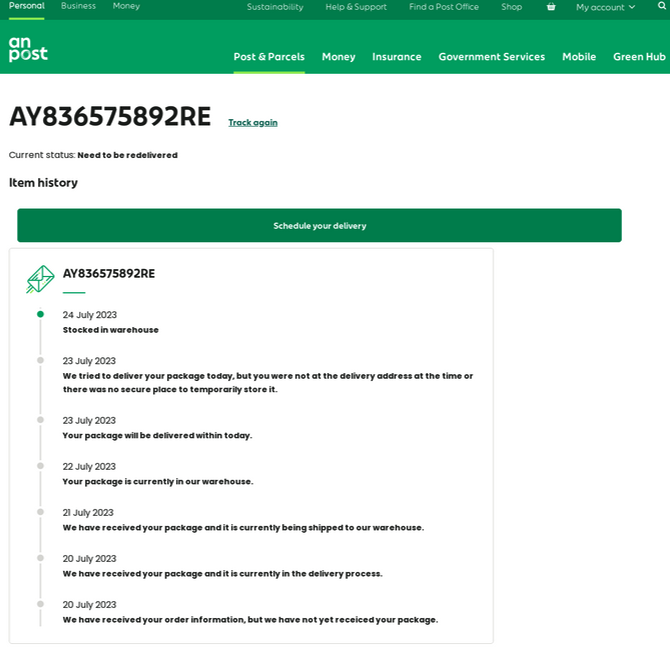
A phishing page targeting An Post, the state-owned provider of postal services in Ireland.

The Georgia, AL domains at Alibaba also encompass several that spoof sites claiming to collect outstanding road toll fees and fines from the governments of Australia, New Zealand and Singapore.

Meanwhile, researchers at DomainTools recently published a report on an apparently unrelated but equally sprawling SMS-based phishing campaign targeting USPS customers that appears to be the work of cybercriminals based in Iran.

SMS-based phishing scams tend to cast a wide net and often spoof entities that are broadly used by the local population, and few brands are going to have more household reach than domestic mail services. In June, the United Parcel Service (UPS) disclosed that fraudsters were abusing an online shipment tracking tool in Canada to send highly targeted SMS phishing messages that spoofed the UPS and other brands.

With the holiday shopping season nearly upon us, now is a great time to remind family and friends about the best advice to sidestep phishing scams: Avoid clicking on links or attachments that arrive unbidden in emails, text messages and other mediums. Most phishing scams invoke a temporal element that warns of negative consequences should you fail to respond or act quickly.

If you’re unsure whether the message is legitimate, take a deep breath and visit the site or service in question manually — ideally, using a browser bookmark so as to avoid potential typosquatting sites.

source https://krebsonsecurity.com/2023/10/phishers-spoof-usps-12-other-natl-postal-services/

Don’t Let Zombie Zoom Links Drag You Down

Many organizations — including quite a few Fortune 500 firms — have exposed web links that allow anyone to initiate a Zoom video conference meeting as a valid employee. These company-specific Zoom links, which include a permanent user ID number and an embedded passcode, can work indefinitely and expose an organization’s employees, customers or partners to phishing and other social engineering attacks.

Image: @Pressmaster on Shutterstock.

At issue is the Zoom Personal Meeting ID (PMI), which is a permanent identification number linked to your Zoom account and serves as your personal meeting room available around the clock. The PMI portion forms part of each new meeting URL created by that account, such as:

zoom.us/j/5551112222

Zoom has an option to include an encrypted passcode within a meeting invite link, which simplifies the process for attendees by eliminating the need to manually enter the passcode. Following the previous example, such a link might look something like this:

zoom.us/j/5551112222/pwd=jdjsklskldklsdksdklsdkll

Using your PMI to set up new meetings is convenient, but of course convenience often comes at the expense of security. Because the PMI remains the same for all meetings, anyone with your PMI link can join any ongoing meeting unless you have locked the meeting or activated Zoom’s Waiting Room feature.

Including an encrypted passcode in the Zoom link definitely makes it easier for attendees to join, but it might open your meetings to unwanted intruders if not handled responsibly. Particularly if that Zoom link is somehow indexed by Google or some other search engine, which happens to be the case for thousands of organizations.

Armed with one of these links, an attacker can invite others using the identity of the authorized employee. And many companies using Zoom have made it easy to find recently created meeting links that include encrypted passcodes, because they have dedicated subdomains at Zoom.us.

For example, Citigroup has one, and it’s citi.zoom.us. Using the Wayback Machine at archive.org, KrebsOnSecurity was able to find multiple links at this address that opened working virtual meeting rooms at Citi.

One of the open Zoom meeting links for Citi.

Using the same method, KrebsOnSecurity also found working Zoom meeting links for Disney, Humana, JPMorgan Chase, LinkedIn, Nike, Oracle and Uber. And that was from just a few minutes of searching. And to illustrate the persistence of some of these Zoom links, Archive.org says several of the links were first created as far back as 2020 and 2021.

KrebsOnSecurity received a tip about the Zoom exposures from Charan Akiri, a researcher and security engineer at Reddit. In April 2023, this site featured research by Akiri showing that many public Salesforce websites were leaking private data, including banks and healthcare organizations (Akiri said Salesforce also had these open Zoom meeting links before he notified them).

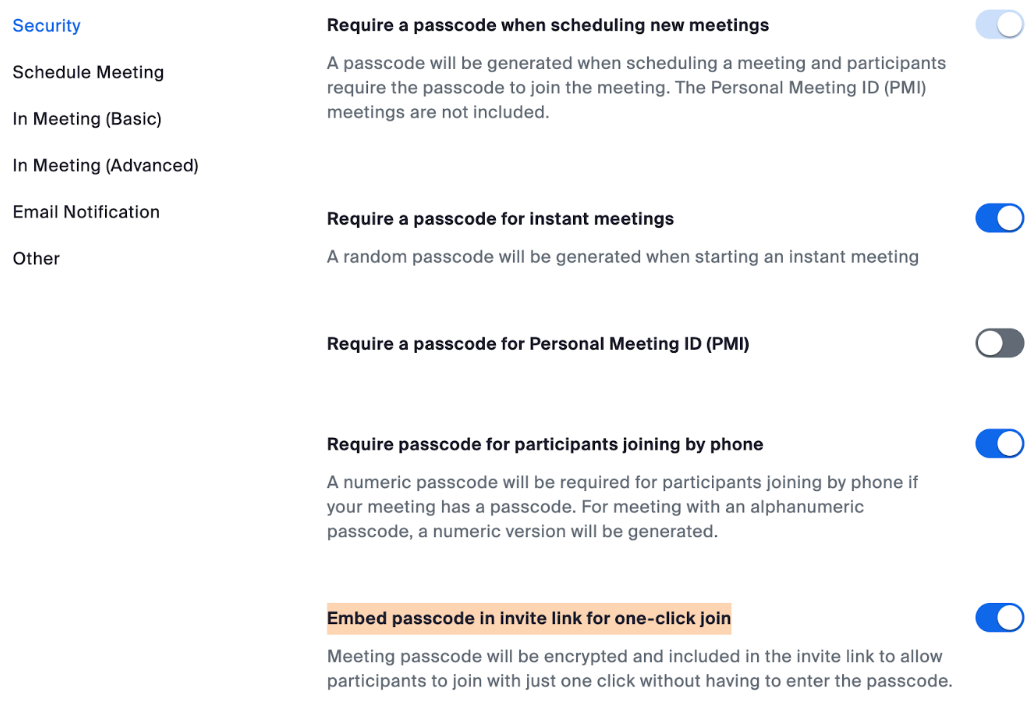
The Zoom links that exposed working meeting rooms all had enabled the highlighted option.

Charan said the misuse of PMI links, particularly those with passcodes embedded, can give unauthorized individuals access to meetings.

“These one-click links, which are not subject to expiration or password requirement, can be exploited by attackers for impersonation,” Charan said. “Attackers exploiting these vulnerabilities can impersonate companies, initiating meetings unknowingly to users. They can contact other employees or customers while posing as the company, gaining unauthorized access to confidential information, potentially for financial gain, recruitment, or fraudulent advertising campaigns.”

Akiri said he built a simple program to crawl the web for working Zoom meeting links from different organizations, and so far it has identified thousands of organizations with these perfectly functional zombie Zoom links.

According to Akiri, here are several tips for using Zoom links more safely:

Don’t Use Personal Meeting ID or Public Meetings: Your Personal Meeting ID (PMI) is the default meeting that launches when you start an ad hoc meeting. Your PMI doesn’t change unless you change it yourself, which makes it very useful if people need a way to reach you. But for public meetings, you should always schedule new meetings with randomly generated meeting IDs. That way, only invited attendees will know how to join your meeting. You can also turn off your PMI when starting an instant meeting in your profile settings.

Require a Passcode to Join: You can take meeting security even further by requiring a passcode to join your meetings. This feature can be applied to both your Personal Meeting ID, so only those with the passcode will be able to reach you, and to newly scheduled meetings. To learn all the ways to add a passcode for your meetings, see this support article.

Only Allow Registered or Domain Verified Users: Zoom can also give you peace of mind by letting you know exactly who will be attending your meeting. When scheduling a meeting, you can require attendees to register with their email, name, and custom questions. You can even customize your registration page with a banner and logo. By default, Zoom also restricts participants to those who are logged into Zoom, and you can even restrict it to Zoom users whose email address uses a certain domain.

source https://krebsonsecurity.com/2023/10/dont-let-zombie-zoom-links-drag-you-down/

A Closer Look at the Snatch Data Ransom Group

Earlier this week, KrebsOnSecurity revealed that the darknet website for the Snatch ransomware group was leaking data about its users and the crime gang’s internal operations. Today, we’ll take a closer look at the history of Snatch, its alleged founder, and their claims that everyone has confused them with a different, older ransomware group by the same name.

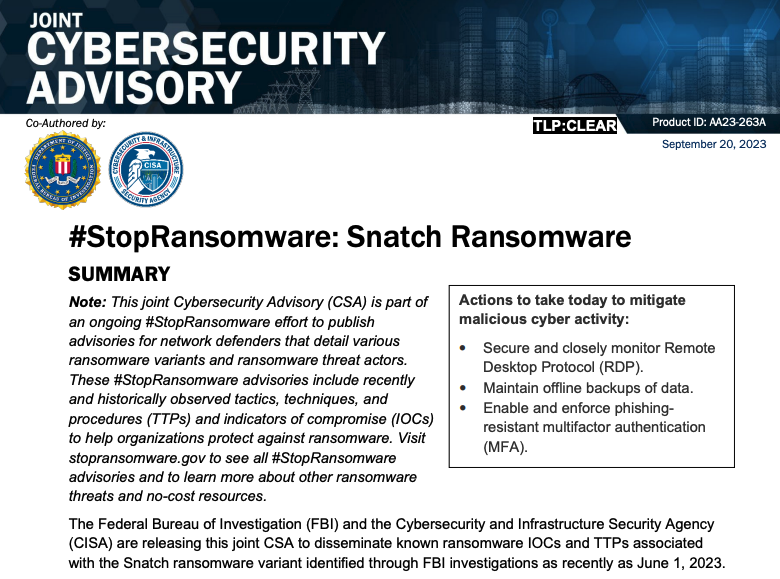
According to a September 20, 2023 joint advisory from the FBI and the U.S. Cybersecurity and Infrastructure Security Administration (CISA), Snatch was originally named Team Truniger, based on the nickname of the group’s founder and organizer — Truniger.

The FBI/CISA report says Truniger previously operated as an affiliate of GandCrab, an early ransomware-as-a-service offering that closed up shop after several years and claims to have extorted more than $2 billion from victims. GandCrab dissolved in July 2019, and is thought to have become “REvil,” one of the most ruthless and rapacious Russian ransomware groups of all time.

The government says Snatch used a customized ransomware variant notable for rebooting Microsoft Windows devices into Safe Mode — enabling the ransomware to circumvent detection by antivirus or endpoint protection — and then encrypting files when few services are running.

“Snatch threat actors have been observed purchasing previously stolen data from other ransomware variants in an attempt to further exploit victims into paying a ransom to avoid having their data released on Snatch’s extortion blog,” the FBI/CISA alert reads. It continues:

“Prior to deploying the ransomware, Snatch threat actors were observed spending up to three months on a victim’s system. Within this timeframe, Snatch threat actors exploited the victim’s network moving laterally across the victim’s network with RDP for the largest possible deployment of ransomware and searching for files and folders for data exfiltration followed by file encryption.”

New York City-based cyber intelligence firm Flashpoint said the Snatch ransomware group was created in 2018, based on Truniger’s recruitment both on Russian language cybercrime forums and public Russian programming boards. Flashpoint said Truniger recruited “pen testers” for a new, then-unnamed cybercrime group, by posting their private Jabber instant messenger contact details on multiple Russian language coding forums, as well as on Facebook.

“The command requires Windows system administrators,” Truniger’s ads explained. “Experience in backup, increase privileges, mikicatz, network. Details after contacting on jabber: truniger@xmpp[.]jp.”

In at least some of those recruitment ads — like one in 2018 on the forum sysadmins[.]ru –the username promoting Truniger’s contact information was Semen7907. In April 2020, Truniger was banned from two of the top Russian cybercrime forums, where members from both forums confirmed that Semen7907 was one of Truniger’s known aliases.

[SIDE NOTE: Truniger was banned because he purchased credentials to a company from a network access broker on the dark web, and although he promised to share a certain percentage of whatever ransom amount Truniger’s group extracted from the victim, Truniger paid the access broker just a few hundred dollars off of a six-figure ransom].

According to Constella Intelligence, a data breach and threat actor research platform, a user named Semen7907 registered in 2017 on the Russian-language programming forum pawno[.]ru using the email address tretyakov-files@yandex.ru.

That same email address was assigned to the user “Semen-7907” on the now defunct gaming website tunngle.net, which suffered a data breach in 2020. Semen-7907 registered at Tunngle from the Internet address 31.192.175[.]63, which is in Yekaterinburg, RU.

Constella reports that tretyakov-files@yandex.ru was also used to register an account at the online game stalker[.]so with the nickname Trojan7907.

There is a Skype user by the handle semen7907, and which has the name Semyon Tretyakov from Yekaterinburg, RU. Constella also found a breached record from the Russian mobile telephony site tele2[.]ru, which shows that a user from Yekaterinburg registered in 2019 with the name Semyon Sergeyvich Tretyakov and email address tretyakov-files@ya.ru.

The above accounts, as well as the email address semen_7907@mail.ru, were all registered or accessed from the same Yekaterinburg Internet address mentioned previously: 31.192.175.63. The Russian mobile phone number associated with that tele2[.]ru account is connected to the Telegram account “Perchatka,” (“glove” in Russian).

BAD BEATS

Reached via Telegram, Perchatka (a.k.a. Mr. Tretyakov) said he was not a cybercriminal, and that he currently has a full-time job working in IT at a major company (he declined to specify which).

Presented with the information gathered for this report (and more that is not published here), Mr. Tretyakov acknowledged that Semen7907 was his account on sysadmins[.]ru, the very same account Truniger used to recruit hackers for the Snatch Ransomware group back in 2018.

However, he claims that he never made those posts, and that someone else must have assumed control over his sysadmins[.]ru account and posted as him. Mr. Tretyakov said that KrebsOnSecurity’s outreach this week was the first time he became aware that his sysadmins[.]ru account was used without his permission.

Mr. Tretyakov suggested someone may have framed him, pointing to an August 2023 story at a Russian news outlet about the reported hack and leak of the user database from sysadmins[.]ru, allegedly at the hands of a pro-Ukrainian hacker group called CyberSec.

“Recently, because of the war in Ukraine, a huge number of databases have been leaked and finding information about a person is not difficult,” Tretyakov said. “I’ve been using this login since about 2013 on all the forums where I register, and I don’t always set a strong password. If I had done something illegal, I would have hidden much better :D.”

[For the record, KrebsOnSecurity does not generally find this to be the case, as the ongoing Breadcrumbs series will attest.]

A Semyon Sergeyvich Tretyakov is listed as the composer of a Russian-language rap song called “Parallels,” which seems to be about the pursuit of a high-risk lifestyle online. A snippet of the song goes:

“Someone is on the screen, someone is on the blacklist
I turn on the timer and calculate the risks
I don’t want to stay broke And in the pursuit of money
I can’t take these zeros Life is like a zebra –
everyone wants to be first Either the stripes are white,
or we’re moving through the wilds I won’t waste time.”

Mr. Tretyakov said he was not the author of that particular rhyme, but that he has been known to record his own rhythms.

“Sometimes I make bad beats,” he said. “Soundcloud.”

NEVER MIND THE DOMAIN NAME

The FBI/CISA alert on Snatch Ransomware (PDF) includes an interesting caveat: It says Snatch actually deploys ransomware on victim systems, but it also acknowledges that the current occupants of Snatch’s dark and clear web domains call themselves Snatch Team, and maintain that they are not the same people as Snatch Ransomware from 2018.

Here’s the interesting bit from the FBI/CISA report:

“Since November 2021, an extortion site operating under the name Snatch served as a clearinghouse for data exfiltrated or stolen from victim companies on Clearnet and TOR hosted by a bulletproof hosting service. In August 2023, individuals claiming to be associated with the blog gave a media interview claiming the blog was not associated with Snatch ransomware and “none of our targets has been attacked by Ransomware Snatch…”, despite multiple confirmed Snatch victims’ data appearing on the blog alongside victims associated with other ransomware groups, notably Nokoyawa and Conti.”

Avid readers will recall a story here earlier this week about Snatch Team’s leaky darknet website based in Yekaterinburg, RU that exposed their internal operations and Internet addresses of their visitors. The leaked data suggest that Snatch is one of several ransomware groups using paid ads on Google.com to trick people into installing malware disguised as popular free software, such as Microsoft TeamsAdobe ReaderMozilla Thunderbird, and Discord.

Snatch Team claims to deal only in stolen data — not in deploying ransomware malware to hold systems hostage.

Representatives of the Snatch Team recently answered questions from Databreaches.net about the claimed discrepancy in the FBI/CISA report.

“First of all, we repeat once again that we have nothing to do with Snatch Ransomware, we are Security Notification Attachment, and we have never violated the terms of the concluded transactions, because our honesty and openness is the guarantee of our income,” the Snatch Team wrote to Databreaches.net in response to questions.

But so far the Snatch Team has not been able to explain why it is using the very same domain names that the Snatch ransomware group used?

Their claim is even more unbelievable because the Snatch Team members told Databreaches.net they didn’t even know that a ransomware group with that name already existed when they initially formed just two years ago.

This is difficult to swallow because even if they were a separate group, they’d still need to somehow coordinate the transfer of the Ransomware group’s domains on the clear and dark webs. If they were hoping for a fresh start or separation, why not just pick a new name and new web destination?

“Snatchteam[.]cc is essentially a data market,” they continued. “The only thing to underline is that we are against selling leaked information, sticking to the idea of free access. Absolutely any team can come to us and offer information for publication. Even more, we have heard rumors that a number of ransomware teams scare their clients that they will post leaked information on our resource. We do not have our own ransomware, but we are open to cooperation on placement and monetization of dates (sic).”

Maybe Snatch Team does not wish to be associated with Snatch Ransomware because they currently believe stealing data and then extorting victim companies for money is somehow less evil than infecting all of the victim’s servers and backups with ransomware.

It is also likely that Snatch Team is well aware of how poorly some of their founders covered their tracks online, and are hoping for a do-over on that front.

source https://krebsonsecurity.com/2023/09/a-closer-look-at-the-snatch-data-ransom-group/