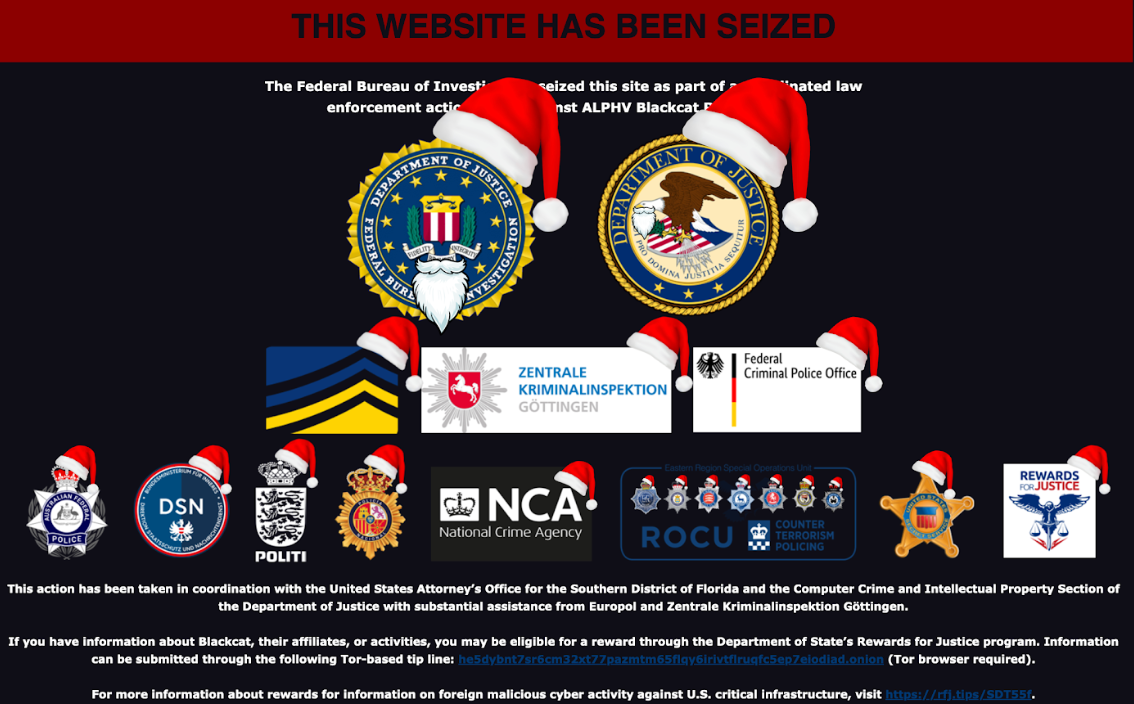
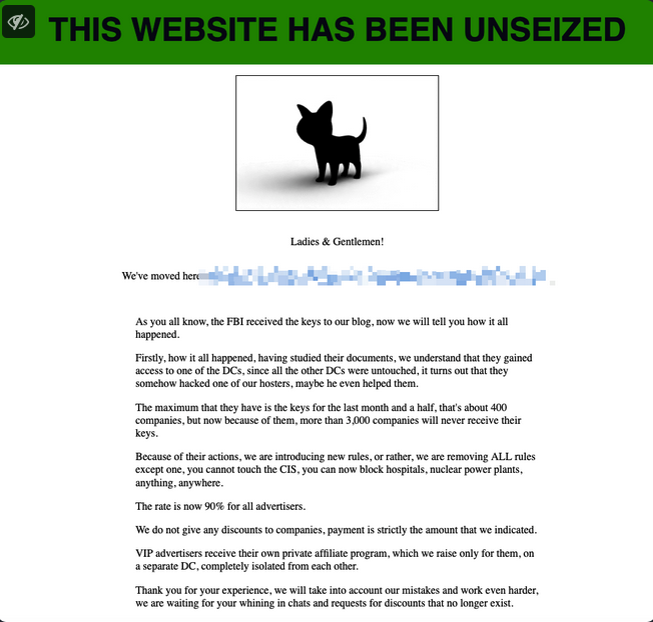
The U.S. Federal Bureau of Investigation (FBI) disclosed today that it infiltrated the world’s second most prolific ransomware gang, a Russia-based criminal group known as ALPHV and BlackCat. The FBI said it seized the gang’s darknet website, and released a decryption tool that hundreds of victim companies can use to recover systems. Meanwhile, BlackCat responded by briefly “unseizing” its darknet site with a message promising 90 percent commissions for affiliates who continue to work with the crime group, and open season on everything from hospitals to nuclear power plants.
A slightly modified version of the FBI seizure notice on the BlackCat darknet site (Santa caps added).
Whispers of a possible law enforcement action against BlackCat came in the first week of December, after the ransomware group’s darknet site went offline and remained unavailable for roughly five days. BlackCat eventually managed to bring its site back online, blaming the outage on equipment malfunctions.
But earlier today, the BlackCat website was replaced with an FBI seizure notice, while federal prosecutors in Florida released a search warrant explaining how FBI agents were able to gain access to and disrupt the group’s operations.
A statement on the operation from the U.S. Department of Justice says the FBI developed a decryption tool that allowed agency field offices and partners globally to offer more than 500 affected victims the ability to restore their systems.
“With a decryption tool provided by the FBI to hundreds of ransomware victims worldwide, businesses and schools were able to reopen, and health care and emergency services were able to come back online,” Deputy Attorney General Lisa O. Monaco said. “We will continue to prioritize disruptions and place victims at the center of our strategy to dismantle the ecosystem fueling cybercrime.”
The DOJ reports that since BlackCat’s formation roughly 18 months ago, the crime group has targeted the computer networks of more than 1,000 victim organizations. BlackCat attacks usually involve encryption and theft of data; if victims refuse to pay a ransom, the attackers typically publish the stolen data on a BlackCat-linked darknet site.
BlackCat formed by recruiting operators from several competing or disbanded ransomware organizations — including REvil, BlackMatter and DarkSide. The latter group was responsible for the Colonial Pipeline attack in May 2021 that caused nationwide fuel shortages and price spikes.
Like many other ransomware operations, BlackCat operates under the “ransomware-as-a-service” model, where teams of developers maintain and update the ransomware code, as well as all of its supporting infrastructure. Affiliates are incentivized to attack high-value targets because they generally reap 60-80 percent of any payouts, with the remainder going to the crooks running the ransomware operation.
BlackCat was able to briefly regain control over their darknet server today. Not long after the FBI’s seizure notice went live the homepage was “unseized” and retrofitted with a statement about the incident from the ransomware group’s perspective.
The message that was briefly on the homepage of the BlackCat ransomware group this morning. Image: @GossiTheDog.
BlackCat claimed that the FBI’s operation only touched a portion of its operations, and that as a result of the FBI’s actions an additional 3,000 victims will no longer have the option of receiving decryption keys. The group also said it was formally removing any restrictions or discouragement against targeting hospitals or other critical infrastructure.
“Because of their actions, we are introducing new rules, or rather, we are removing ALL rules except one, you cannot touch the CIS [a common restriction against attacking organizations in Russia or the Commonwealth of Independent States]. You can now block hospitals, nuclear power plants, anything, anywhere.”
The crime group also said it was setting affiliate commissions at 90 percent, presumably to attract interest from potential affiliates who might otherwise be spooked by the FBI’s recent infiltration. BlackCat also promised that all “advertisers” under this new scheme would manage their affiliate accounts from data centers that are completely isolated from each other.
BlackCat’s darknet site currently displays the FBI seizure notice. But as BleepingComputer founder Lawrence Abramsexplained on Mastodon, both the FBI and BlackCat have the private keys associated with the Tor hidden service URL for BlackCat’s victim shaming and data leak site.
“Whoever is the latest to publish the hidden service on Tor (in this case the BlackCat data leak site), will resume control over the URL,” Abrams said. “Expect to see this type of back and forth over the next couple of days.”
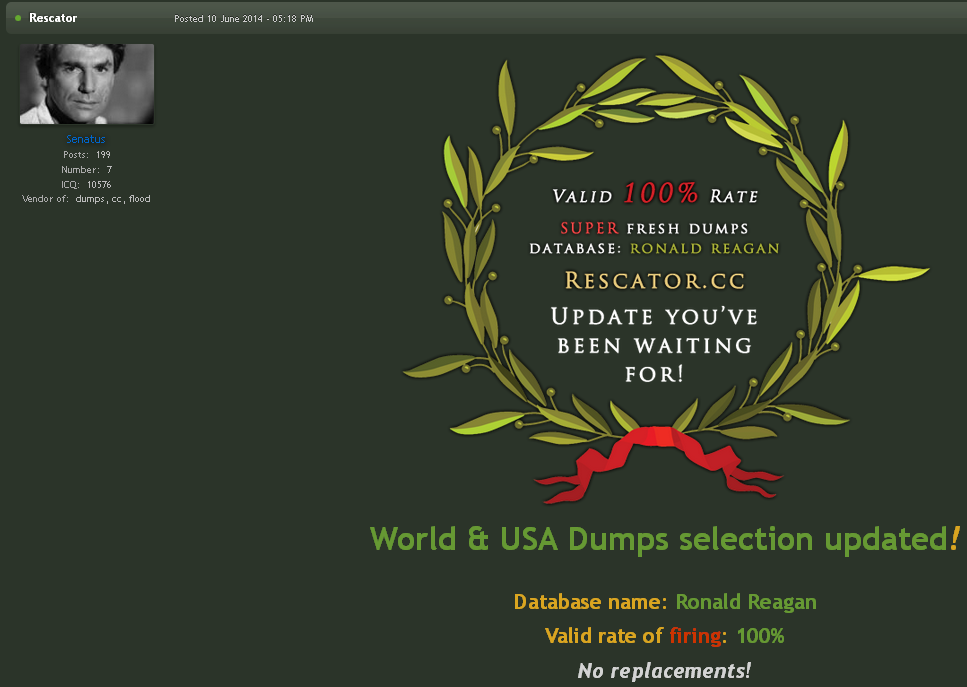
On Dec. 18, 2013, KrebsOnSecurity broke the news that U.S. retail giant Target was battling a wide-ranging computer intrusion that compromised more than 40 million customer payment cards over the previous month. The malware used in the Target breach included the text string “Rescator,” which also was the handle chosen by the cybercriminal who was selling all of the cards stolen from Target customers. Ten years later, KrebsOnSecurity has uncovered new clues about the real-life identity of Rescator.
Rescator, advertising a new batch of cards stolen in a 2014 breach at P.F. Chang’s.
Shortly after breaking the Target story, KrebsOnSecurity reported that Rescator appeared to be a hacker from Ukraine. Efforts to confirm my reporting with that individual ended when they declined to answer questions, and after I declined to accept a bribe of $10,000 not to run my story.
That reporting was based on clues from an early Russian cybercrime forum in which a hacker named Rescator — using the same profile image that Rescator was known to use on other forums — claimed to have originally been known as “Helkern,” the nickname chosen by the administrator of a cybercrime forum called Darklife.
KrebsOnSecurity began revisiting the research into Rescator’s real-life identity in 2018, after the U.S. Department of Justice unsealed an indictment that named a different Ukrainian man as Helkern.
It may be helpful to first recap why Rescator is thought to be so closely tied to the Target breach. For starters, the text string “Rescator” was found in some of the malware used in the Target breach. Investigators would later determine that a variant of the malware used in the Target breach was used in 2014 to steal 56 million payment cards from Home Depot customers. And once again, cards stolen in the Home Depot breach were sold exclusively at Rescator’s shops.
On Nov. 25, 2013, two days before Target said the breach officially began, Rescator could be seen in instant messages hiring another forum member to verify 400,000 payment cards that Rescator claimed were freshly stolen.
By the first week of December, 2013, Rescator’s online store — rescator[.]la — was selling more than six million payment card records stolen from Target customers. Prior to the Target breach, Rescator had mostly sold much smaller batches of stolen card and identity data, and the website allowed cybercriminals to automate the sending of fraudulent wire transfers to money mules based in Lviv, Ukraine.
Finally, there is some honor among thieves, and in the marketplace for stolen payment card data it is considered poor form to advertise a batch of cards as “yours” if you are merely reselling cards sold to you by a third-party card vendor or thief. When serious stolen payment card shop vendors wish to communicate that a batch of cards is uniquely their handiwork or that of their immediate crew, they refer to it as “our base.” And Rescator was quite clear in his advertisements that these millions of cards were obtained firsthand.
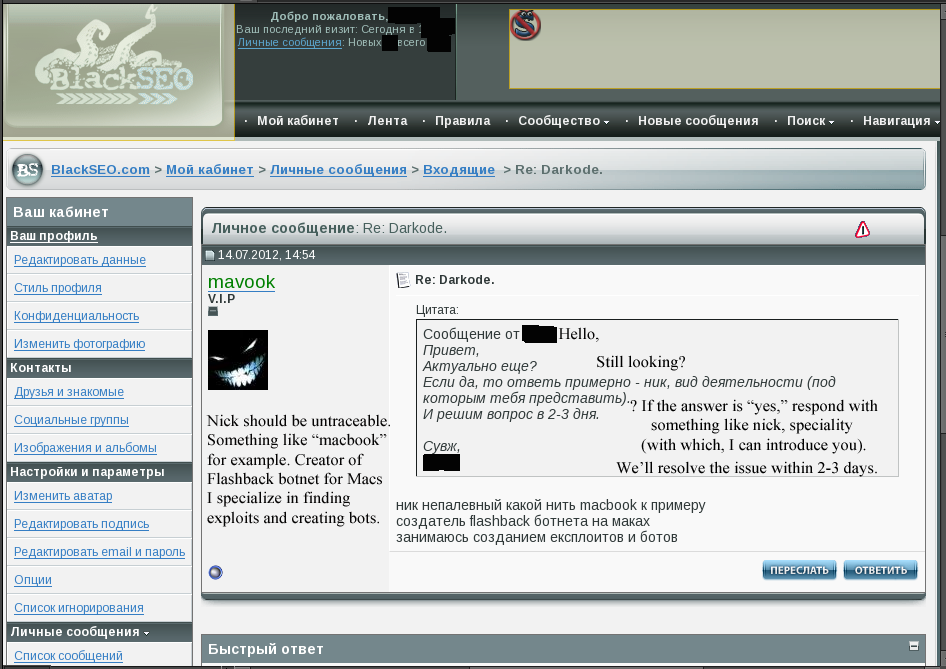
That story about the Flashback author was possible because a source had obtained a Web browser authentication cookie for a founding member of a Russian cybercrime forum called BlackSEO. Anyone in possession of that cookie could then browse the invite-only BlackSEO forum and read the user’s private messages without having to log in.
BlackSEO.com VIP member “Mavook” tells forum admin Ika in a private message that he is the Flashback author.
The legitimate owner of that BlackSEO user cookie went by the nickname Ika, and Ika’s private messages on the forum showed he was close friends with the Flashback author. At the time, Ika also was the administrator of Pustota[.]pw — a closely-guarded Russian forum that counted among its members some of the world’s most successful and established spammers and malware writers.
For many years, Ika held a key position at one of Russia’s largest Internet service providers, and his (mostly glowing) reputation as a reliable provider of web hosting to the Russian cybercrime community gave him an encyclopedic knowledge about nearly every major player in that scene at the time.
The story on the Flashback author featured redacted screenshots that were taken from Ika’s BlackSEO account (see image above). The day after that story ran, Ika posted a farewell address to his mates, expressing shock and bewilderment over the apparent compromise of his BlackSEO account.
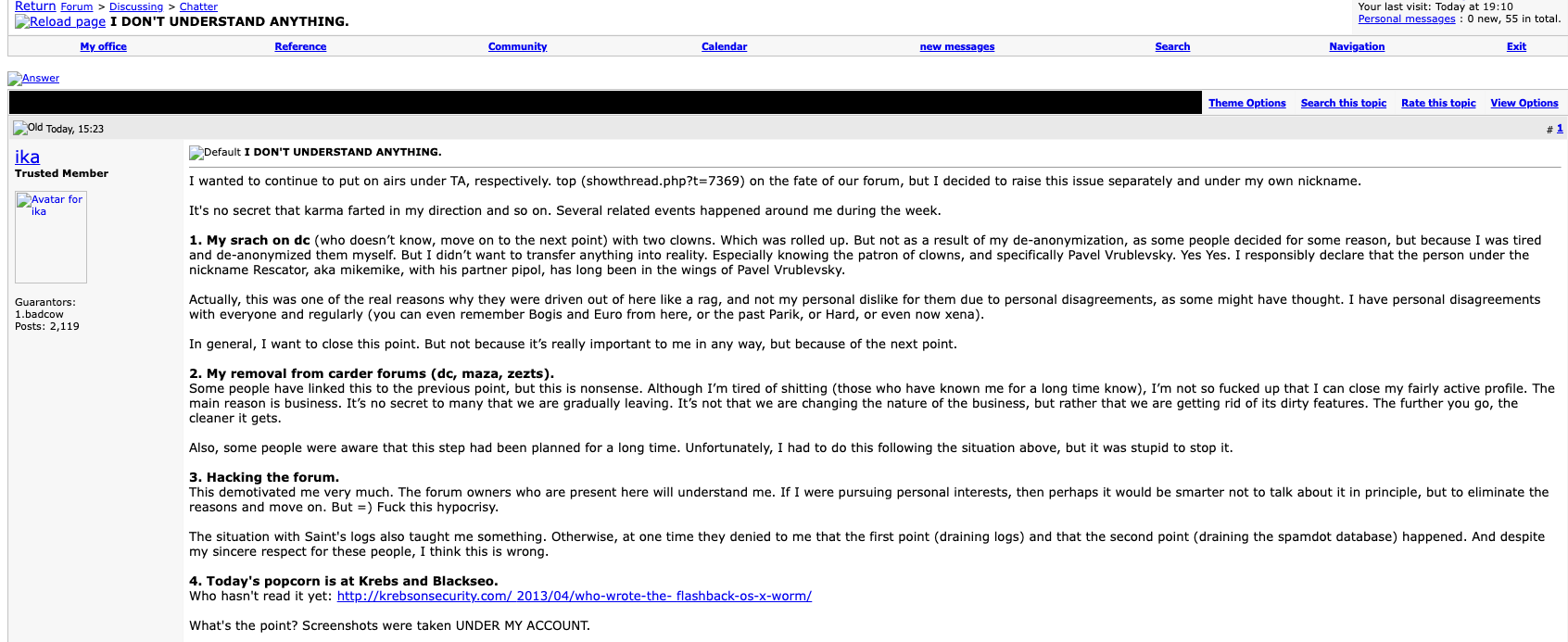
In a lengthy post on April 4, 2013 titled “I DON’T UNDERSTAND ANYTHING,” Ika told Pustota forum members he was so spooked by recent events that he was closing the forum and quitting the cybercrime business entirely. Ika recounted how the Flashback story had come the same week that rival cybercriminals tried to “dox” him (their dox named the wrong individual, but included some of Ika’s more guarded identities).
“It’s no secret that karma farted in my direction,” Ika said at the beginning of his post. Unbeknownst to Ika at the time, his Pustota forum also had been completely hacked that week, and a copy of its database shared with this author.
A Google translated version of the farewell post from Ika, the administrator of Pustota, a Russian language cybercrime forum focused on botnets and spam. Click to enlarge.
Ika said the two individuals who tried to dox him did so on an even more guarded Russian language forum — DirectConnection[.]ws, perhaps the most exclusive Russian cybercrime community ever created. New applicants of this forum had to pay a non-refundable deposit, and receive vouches by three established cybercriminals already on the forum. Even if one managed to steal (or guess) a user’s DirectConnection password, the login page could not be reached unless the visitor also possessed a special browser certificate that the forum administrator gave only to approved members.
In no uncertain terms, Ika declared that Rescator went by the nickname MikeMike on DirectConnection:
“I did not want to bring any of this to real life. Especially since I knew the patron of the clowns – specifically Pavel Vrublevsky. Yes, I do state with confidence that the man with the nickname Rescator a.k.a. MikeMike with his partner Pipol have been Pavel Vrublevsky’s puppets for a long time.”
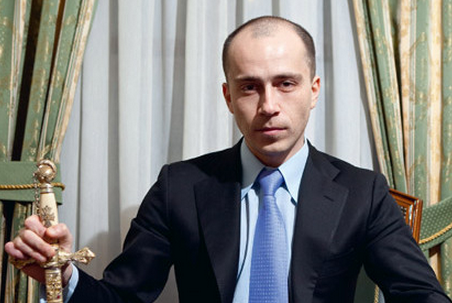
Pavel Vrublevsky is a convicted cybercriminal who became famous as the CEO of the Russian e-payments company ChronoPay, which specialized in facilitating online payments for a variety of “high-risk” businesses, including gambling, pirated Mp3 files, rogue antivirus software and “male enhancement” pills.
As detailed in my 2014 book Spam Nation, Vrublevsky not-so-secretly ran a pharmacy affiliate spam program called Rx-Promotion, which paid spammers and virus writers to blast out tens of billions of junk emails advertising generic Viagra and controlled pharmaceuticals like pain relief medications. Much of my reporting on Vrublevsky’s cybercrime empire came from several years worth of internal ChronoPay emails and documents that were leaked online in 2010 and 2011.
Pavel Vrublevsky’s former Facebook profile photo.
ZAXVATMIRA
In 2014, KrebsOnSecurity learned from a trusted source close to the Target breach investigation that the user MikeMike on DirectConnection — the same account that Ika said belonged to Rescator — used the email address “zaxvatmira@gmail.com.”
At the time, KrebsOnSecurity could not connect that email address to anything or anyone. However, a recent search on zaxvatmira@gmail.com at the breach tracking service Constella Intelligence returns just one result: An account created in November 2010 at the site searchengines[.]ru under the handle “r-fac1.”
A search on “r-fac1” at cyber intelligence firm Intel 471 revealed that this user’s introductory post on searchengines[.]ru advertised musictransferonline[.]com, an affiliate program that paid people to drive traffic to sites that sold pirated music files for pennies apiece.
According to leaked ChronoPay emails from 2010, this domain was registered and paid for by ChronoPay. Those missives also show that in August 2010 Vrublevsky authorized a payment of ~$1,200 for a multi-user license of an Intranet service called MegaPlan.
ChronoPay used the MegaPlan service to help manage the sprawling projects that Vrublevsky referred to internally as their “black” payment processing operations, including pirated pills, porn, Mp3s, and fake antivirus products. ChronoPay employees used their MegaPlan accounts to track payment disputes, order volumes, and advertising partnerships for these high-risk programs.
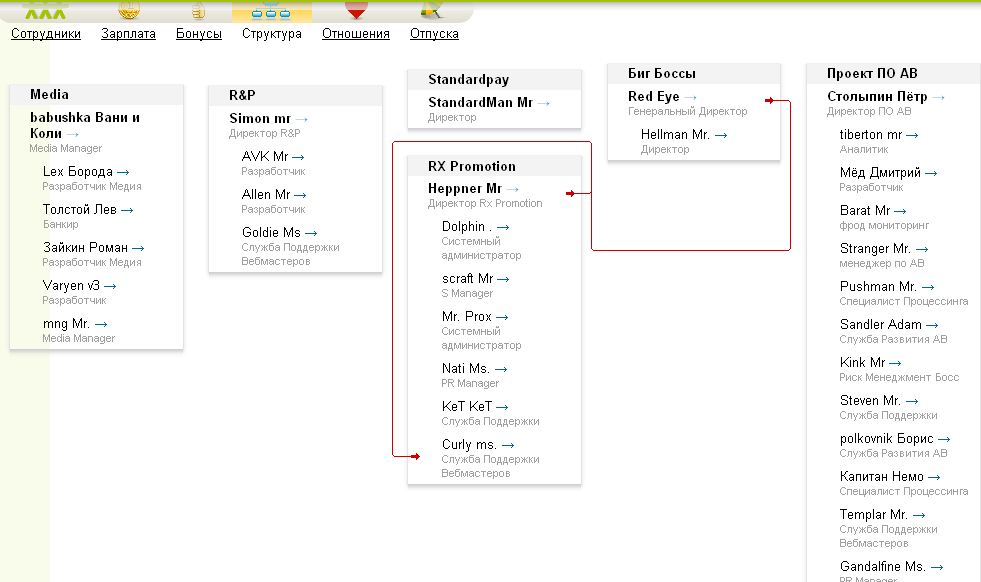
Borrowing a page from the Quentin Tarantino movie Reservoir Dogs, the employees adopted nicknames like “Mr. Kink,” “Mr. Heppner,” and “Ms. Nati.” However, in a classic failure of operational security, many of these employees had their MegaPlan account messages automatically forwarded to their real ChronoPay email accounts.
A screen shot of the org chart from ChronoPay’s MegaPlan Intranet system.
When ChronoPay’s internal emails were leaked in 2010, the username and password for its MegaPlan subscription were still working and valid. An internal user directory for that subscription included the personal (non-ChronoPay) email address tied to each employee Megaplan nickname. That directory listing said the email address zaxvatmira@gmail.com was assigned to the head of the Media/Mp3 division for ChronoPay, pictured at the top left of the organizational chart above as “Babushka Vani and Koli.”
[Author’s note: I initially overlooked the presence of the email address zaxvatmira@gmail.com in my notes because it did not show up in text searches of my saved emails, files or messages. I rediscovered it recently when a text search for zaxvatmira@gmail.com on my Mac found the address in a screenshot of the ChronoPay MegaPlan interface.]
The nickname two rungs down from “Babushka” in the ChronoPay org chart is “Lev Tolstoy,” which the MegaPlan service showed was picked by someone who used the email address v.zhabukin@freefrog-co-ru.
ChronoPay’s emails show that this Freefrog email address belongs to a Vasily Borisovich Zhabykin from Moscow. The Russian business tracking website rusprofile[.]ru reports that Zhabykin is or was the supervisor or owner of three Russian organizations, including one called JSC Hot Spot.
[Author’s note: The word “babushka” means “grandma” in Russian, and it could be that this nickname is a nod to the ChronoPay CEO’s wife, Vera. The leaked ChronoPay emails show that Vera Vrublevsky managed a group of hackers working with their media division, and was at least nominally in charge of MP3 projects for ChronoPay. Indeed, in messages exposed by the leaked ChronoPay email cache, Zhabykin stated that he was “directly subordinate” to Mrs. Vrublevsky].
CYBERCRIME HOTSPOT
JSC Hot Spot is interesting because its co-founder is another ChronoPay employee: 37-year-old Mikhail “Mike” Shefel. A Facebook profile for Mr. Shefel says he is or was vice president of payment systems at ChronoPay. However, the last update on that profile is from 2018, when Shefel appears to have legally changed his last name.
Archive.org shows that Hot Spot’s website — myhotspot[.]ru — sold a variety of consulting services, including IT security assessments, code and system audits, and email marketing. The earliest recorded archive of the Hot Spot website listed three clients on its homepage, including ChronoPay and Freefrog.
ChronoPay internal emails show that Freefrog was one of its investment projects that facilitated the sale of pirated Mp3 files. Rusprofile[.]ru reports that Freefrog’s official company name — JSC Freefrog — is incorporated by a thinly-documented entity based in the Seychelles called Impex Consulting Ltd., and it is unclear who its true owners are.
However, a search at DomainTools.com on the phone number listed on the homepage of myhotspot[.]ru (74957809554) reveals that number is associated with eight domain names.
Six of those domains are some variation of FreeFrog. Another domain registered to that phone number is bothunter[.]me, which included a copyright credit to “Hot Spot 2011.” At the annual Russian Internet Week IT convention in Moscow in 2012, Mr. Shefel gave a short presentation about bothunter, which he described as a service he designed to identify inauthentic (bot) accounts on Russian social media networks.
Interestingly, one of r-fac1’s first posts to Searchengines[.]ru a year earlier saw this user requesting help from other members who had access to large numbers of hacked social media accounts. R-fac1 told forum members that he was only looking to use those accounts to post harmless links and comments to the followers of the hacked profiles, and his post suggested he was testing something.
“Good afternoon,” r-fac1 wrote on Dec. 20, 2010. “I’m looking for people with their own not-recently-registered accounts on forums, (except for search) Social networks, Twitter, blogs, their websites. Tasks, depending on your accounts, post text and a link, sometimes just a link. Most often the topic is chatter, relaxation, discussion. Posting my links in your profiles, on your walls. A separate offer for people with a large set of contacts in instant messengers to try to use viral marketing.”
Neither Mr. Shefel nor Mr. Zhabykin responded to requests for comment.
WHERE ARE THEY NOW?
Mr. Zhabykin soon moved on to bigger ventures, co-founding a cryptocurrency exchange based in Moscow’s financial center called Suex. In September 2021, Suex earned the distinction of becoming the first crypto firm to be sanctioned by the U.S. Department of the Treasury, which effectively blocked Suex from the global financial system. The Treasury alleged Suex helped to process millions in criminal transactions, including the proceeds of numerous ransomware attacks.
“I don’t understand how I got mixed up in this,” Zhabykin toldThe New York Times in 2021. Zhabykin said Suex, which is registered in the Czech Republic, was mostly a failure and had conducted only a half dozen or so transactions since 2019.
The Russian business tracking service Rusprofile says Zhabykin also is the owner of a company based in the United Kingdom called RideWithLocal; the company’s website says it specializes in arranging excursions for extreme sports, including snowboarding, skiing, surfing and parasailing. Images from the RideWithLocal Facebook page show helicopters dropping snowboarders and skiers atop some fairly steep mountains.
A screenshot from the Facebook page of RideWithLocal.
Constella Intelligence found a cached copy of a now-deleted LinkedIn profile for Mr. Zhabykin, who described himself as a “sporttech/fintech specialist and mentor.”
“I create products and services worldwide, focusing on innovation and global challenges,” his LinkedIn profile said. “I’ve started my career in 2002 and since then I worked in Moscow, different regions of Russia, including Siberia and in Finland, Brazil, United Kingdom, Sri Lanka. Over the last 15 years I contributed to many amazing products in the following industries: sports, ecology, sport tech, fin tech, electronic payments, big data, telecommunications, pulp and paper industry, wood processing and travel. My specialities are Product development, Mentorship, Strategy and Business development.”
Rusprofile reports that Mikhail Borisovich Shefel is associated with at least eight current or now-defunct companies in Russia, including Dengi IM (Money IM), Internet Capital, Internet Lawyer, Internet 2, Zao Hot Spot, and (my personal favorite) an entity incorporated in 2021 called “All the Money in the World.”
Constella Intelligence found several official documents for Mr. Shefel that came from hacked Russian phone, automobile and residence records. They indicate Mr. Shefel is the registrant of a black Porsche Cayenne (Plate:X537SR197) and a Mercedes (Plate:P003PX90). Those vehicle records show Mr. Shefel was born on May 28, 1986.
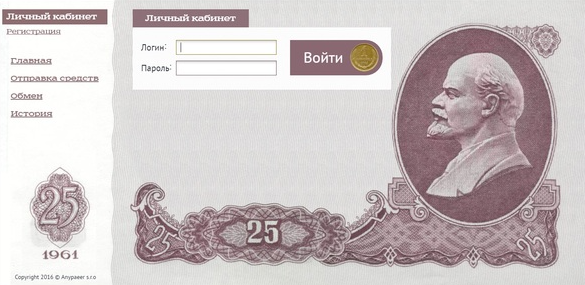
Rusprofile reveals that at some point near the end of 2018, Shefel changed his last name to Lenin. DomainTools reports that in 2018, Mr. Shefel’s company Internet 2 LLC registered the domain name Lenin[.]me. This now-defunct service sold physical USSR-era Ruble notes that bear the image of Vladimir Lenin, the founding father of the Soviet Union.
Meanwhile, Pavel Vrublevsky remains imprisoned in Russia, awaiting trial on fraud charges levied against the payment company CEO in March 2022. Authorities allege Vrublevsky operated several fraudulent SMS-based payment schemes. They also accused Vrublevsky of facilitating money laundering for Hydra, the largest Russian darknet market. Hydra trafficked in illegal drugs and financial services, including cryptocurrency tumbling for money laundering, exchange services between cryptocurrency and Russian rubles, and the sale of falsified documents and hacking services.
In 2013, Vrublevsky was sentenced to 2.5 years in a Russian penal colony for convincing one of his top spammers and botmasters to launch a distributed denial-of-service (DDoS) attack against a ChronoPay competitor that shut down the ticketing system for the state-owned Aeroflot airline.
Following his release, Vrublevsky began working on a new digital payments platform based in Hong Kong called HPay Ltd (a.k.a. Hong Kong Processing Corporation). HPay appears to have had a great number of clients that were running schemes which bamboozled people with fake lotteries and prize contests.
KrebsOnSecurity sought comment on this research from the Federal Bureau of Investigation (FBI) and the U.S. Secret Service, both of which have been involved in the Target breach investigation over the years. The Secret Service declined to confirm or dispute any of the findings, but said it is still interested in hearing from anyone who might have more information.
“The U.S. Secret Service does not comment on any open investigation and won’t confirm or deny the accuracy in any reporting related to a criminal manner,” the agency said in a written statement. “However, If you have any information relating to the subjects referenced in this article, please contact the U.S. Secret Service at mostwanted@usss.dhs.gov. The Secret Service pays a reward for information leading to the arrest of cybercriminals.”
The final Patch Tuesday of 2023 is upon us, with Microsoft Corp. today releasing fixes for a relatively small number of security holes in its Windows operating systems and other software. Even more unusual, there are no known “zero-day” threats targeting any of the vulnerabilities in December’s patch batch. Still, four of the updates pushed out today address “critical” vulnerabilities that Microsoft says can be exploited by malware or malcontents to seize complete control over a vulnerable Windows device with little or no help from users.
Among the critical bugs quashed this month is CVE-2023-35628, a weakness present in Windows 10 and later versions, as well as Microsoft Server 2008 and later. Kevin Breen, senior director of threat research at Immersive Labs, said the flaw affects MSHTML, a core component of Windows that is used to render browser-based content. Breen notes that MSHTML also can be found in a number of Microsoft applications, including Office, Outlook, Skype and Teams.
“In the worst-case scenario, Microsoft suggests that simply receiving an email would be enough to trigger the vulnerability and give an attacker code execution on the target machine without any user interaction like opening or interacting with the contents,” Breen said.
Another critical flaw that probably deserves priority patching is CVE-2023-35641, a remote code execution weakness in a built-in Windows feature called the Internet Connection Sharing (ICS) service that lets multiple devices share an Internet connection. While CVE-2023-35641 earned a high vulnerability severity score (a CVSS rating of 8.8), the threat from this flaw may be limited somewhat because an attacker would need to be on the same network as the target. Also, while ICS is present in all versions of Windows since Windows 7, it is not on by default (although some applications may turn it on).
Satnam Narang, senior staff research engineer at Tenable, notes that a number of the non-critical patches released today were identified by Microsoft as “more likely to be exploited.” For example, CVE-2023-35636, which Microsoft says is an information disclosure vulnerability in Outlook. An attacker could exploit this flaw by convincing a potential victim to open a specially crafted file delivered via email or hosted on a malicious website.
Narang said what makes this one stand out is that exploitation of this flaw would lead to the disclosure of NTLM hashes, which could be leveraged as part of an NTLM relay or “pass the hash” attack, which lets an attacker masquerade as a legitimate user without ever having to log in.
”It is reminiscent of CVE-2023-23397, an elevation of privilege vulnerability in Microsoft Outlook that was exploited in the wild as a zero day and patched in the March 2023 Patch Tuesday release,” Narang said. “However, unlike CVE-2023-23397, CVE-2023-35636 is not exploitable via Microsoft’s Preview Pane, which lowers the severity of this flaw.”
As usual, the SANS Internet Storm Center has a good roundup on all of the patches released today and indexed by severity. Windows users, please consider backing up your data and/or imaging your system before applying any updates. And feel free to sound off in the comments if you experience any difficulties as a result of these patches.
More than five years after domain name registrars started redacting personal data from all public domain registration records, the non-profit organization overseeing the domain industry has introduced a centralized online service designed to make it easier for researchers, law enforcement and others to request the information directly from registrars.
In May 2018, the Internet Corporation for Assigned Names and Numbers (ICANN) — the nonprofit entity that manages the global domain name system — instructed all registrars to redact the customer’s name, address, phone number and email from WHOIS, the system for querying databases that store the registered users of domain names and blocks of Internet address ranges.
ICANN made the policy change in response to the General Data Protection Regulation (GDPR), a law enacted by the European Parliament that requires companies to gain affirmative consent for any personal information they collect on people within the European Union. In the meantime, registrars were to continue collecting the data but not publish it, and ICANN promised it would develop a system that facilitates access to this information.
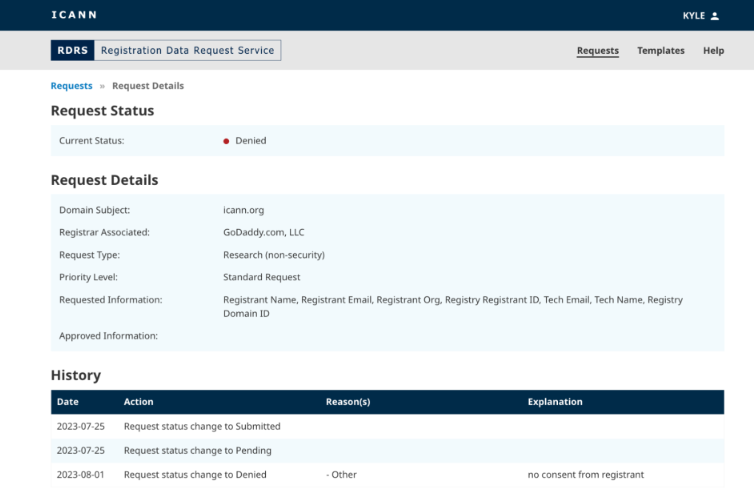
At the end of November 2023, ICANN launched the Registration Data Request Service (RDRS), which is designed as a one-stop shop to submit registration data requests to participating registrars. This video from ICANN walks through how the system works.
Accredited registrars don’t have to participate, but ICANN is asking all registrars to join and says participants can opt out or stop using it at any time. ICANN contends that the use of a standardized request form makes it easier for the correct information and supporting documents to be provided to evaluate a request.
ICANN says the RDRS doesn’t guarantee access to requested registration data, and that all communication and data disclosure between the registrars and requestors takes place outside of the system. The service can’t be used to request WHOIS data tied to country-code top level domains (CCTLDs), such as those ending in .de (Germany) or .nz (New Zealand), for example.
The RDRS portal.
As Catalin Cimpanuwrites for Risky Business News, currently investigators can file legal requests or abuse reports with each individual registrar, but the idea behind the RDRS is to create a place where requests from “verified” parties can be honored faster and with a higher degree of trust.
The registrar community generally views public WHOIS data as a nuisance issue for their domain customers and an unwelcome cost-center. Privacy advocates maintain that cybercriminals don’t provide their real information in registration records anyway, and that requiring WHOIS data to be public simply causes domain registrants to be pestered by spammers, scammers and stalkers.
Meanwhile, security experts argue that even in cases where online abusers provide intentionally misleading or false information in WHOIS records, that information is still extremely useful in mapping the extent of their malware, phishing and scamming operations. What’s more, the overwhelming majority of phishing is performed with the help of compromised domains, and the primary method for cleaning up those compromises is using WHOIS data to contact the victim and/or their hosting provider.
Anyone looking for copious examples of both need only to search this Web site for the term “WHOIS,” which yields dozens of stories and investigations that simply would not have been possible without the data available in the global WHOIS records.
KrebsOnSecurity remains doubtful that participating registrars will be any more likely to share WHOIS data with researchers just because the request comes through ICANN. But I look forward to being wrong on this one, and will certainly mention it in my reporting if the RDRS proves useful.
Regardless of whether the RDRS succeeds or fails, there is another European law that takes effect in 2024 which is likely to place additional pressure on registrars to respond to legitimate WHOIS data requests. The new Network and Information Security Directive (NIS2), which EU member states have until October 2024 to implement, requires registrars to keep much more accurate WHOIS records, and to respond within as little as 24 hours to WHOIS data requests tied everything from phishing, malware and spam to copyright and brand enforcement.
When KrebsOnSecurity broke the news on Oct. 20, 2023 that identity and authentication giant Okta had suffered a breach in its customer support department, Okta said the intrusion allowed hackers to steal sensitive data from fewer than one percent of its 18,000+ customers. But today, Okta revised that impact statement, saying the attackers also stole the name and email address for nearly all of its customer support users.
Okta acknowledged last month that for several weeks beginning in late September 2023, intruders had access to its customer support case management system. That access allowed the hackers to steal authentication tokens from some Okta customers, which the attackers could then use to make changes to customer accounts, such as adding or modifying authorized users.
In its initial incident reports about the breach, Okta said the hackers gained unauthorized access to files inside Okta’s customer support system associated with 134 Okta customers, or less than 1% of Okta’s customer base.
But in an updated statement published early this morning, Okta said it determined the intruders also stole the names and email addresses of all Okta customer support system users.
“All Okta Workforce Identity Cloud (WIC) and Customer Identity Solution (CIS) customers are impacted except customers in our FedRamp High and DoD IL4 environments (these environments use a separate support system NOT accessed by the threat actor),” Okta’s advisory states. “The Auth0/CIC support case management system was also not impacted by this incident.”
Okta said that for nearly 97 percent of users, the only contact information exposed was full name and email address. That means about three percent of Okta customer support accounts had one or more of the following data fields exposed (in addition to email address and name): last login; username; phone number; SAML federation ID; company name; job role; user type; date of last password change or reset.
Okta notes that a large number of the exposed accounts belong to Okta administrators — IT people responsible for integrating Okta’s authentication technology inside customer environments — and that these individuals should be on guard for targeted phishing attacks.
“Many users of the customer support system are Okta administrators,” Okta pointed out. “It is critical that these users have multi-factor authentication (MFA) enrolled to protect not only the customer support system, but also to secure access to their Okta admin console(s).”
While it may seem completely bonkers that some companies allow their IT staff to operate company-wide authentication systems using an Okta administrator account that isn’t protected with MFA, Okta said fully six percent of its customers (more than 1,000) persist in this dangerous practice.
In a previous disclosure on Nov. 3, Okta blamed the intrusion on an employee who saved the credentials for a service account in Okta’s customer support infrastructure to their personal Google account, and said it was likely those credentials were stolen when the employee’s personal device using the same Google account was compromised.
Unlike standard user accounts, which are accessed by humans, service accounts are mostly reserved for automating machine-to-machine functions, such as performing data backups or antivirus scans every night at a particular time. For this reason, they can’t be locked down with multifactor authentication the way user accounts can.
Dan Goodin over at Ars Technica reckons this explains why MFA wasn’t set up on the compromised Okta service account. But as he rightly point out, if a transgression by a single employee breaches your network, you’re doing it wrong.
“Okta should have put access controls in place besides a simple password to limit who or what could log in to the service account,” Goodin wrote on Nov. 4. “One way of doing this is to put a limit or conditions on the IP addresses that can connect. Another is to regularly rotate access tokens used to authenticate to service accounts. And, of course, it should have been impossible for employees to be logged in to personal accounts on a work machine. These and other precautions are the responsibility of senior people inside Okta.”
Goodin suggested that people who want to delve further into various approaches for securing service accounts should read this thread on Mastodon.
“A fair number of the contributions come from security professionals with extensive experience working in sensitive cloud environments,” Goodin wrote.
One of the cybercrime underground’s more active sellers of Social Security numbers, background and credit reports has been pulling data from hacked accounts at the U.S. consumer data broker USinfoSearch, KrebsOnSecurity has learned.
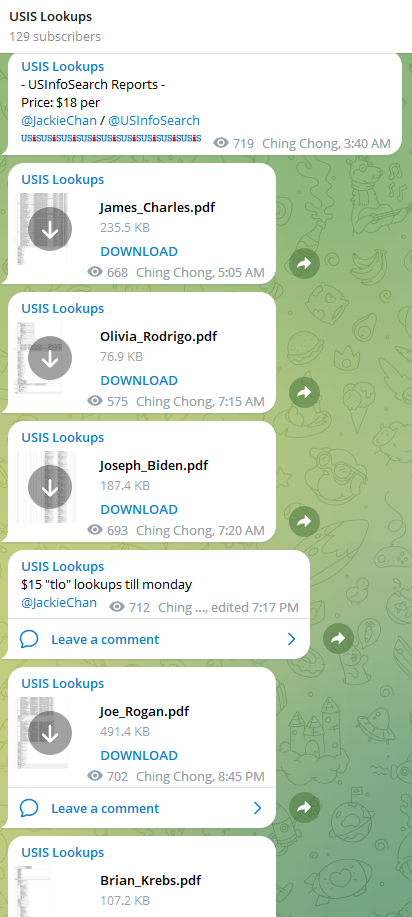
Since at least February 2023, a service advertised on Telegram called USiSLookups has operated an automated bot that allows anyone to look up the SSN or background report on virtually any American. For prices ranging from $8 to $40 and payable via virtual currency, the bot will return detailed consumer background reports automatically in just a few moments.
USiSLookups is the project of a cybercriminal who uses the nicknames JackieChan/USInfoSearch, and the Telegram channel for this service includes a small number of sample background reports, including that of President Joe Biden, and podcaster Joe Rogan. The data in those reports includes the subject’s date of birth, address, previous addresses, previous phone numbers and employers, known relatives and associates, and driver’s license information.
JackieChan’s service abuses the name and trademarks of Columbus, OH based data broker USinfoSearch, whose website says it provides “identity and background information to assist with risk management, fraud prevention, identity and age verification, skip tracing, and more.”
“We specialize in non-FCRA data from numerous proprietary sources to deliver the information you need, when you need it,” the company’s website explains. “Our services include API-based access for those integrating data into their product or application, as well as bulk and batch processing of records to suit every client.”
As luck would have it, my report was also listed in the Telegram channel for this identity fraud service, presumably as a teaser for would-be customers. On October 19, 2023, KrebsOnSecurity shared a copy of this file with the real USinfoSearch, along with a request for information about the provenance of the data.
USinfoSearch said it would investigate the report, which appears to have been obtained on or before June 30, 2023. On Nov. 9, 2023, Scott Hostettler, general manager of USinfoSearch parent Martin Data LLC shared a written statement about their investigation that suggested the ID theft service was trying to pass off someone else’s consumer data as coming from USinfoSearch:
Regarding the Telegram incident, we understand the importance of protecting sensitive information and upholding the trust of our users is our top priority. Any allegation that we have provided data to criminals is in direct opposition to our fundamental principles and the protective measures we have established and continually monitor to prevent any unauthorized disclosure. Because Martin Data has a reputation for high-quality data, thieves may steal data from other sources and then disguise it as ours. While we implement appropriate safeguards to guarantee that our data is only accessible by those who are legally permitted, unauthorized parties will continue to try to access our data. Thankfully, the requirements needed to pass our credentialing process is tough even for established honest companies.
USinfoSearch’s statement did not address any questions put to the company, such as whether it requires multi-factor authentication for customer accounts, or whether my report had actually come from USinfoSearch’s systems.
After much badgering, on Nov. 21 Hostettler acknowledged that the USinfoSearch identity fraud service on Telegram was in fact pulling data from an account belonging to a vetted USinfoSearch client.
“I do know 100% that my company did not give access to the group who created the bots, but they did gain access to a client,” Hostettler said of the Telegram-based identity fraud service. “I apologize for any inconvenience this has caused.”
Hostettler said USinfoSearch heavily vets any new potential clients, and that all users are required to undergo a background check and provide certain documents. Even so, he said, several fraudsters each month present themselves as credible business owners or C-level executives during the credentialing process, completing the application and providing the necessary documentation to open a new account.
“The level of skill and craftsmanship demonstrated in the creation of these supporting documents is incredible,” Hostettler said. “The numerous licenses provided appear to be exact replicas of the original document. Fortunately, I’ve discovered several methods of verification that do not rely solely on those documents to catch the fraudsters.”
“These people are unrelenting, and they act without regard for the consequences,” Hostettler continued. “After I deny their access, they will contact us again within the week using the same credentials. In the past, I’ve notified both the individual whose identity is being used fraudulently and the local police. Both are hesitant to act because nothing can be done to the offender if they are not apprehended. That is where most attention is needed.”
SIM SWAPPER’S DELIGHT
JackieChan is most active on Telegram channels focused on “SIM swapping,” which involves bribing or tricking mobile phone company employees into redirecting a target’s phone number to a device the attackers control. SIM swapping allows crooks to temporarily intercept the target’s text messages and phone calls, including any links or one-time codes for authentication that are delivered via SMS.
Reached on Telegram, JackieChan said most of his clients hail from the criminal SIM swapping world, and that the bulk of his customers use his service via an application programming interface (API) that allows customers to integrate the lookup service with other web-based services, databases, or applications.
“Sim channels is where I get most of my customers,” JackieChan told KrebsOnSecurity. “I’m averaging around 100 lookups per day on the [Telegram] bot, and around 400 per day on the API.”
JackieChan claims his USinfoSearch bot on Telegram abuses stolen credentials needed to access an API used by the real USinfoSearch, and that his service was powered by USinfoSearch account credentials that were stolen by malicious software tied to a botnet that he claims to have operated for some time.
This is not the first time USinfoSearch has had trouble with identity thieves masquerading as legitimate customers. In 2013, KrebsOnSecurity broke the news that an identity fraud service in the underground called “SuperGet[.]info” was reselling access to personal and financial data on more than 200 million Americans that was obtained via the big-three credit bureau Experian.
The consumer data resold by Superget was not obtained directly from Experian, but rather via USinfoSearch. At the time, USinfoSearch had a contractual agreement with a California company named Court Ventures, whereby customers of Court Ventures had access to the USinfoSearch data, and vice versa.
When Court Ventures was purchased by Experian in 2012, the proprietor of SuperGet — a Vietnamese hacker named Hieu Minh Ngo who had impersonated an American private investigator — was grandfathered in as a client. The U.S. Secret Service agent who oversaw Ngo’s capture, extradition, prosecution and rehabilitation told KrebsOnSecurity he’s unaware of any other cybercriminal who has caused more material financial harm to more Americans than Ngo.
REAL POLICE, FAKE EDRS
JackieChan also sells access to hacked email accounts belonging to law enforcement personnel in the United States and abroad. Hacked police department emails can come in handy for ID thieves trying to pose as law enforcement officials who wish to purchase consumer data from platforms like USinfoSearch. Hence, Mr. Hostettler’s ongoing battle with fraudsters seeking access to his company’s service.
These police credentials are mainly marketed to criminals seeking fraudulent “Emergency Data Requests,” wherein crooks use compromised government and police department email accounts to rapidly obtain customer account data from mobile providers, ISPs and social media companies.
Normally, these companies will require law enforcement officials to supply a subpoena before turning over customer or user records. But EDRs allow police to bypass that process by attesting that the information sought is related to an urgent matter of life and death, such as an impending suicide or terrorist attack.
In response to an alarming increase in the volume of fraudulent EDRs, many service providers have chosen to require all EDRs be processed through a service called Kodex, which seeks to filter EDRs based on the reputation of the law enforcement entity requesting the information, and other attributes of the requestor.
For example, if you want to send an EDR to Coinbase or Twilio, you’ll first need to have valid law enforcement credentials and create an account at the Kodex online portal at these companies. However, Kodex may still throttle or block any requests from any accounts if they set off certain red flags.
Within their own separate Kodex portals, Twilio can’t see requests submitted to Coinbase, or vice versa. But each can see if a law enforcement entity or individual tied to one of their own requests has ever submitted a request to a different Kodex client, and then drill down further into other data about the submitter, such as Internet address(es) used, and the age of the requestor’s email address.
In August, JackieChan was advertising a working Kodex account for sale on the cybercrime channels, including redacted screenshots of the Kodex account dashboard as proof of access.
Kodex co-founder Matt Donahue told KrebsOnSecurity his company immediately detected that the law enforcement email address used to create the Kodex account pictured in JackieChan’s ad was likely stolen from a police officer in India. One big tipoff, Donahue said, was that the person creating the account did so using an Internet address in Brazil.
“There’s a lot of friction we can put in the way for illegitimate actors,” Donahue said. “We don’t let people use VPNs. In this case we let them in to honeypot them, and that’s how they got that screenshot. But nothing was allowed to be transmitted out from that account.”
Massive amounts of data about you and your personal history are available from USinfoSearch and dozens of other data brokers that acquire and sell “non-FCRA” data — i.e., consumer data that cannot be used for the purposes of determining one’s eligibility for credit, insurance, or employment.
Anyone who works in or adjacent to law enforcement is eligible to apply for access to these data brokers, which often market themselves to police departments and to “skip tracers,” essentially bounty hunters hired to locate others in real life — often on behalf of debt collectors, process servers or a bail bondsman.
There are tens of thousands of police jurisdictions around the world — including roughly 18,000 in the United States alone. And the harsh reality is that all it takes for hackers to apply for access to data brokers (and abuse the EDR process) is illicit access to a single police email account.
The trouble is, compromised credentials to law enforcement email accounts show up for sale with alarming frequency on the Telegram channels where JackieChan and their many clients reside. Indeed, Donahue said Kodex so far this year has identified attempted fake EDRs coming from compromised email accounts for police departments in India, Italy, Thailand and Turkey.
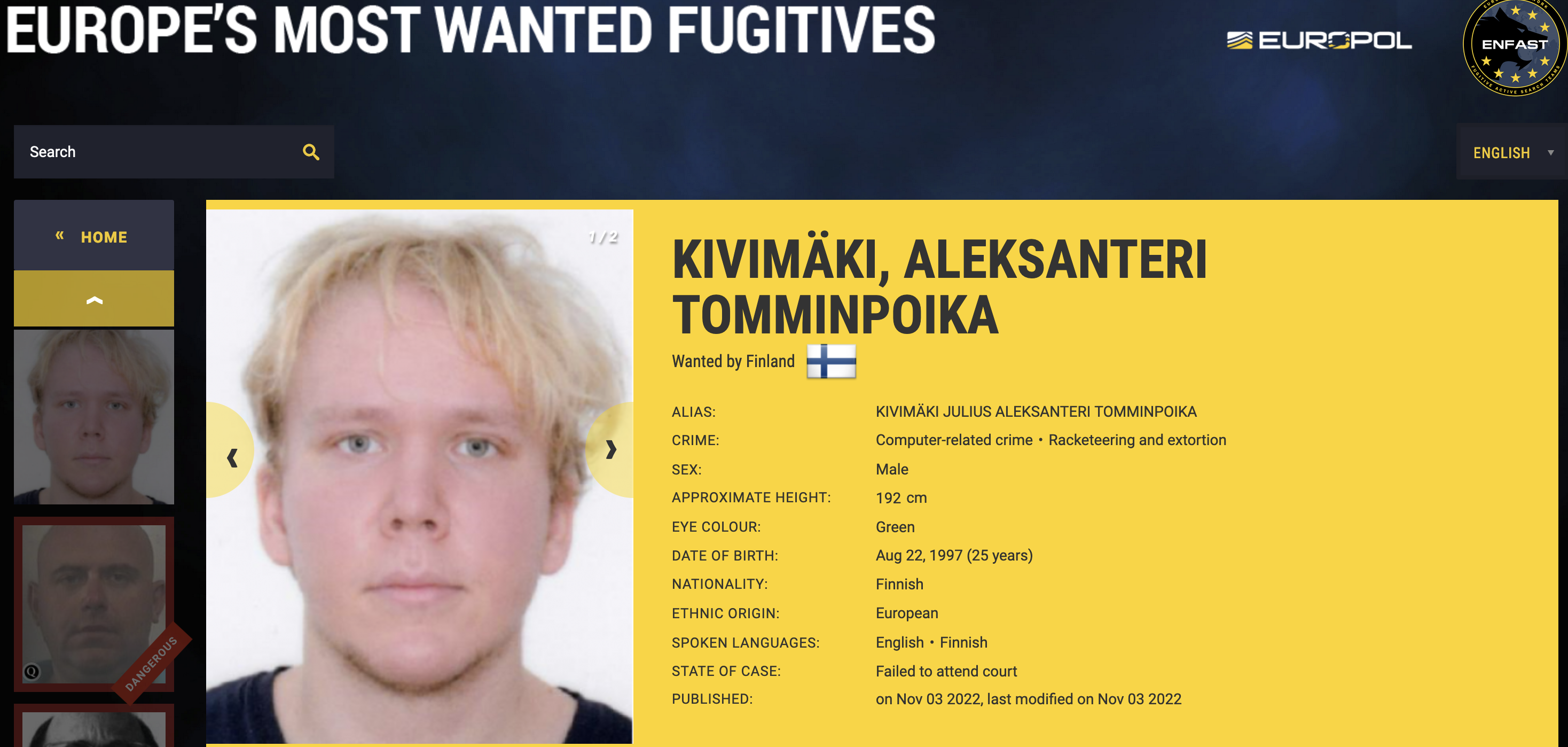
Prosecutors in Finland this week commenced their criminal trial against Julius Kivimäki, a 26-year-old Finnish man charged with extorting a once popular and now-bankrupt online psychotherapy practice and thousands of its patients. In a 2,200-page report, Finnish authorities laid out how they connected the extortion spree to Kivimäki, a notorious hacker who was convicted in 2015 of perpetrating tens of thousands of cybercrimes, including data breaches, payment fraud, operating a botnet and calling in bomb threats.
In late October 2022, Kivimäki was charged with attempting to extort money from the Vastaamo Psychotherapy Center. In that breach, which occurred in October 2020, a hacker using the handle “Ransom Man” threatened to publish patient psychotherapy notes if Vastaamo did not pay a six-figure ransom demand.
Vastaamo refused, so Ransom Man shifted to extorting individual patients — sending them targeted emails threatening to publish their therapy notes unless paid a 500-euro ransom. When Ransom Man found little success extorting patients directly, they uploaded to the dark web a large compressed file containing all of the stolen Vastaamo patient records.
Security experts soon discovered Ransom Man had mistakenly included an entire copy of their home folder, where investigators found many clues pointing to Kivimäki’s involvement. In November 2022, the Finnish government charged Kivimäki in absentia with the Vastaamo hack. The 2,200-page evidence document against Kivimäki suggests he enjoyed a lavish lifestyle while on the lam, frequenting luxury resorts and renting fabulously expensive cars and living quarters.
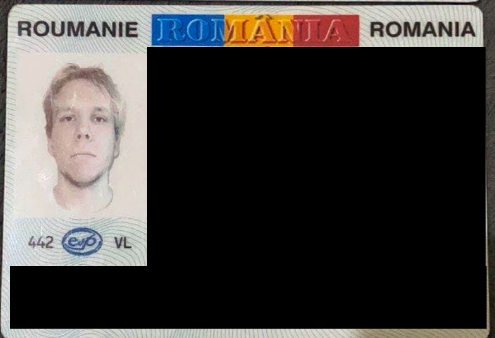
But in February 2023, Kivimäki was arrested in France after authorities there responded to a domestic disturbance call and found the defendant sleeping off a hangover on the couch of a woman he’d met the night before. The French police grew suspicious when the 6′ 3″ blonde, green-eyed man presented an ID that stated he was of Romanian nationality.
A redacted copy of an ID Kivimaki gave to French authorities claiming he was from Romania.
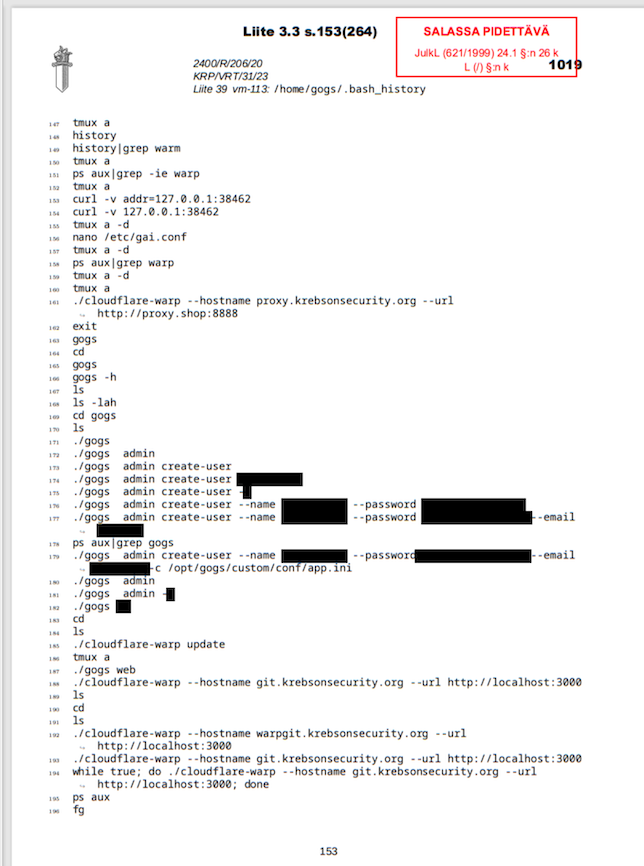
Finnish prosecutors showed that Kivimäki’s credit card had been used to pay for the virtual server that hosted the stolen Vastaamo patient notes. What’s more, the home folder included in the Vastaamo patient data archive also allowed investigators to peer into other cybercrime projects of the accused, including domains that Ransom Man had access to as well as a lengthy history of commands he’d executed on the rented virtual server.
Some of those domains allegedly administered by Kivimäki were set up to smear the reputations of different companies and individuals. One of those was a website that claimed to have been authored by a person who headed up IT infrastructure for a major bank in Norway which discussed the idea of legalizing child sexual abuse.
Another domain hosted a fake blog that besmirched the reputation of a Tulsa, Okla. man whose name was attached to blog posts about supporting the “white pride” movement and calling for a pardon of the Oklahoma City bomber Timothy McVeigh.
Kivimäki appears to have sought to sully the name of this reporter as well. The 2,200-page document shows that Kivimäki owned and operated the domain krebsonsecurity[.]org, which hosted various hacking tools that Kivimäki allegedly used, including programs for mass-scanning the Internet for systems vulnerable to known security flaws, as well as scripts for cracking database server usernames and passwords, and downloading databases.
Ransom Man inadvertently included a copy of his home directory in the leaked Vastaamo patient data. A lengthy history of the commands run by that user show they used krebsonsecurity-dot-org to host hacking and scanning tools.
Mikko Hyppönen, chief research officer at WithSecure (formerly F-Secure), said the Finnish authorities have done “amazing work,” and that “it’s rare to have this much evidence for a cybercrime case.”
Petteri Järvinen is a respected IT expert and author who has been following the trial, and he said the prosecution’s case so far has been strong.
“The National Bureau of Investigation has done a good job and Mr Kivimäki for his part some elementary mistakes,” Järvinen wrote on LinkedIn. “This sends an important message: online crime does not pay. Traces are left in the digital world too, even if it is very tedious for the police to collect them from servers all around the world.”
Antti Kurittu is an information security specialist and a former criminal investigator. In 2013, Kurittu worked on an investigation involving Kivimäki’s use of the Zbot botnet, among other activities Kivimäki engaged in as a member of the hacker group Hack the Planet (HTP). Kurittu said it remains to be seen if the prosecution can make their case, and if the defense has any answers to all of the evidence presented.
“Based on the public pretrial investigation report, it looks like the case has a lot of details that seem very improbable to be coincidental,” Kurittu told KrebsOnSecurity. “For example, a full copy of the Vastaamo patient database was found on a server that belonged to Scanifi, a company with no reasonable business that Kivimäki was affiliated with. The leaked home folder contents were also connected to Kivimäki and were found on servers that were under his control.”
The Finnish daily yle.fireports that Kivimäki’s lawyers sought to have their client released from confinement for the remainder of his trial, noting that the defendant has already been detained for eight months.
The court denied that request, saying the defendant was still a flight risk. Kivimäki’s trial is expected to continue until February 2024, in part to accommodate testimony from a large number of victims. Prosecutors are seeking a seven-year sentence for Kivimäki.
Microsoft today released updates to fix more than five dozen security holes in its Windows operating systems and related software, including three “zero day” vulnerabilities that Microsoft warns are already being exploited in active attacks.
The zero-day threats targeting Microsoft this month include CVE-2023-36025, a weakness that allows malicious content to bypass the Windows SmartScreen Security feature. SmartScreen is a built-in Windows component that tries to detect and block malicious websites and files. Microsoft’s security advisory for this flaw says attackers could exploit it by getting a Windows user to click on a booby-trapped link to a shortcut file.
Kevin Breen, senior director of threat research at Immersive Labs, said emails with .url attachments or logs with processes spawning from .url files “should be a high priority for threat hunters given the active exploitation of this vulnerability in the wild.”
The second zero day this month is CVE-2023-36033, which is a vulnerability in the “DWM Core Library” in Microsoft Windows that was exploited in the wild as a zero day and publicly disclosed prior to patches being available. It affects Microsoft Windows 10 and later, as well as Microsoft Windows Server 2019 and subsequent versions.
“This vulnerability can be exploited locally, with low complexity and without needing high-level privileges or user interaction,” said Mike Walters, president and co-founder of the security firm Action1. “Attackers exploiting this flaw could gain SYSTEM privileges, making it an efficient method for escalating privileges, especially after initial access through methods like phishing.”
The final zero day in this month’s Patch Tuesday is a problem in the “Windows Cloud Files Mini Filter Driver” tracked as CVE-2023-36036 that affects Windows 10 and later, as well as Windows Server 2008 at later. Microsoft says it is relatively straightforward for attackers to exploit CVE-2023-36036 as a way to elevate their privileges on a compromised PC.
Beyond the zero day flaws, Breen said organizations running Microsoft Exchange Server should prioritize several new Exchange patches, including CVE-2023-36439, which is a bug that would allow attackers to install malicious software on an Exchange server. This weakness technically requires the attacker to be authenticated to the target’s local network, but Breen notes that a pair of phished Exchange credentials will provide that access nicely.
“This is typically achieved through social engineering attacks with spear phishing to gain initial access to a host before searching for other vulnerable internal targets – just because your Exchange Server doesn’t have internet-facing authentication doesn’t mean it’s protected,” Breen said.
Breen said this vulnerability goes hand in hand with three other Exchange bugs that Microsoft designated as “exploitation more likely:” CVE-2023-36050, CVE-2023-36039 and CVE-2023-36035.
Finally, the SANS Internet Storm Centerpoints to two additional bugs patched by Microsoft this month that aren’t yet showing signs of active exploitation but that were made public prior to today and thus deserve prioritization. Those include: CVE-2023-36038, a denial of service vulnerability in ASP.NET Core, with a CVSS score of 8.2; and CVE-2023-36413: A Microsoft Office security feature bypass. Exploiting this vulnerability will bypass the protected mode when opening a file received via the web.
Windows users, please consider backing up your data and/or imaging your system before applying any updates. And feel free to sound off in the comments if you experience any difficulties as a result of these patches.
In the summer of 2022, KrebsOnSecurity documented the plight of several readers who had their accounts at big-three consumer credit reporting bureau Experian hijacked after identity thieves simply re-registered the accounts using a different email address. Sixteen months later, Experian clearly has not addressed this gaping lack of security. I know that because my account at Experian was recently hacked, and the only way I could recover access was by recreating the account.
Entering my SSN and birthday at Experian showed my identity was tied to an email address I did not authorize.
I recently ordered a copy of my credit file from Experian via annualcreditreport.com, but as usual Experian declined to provide it, saying they couldn’t verify my identity. Attempts to log in to my account directly at Experian.com also failed; the site said it didn’t recognize my username and/or password.
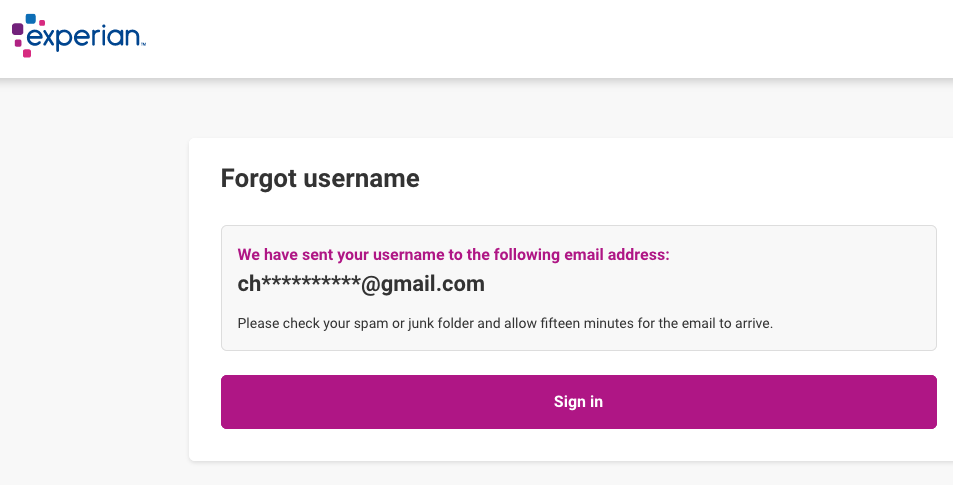
A request for my Experian account username required my full Social Security number and date of birth, after which the website displayed portions of an email address I never authorized and did not recognize (the full address was redacted by Experian).
I immediately suspected that Experian was still allowing anyone to recreate their credit file account using the same personal information but a different email address, a major authentication failure that was explored in last year’s story, Experian, You Have Some Explaining to Do. So once again I sought to re-register as myself at Experian.
The homepage said I needed to provide a Social Security number and mobile phone number, and that I’d soon receive a link that I should click to verify myself. The site claims that the phone number you provide will be used to help validate your identity. But it appears you could supply any phone number in the United States at this stage in the process, and Experian’s website would not balk. Regardless, users can simply skip this step by selecting the option to “Continue another way.”
Experian then asks for your full name, address, date of birth, Social Security number, email address and chosen password. After that, they require you to successfully answer between three to five multiple-choice security questions whose answers are very often based on public records. When I recreated my account this week, only two of the five questions pertained to my real information, and both of those questions concerned street addresses we’ve previously lived at — information that is just a Google search away.
Assuming you sail through the multiple-choice questions, you’re prompted to create a 4-digit PIN and provide an answer to one of several pre-selected challenge questions. After that, your new account is created and you’re directed to the Experian dashboard, which allows you to view your full credit file, and freeze or unfreeze it.
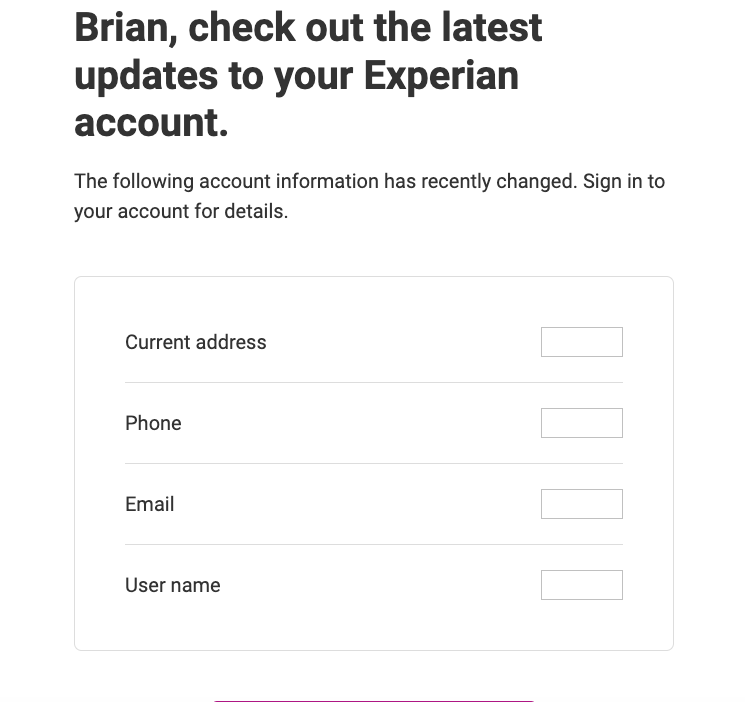
At this point, Experian will send a message to the old email address tied to the account, saying certain aspects of the user profile have changed. But this message isn’t a request seeking verification: It’s just a notification from Experian that the account’s user data has changed, and the original user is offered zero recourse here other than to a click a link to log in at Experian.com.
If you don’t have an Experian account, it’s a good idea to create one. Because at least then you will receive one of these emails when someone hijacks your credit file at Experian.
And of course, a user who receives one of these notices will find that the credentials to their Experian account no longer work. Nor do their PIN or account recovery question, because those have been changed also. Your only option at this point is recreate your account at Experian and steal it back from the ID thieves!
In contrast, if you try to modify an existing account at either of the other two major consumer credit reporting bureaus — Equifax or TransUnion — they will ask you to enter a code sent to the email address or phone number on file before any changes can be made.
Reached for comment, Experian declined to share the full email address that was added without authorization to my credit file.
“To ensure the protection of consumers’ identities and information, we have implemented a multi-layered security approach, which includes passive and active measures, and are constantly evolving,” Experian spokesperson Scott Anderson said in an emailed statement. “This includes knowledge-based questions and answers, and device possession and ownership verification processes.”
Anderson said all consumers have the option to activate a multi-factor authentication method that’s requested each time they log in to their account. But what good is multi-factor authentication if someone can simply recreate your account with a new phone number and email address?
Several readers who spotted my rant about Experian on Mastodon earlier this week responded to a request to validate my findings. The Mastodon user @Jackerbee is a reader from Michican who works in the biotechnology industry. @Jackerbee said when prompted by Experian to provide his phone number and the last four digits of his SSN, he chose the option to “manually enter my information.”
“I put my second phone number and the new email address,” he explained. “I received a single email in my original account inbox that said they’ve updated my information after I ‘signed up.’ No verification required from the original email address at any point. I also did not receive any text alerts at the original phone number. The especially interesting and egregious part is that when I sign in, it does 2FA with the new phone number.”
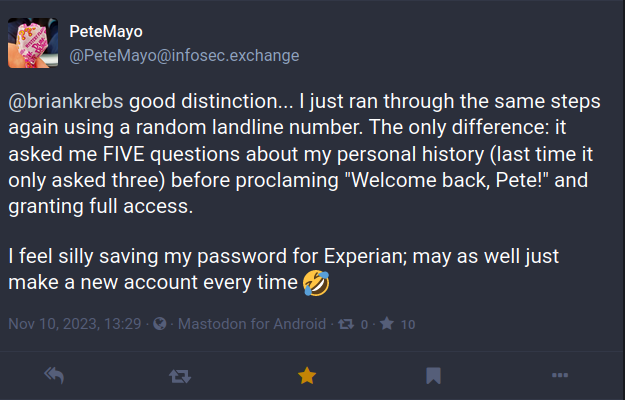
The Mastodon user PeteMayo said they recreated their Experian account twice this week, the second time by supplying a random landline number.
“The only difference: it asked me FIVE questions about my personal history (last time it only asked three) before proclaiming, ‘Welcome back, Pete!,’ and granting full access,” @PeteMayo wrote. “I feel silly saving my password for Experian; may as well just make a new account every time.”
I was fortunate in that whoever hijacked my account did not also thaw my credit freeze. Or if they did, they politely froze it again when they were done. But I fully expect my Experian account will be hijacked yet again unless Experian makes some important changes to its authentication process.
It boggles the mind that these fundamental authentication weaknesses have been allowed to persist for so long at Experian, which already has a horrible track record in this regard.
In December 2022, KrebsOnSecurity alerted Experian that identity thieves had worked out a remarkably simple way to bypass its security and access any consumer’s full credit report — armed with nothing more than a person’s name, address, date of birth, and Social Security number. Experian fixed the glitch, and acknowledged that it persisted for nearly seven weeks, between Nov. 9, 2022 and Dec. 26, 2022.
In April 2021, KrebsOnSecurity revealed how identity thieves were exploiting lax authentication on Experian’s PIN retrieval page to unfreeze consumer credit files. In those cases, Experian failed to send any notice via email when a freeze PIN was retrieved, nor did it require the PIN to be sent to an email address already associated with the consumer’s account.
Last week, KrebsOnSecurity broke the news that one of the largest cybercrime services for laundering stolen merchandise was hacked recently, exposing its internal operations, finances and organizational structure. In today’s Part II, we’ll examine clues about the real-life identity of “Fearless,” the nickname chosen by the proprietor of the SWAT USA Drops service.
Based in Russia, SWAT USA recruits people in the United States to reship packages containing pricey electronics that are purchased with stolen credit cards. As detailed in this Nov. 2 story, SWAT currently employs more than 1,200 U.S. residents, all of whom will be cut loose without a promised payday at the end of their first month reshipping stolen goods.
The current co-owner of SWAT, a cybercriminal who uses the nickname “Fearlless,” operates primarily on the cybercrime forum Verified. This Russian-language forum has tens of thousands of members, and it has suffered several hacks that exposed more than a decade’s worth of user data and direct messages.
January 2021 posts on Verified show that Fearlless and his partner Universalo purchased the SWAT reshipping business from a Verified member named SWAT, who’d been operating the service for years. SWAT agreed to transfer the business in exchange for 30 percent of the net profit over the ensuing six months.
Cyber intelligence firm Intel 471 says Fearlless first registered on Verified in February 2013. The email address Fearlless used on Verified leads nowhere, but a review of Fearlless’ direct messages on Verified indicates this user originally registered on Verified a year earlier as a reshipping vendor, under the alias “Apathyp.”
There are two clues supporting the conclusion that Apathyp and Fearlless are the same person. First, the Verified administrators warned Apathyp he had violated the forum’s rules barring the use of multiple accounts by the same person, and that Verified’s automated systems had detected that Apathyp and Fearlless were logging in from the same device. Second, in his earliest private messages on Verified, Fearlless told others to contact him on an instant messenger address that Apathyp had claimed as his.
Intel 471 says Apathyp registered on Verified using the email address triploo@mail.ru. A search on that email address at the breach intelligence service Constella Intelligence found that a password commonly associated with it was “niceone.” But the triploo@mail.ru account isn’t connected to much else that’s interesting except a now-deleted account at Vkontakte, the Russian answer to Facebook.
However, in Sept. 2020, Apathyp sent a private message on Verified to the owner of a stolen credit card shop, saying his credentials no longer worked. Apathyp told the proprietor that his chosen password on the service was “12Apathy.”
A search on that password at Constella reveals it was used by just four different email addresses, two of which are particularly interesting: gezze@yandex.ru and gezze@mail.ru. Constella discovered that both of these addresses were previously associated with the same password as triploo@mail.ru — “niceone,” or some variation thereof.
Constella found that years ago gezze@mail.ru was used to create a Vkontakte account under the name Ivan Sherban (former password: “12niceone“) from Magnitogorsk, an industrial city in the southern region of Russia. That same email address is now tied to a Vkontakte account for an Ivan Sherban who lists his home as Saint Petersburg, Russia. Sherban’s profile photo shows a heavily tattooed, muscular and recently married individual with his beautiful new bride getting ready to drive off in a convertible sports car.
A pivotal clue for validating the research into Apathyp/Fearlless came from the identity intelligence firm myNetWatchman, which found that gezze@mail.ru at one time used the passwords “геззи1991” (gezze1991) and “gezze18081991.”
Care to place a wager on when Vkontakte says is Mr. Sherban’s birthday? Ten points if you answered August 18 (18081991).
Mr. Sherban did not respond to multiple requests for comment.


 Since at least February 2023, a service advertised on Telegram called USiSLookups has operated an automated bot that allows anyone to look up the SSN or background report on virtually any American. For prices ranging from $8 to $40 and payable via virtual currency, the bot will return detailed consumer background reports automatically in just a few moments.

 Daniel Quinn Flint (not related to Daniel RAY Flint who is a different person entirely)